15 Short Hairstyles for Women Over 50 with Round Faces: Flattering, Modern Ideas
Choosing a short haircut after 50 is not about hiding your face shape. It is about finding a silhouette that works with your proportions, hair texture, density, and personal style. If you have a round face, details such as the part, fringe, crown shape, and length around the cheeks can make a noticeable difference to the overall balance of a cut.
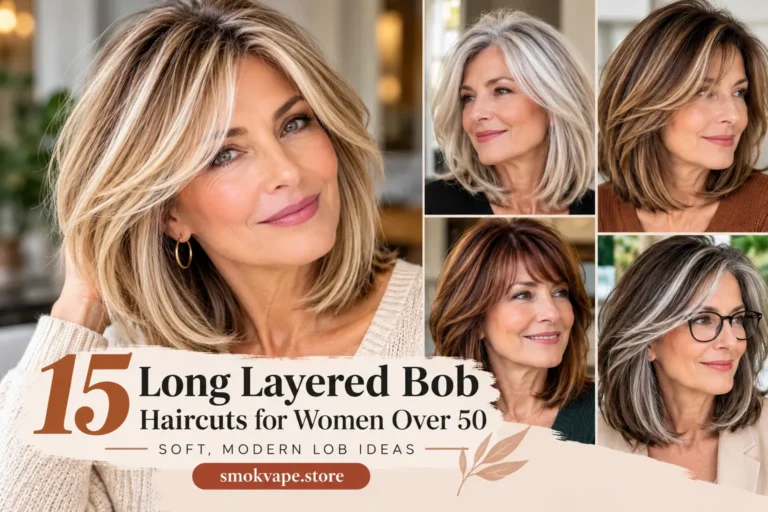
The 15 ideas below range from soft pixies to layered bobs. Each offers a different approach to shape and movement, so you can compare options rather than assume one haircut suits every woman with a round face. Use the suggestions as a starting point for a conversation with your hairstylist.
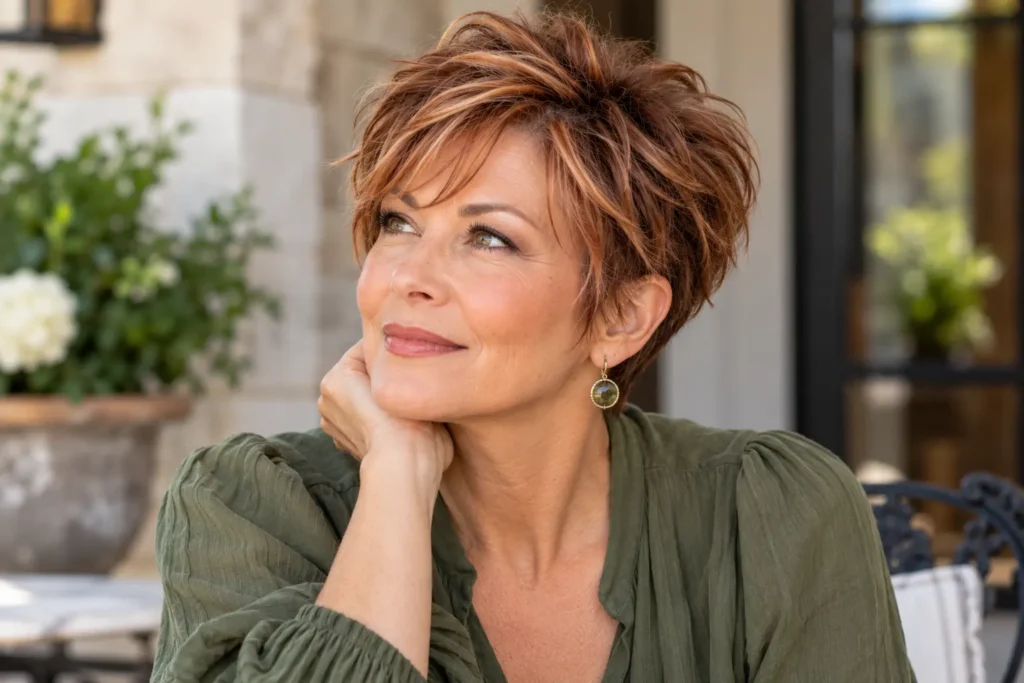
Table of Contents
How to Choose a Short Hairstyle for a Round Face
A round face often has softly curved contours, with the cheek area appearing relatively full and the face length and width looking fairly balanced. Face shape is only one part of choosing a haircut, however. Your natural growth pattern, hairline, neck length, preferred styling time, and the amount of volume your hair can hold all matter.
Think about proportions and face-framing
Layers that create movement around the upper part of the head or pieces that fall below the cheekbone can change how a short haircut frames the face. If you like a bob, ask your stylist to consider where the perimeter will sit in relation to your jawline. A few longer pieces near the front may give you more styling flexibility.
Balance crown volume and side volume
Some height at the crown can add vertical interest, while excessive width directly at the cheeks may not create the shape you want. This does not mean you must avoid volume at the sides. The goal is to place fullness intentionally and adapt it to your hair density and preferred finish.
Choose bangs that work with your features
Side-swept and wispy fringes can introduce diagonal lines and keep the forehead area soft. Curtain bangs can work with a bob or layered cut when they are shaped to blend into the sides. A heavy, blunt fringe is a stronger statement and may need more daily styling, so discuss its weight and length before committing.
Start with your natural hair texture
Fine hair may benefit from a compact shape and carefully placed layers that do not remove too much density. Thick hair may need internal layering to reduce bulk. Wavy and curly hair should be cut with its natural movement in mind, because shrinkage and curl pattern can change the finished length.
15 Short Hairstyles for Women Over 50 with Round Faces
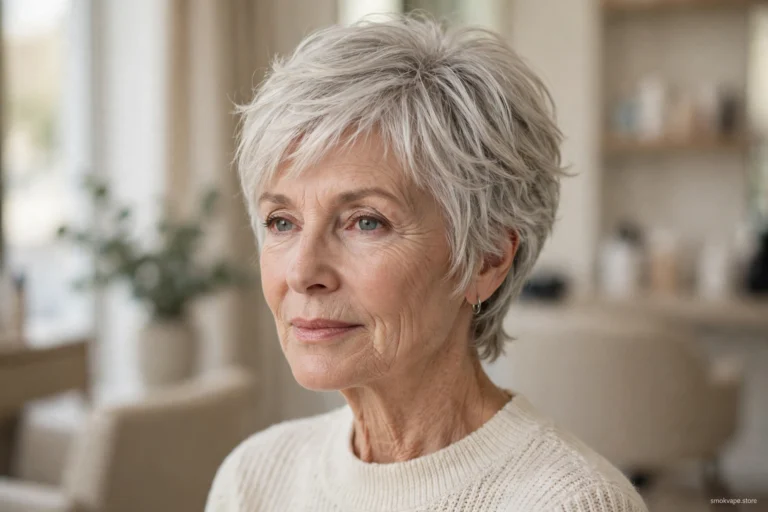
1. Soft Layered Pixie
A soft layered pixie keeps the sides and back neat while leaving enough length on top to create texture. The layers can be styled forward, swept to one side, or lifted gently at the crown. It is a versatile option if you want a short cut without an overly sharp finish. Ask your stylist to keep the outline soft and tailor the side length to your cheek and jaw area.
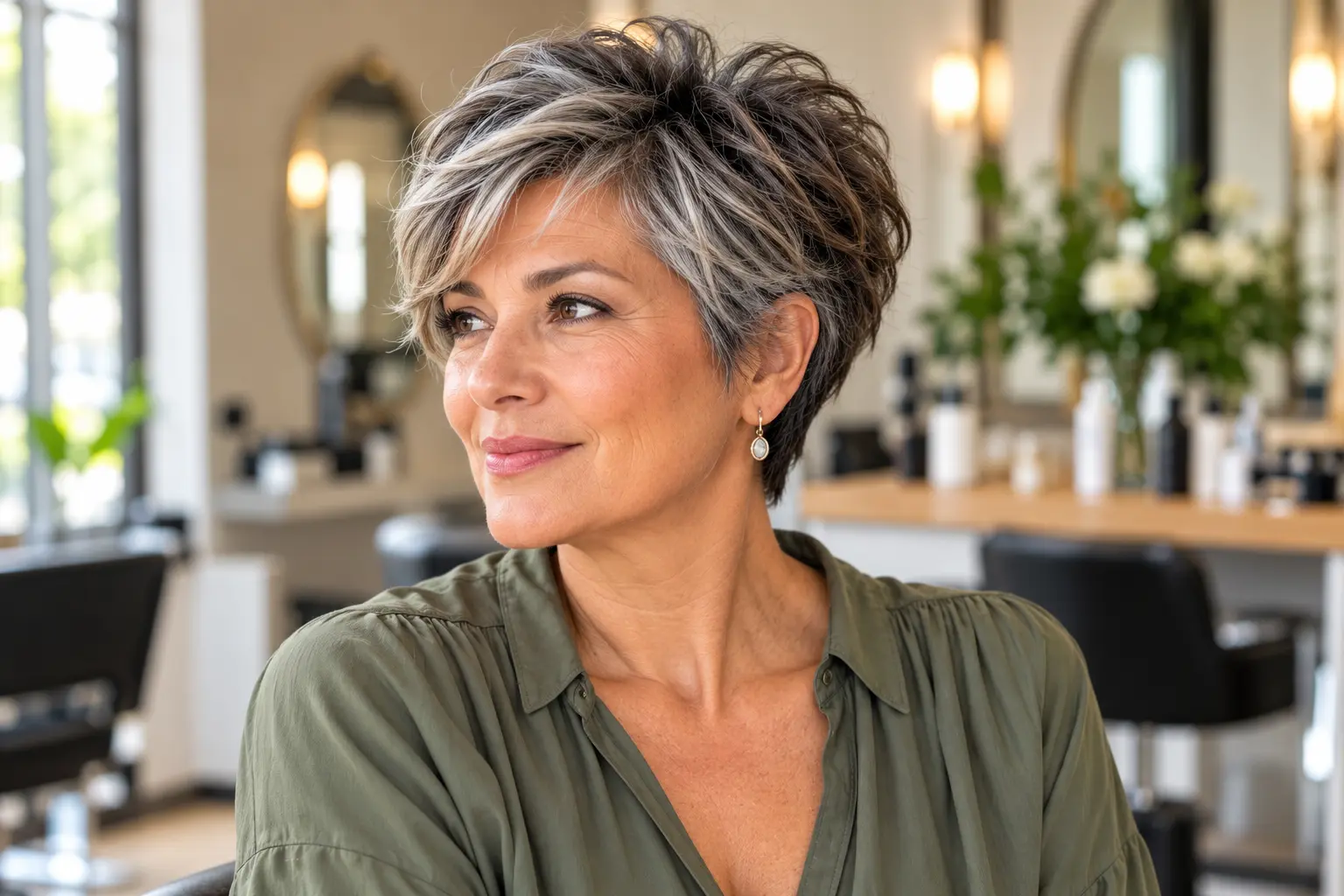
2. Side-Swept Pixie
A longer fringe swept diagonally across the forehead gives this pixie its defining feature. The angled movement creates a different visual line from a straight-across fringe and allows you to adjust how much forehead you show. It can be especially useful if you like a short cut but want some face-framing length. A light styling cream can help the fringe stay in place without looking stiff.
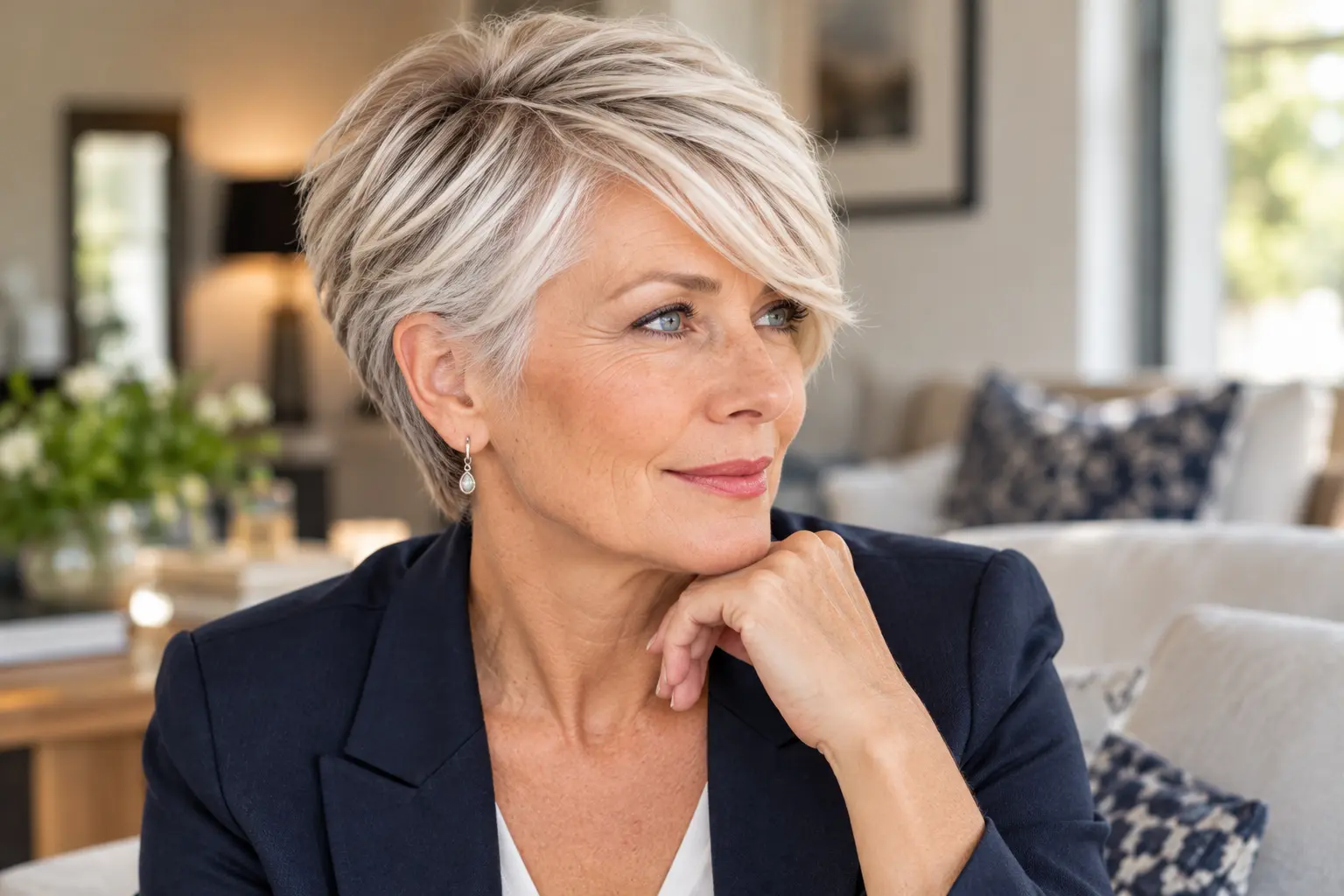
3. Textured Pixie with Crown Volume
This pixie uses short, separated layers on top to create lift and a piecey finish. The sides can be kept close or left slightly longer, depending on your comfort level. A small amount of mousse or texturizing product can help build height at the crown. Keep the texture flexible rather than over-teased for a modern result.
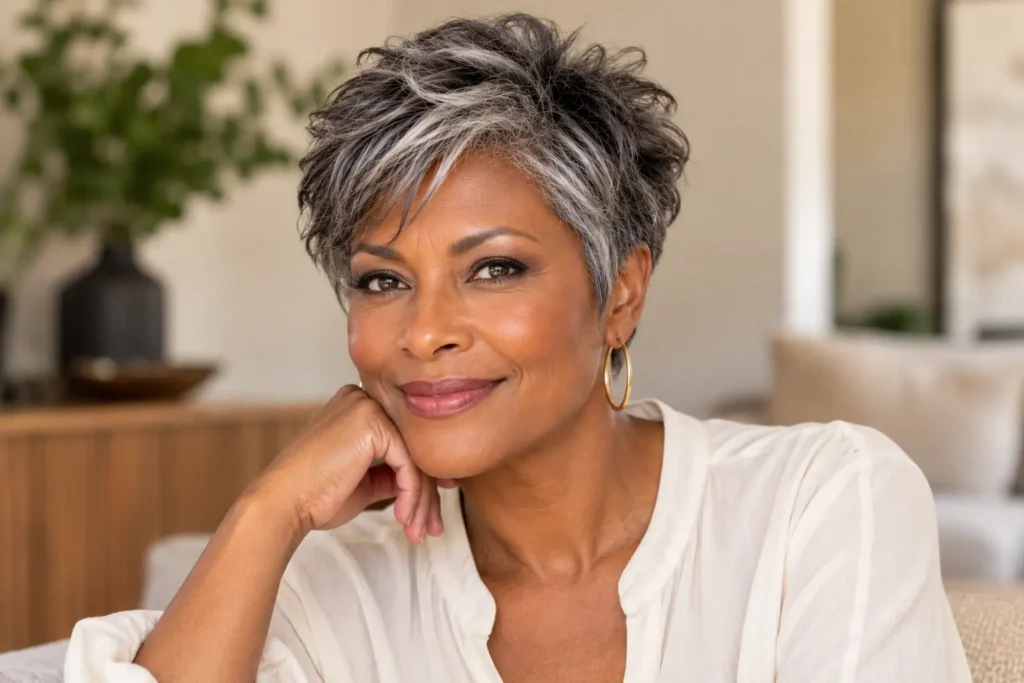
4. Long Pixie with Face-Framing Pieces
A long pixie sits between a classic pixie and a short bob. The extra length around the temples and front gives you more ways to frame your face, tuck hair behind an ear, or sweep it across the forehead. It is a good option if you are transitioning from longer hair and are not ready for a very cropped shape. Ask for layers that connect smoothly rather than a bulky outline.
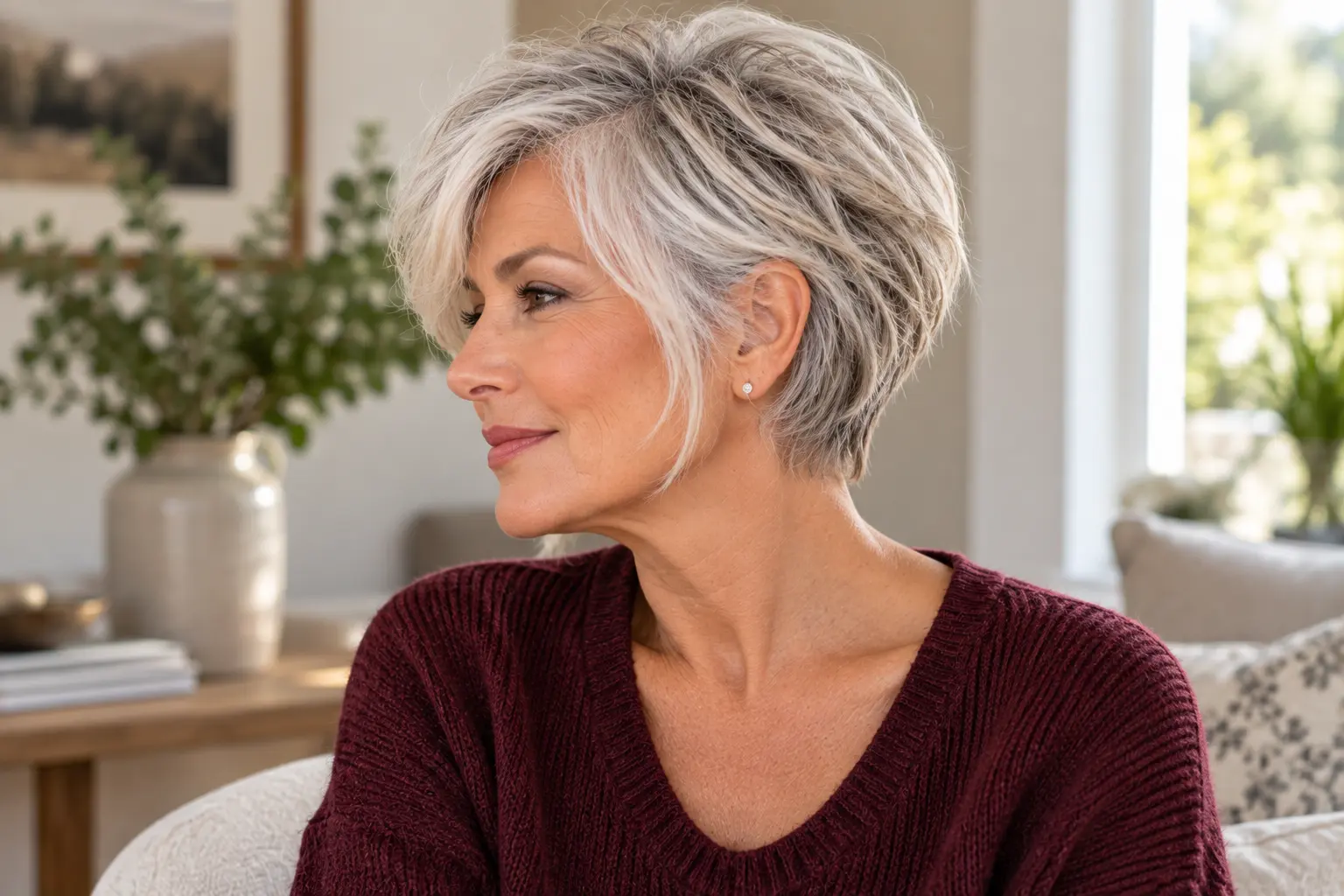
5. Modern Bixie with Soft Layers
The bixie combines the lightness of a pixie with some of the length and movement of a bob. Soft layers around the crown and nape create shape, while longer front sections offer styling flexibility. The cut can be tailored to sit above or near the jaw, depending on your hair and preferences. For more variations, see our guide to modern bixie haircuts for women over 50.
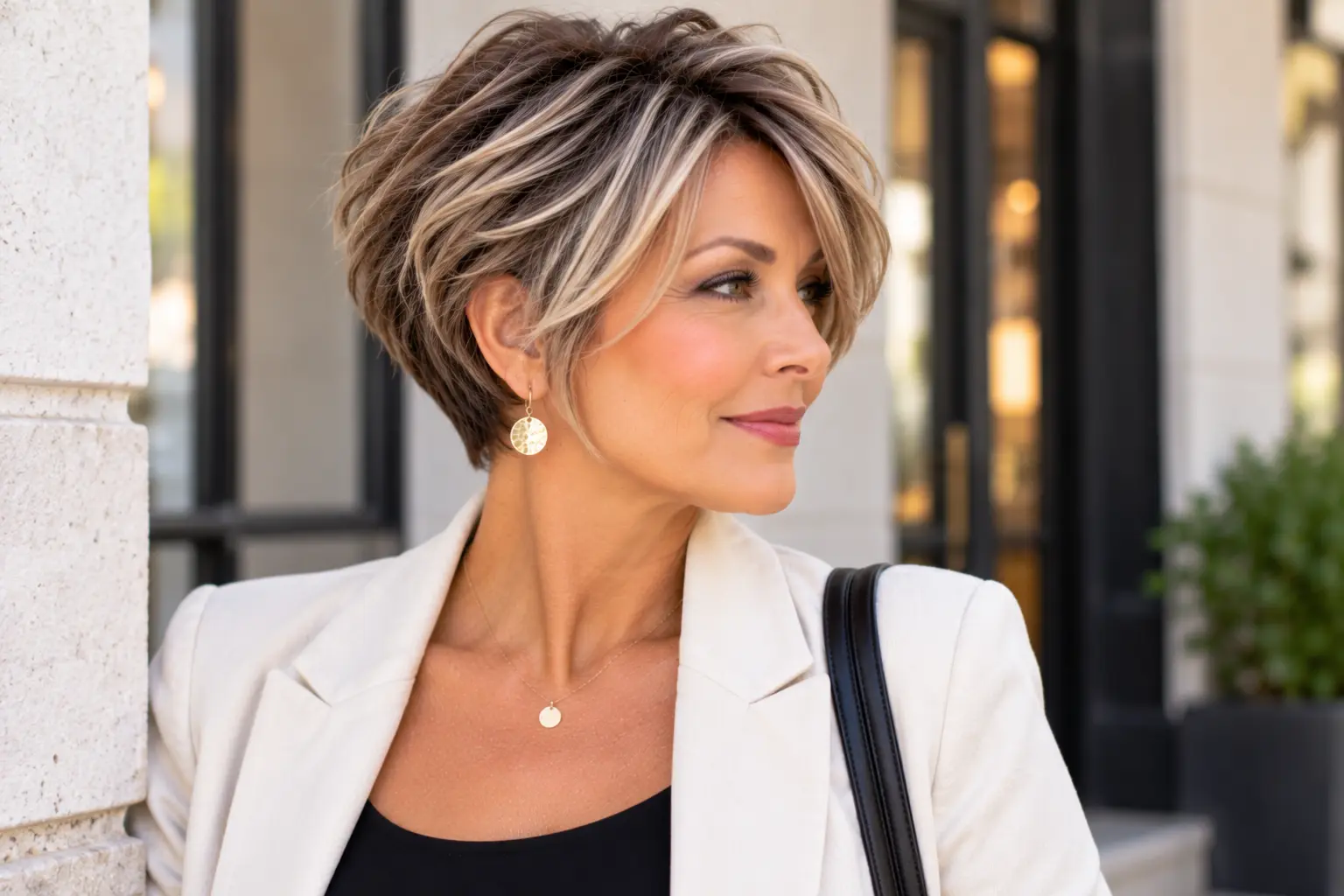
6. Asymmetrical Short Bob
An asymmetrical bob has one side slightly longer than the other, creating an intentional diagonal line. The difference can be subtle for an understated look or more pronounced for a bolder cut. It works best when the asymmetry is planned around your natural parting and how your hair falls. Ask your stylist to show you the shape from the front and side before deciding on the length.
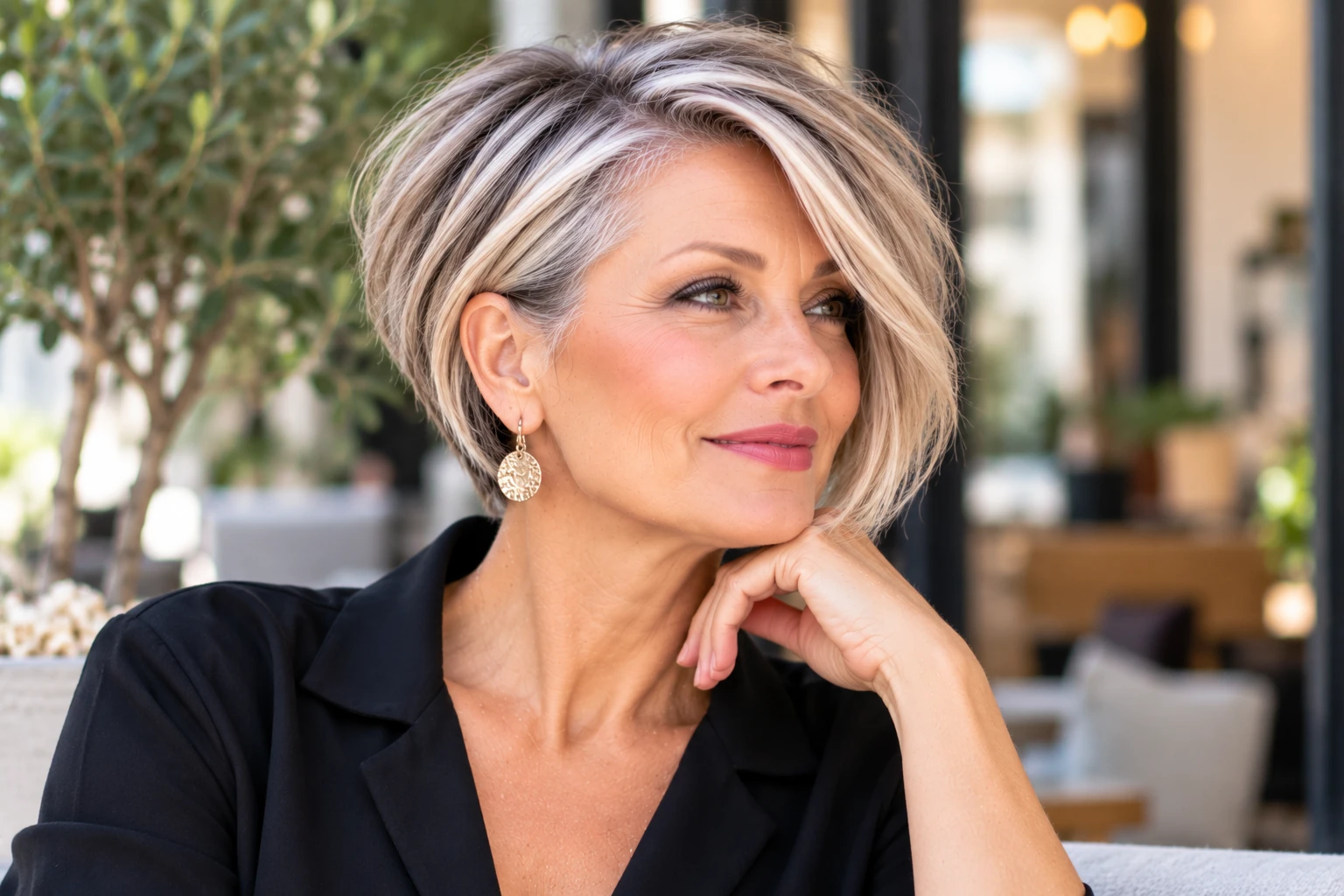
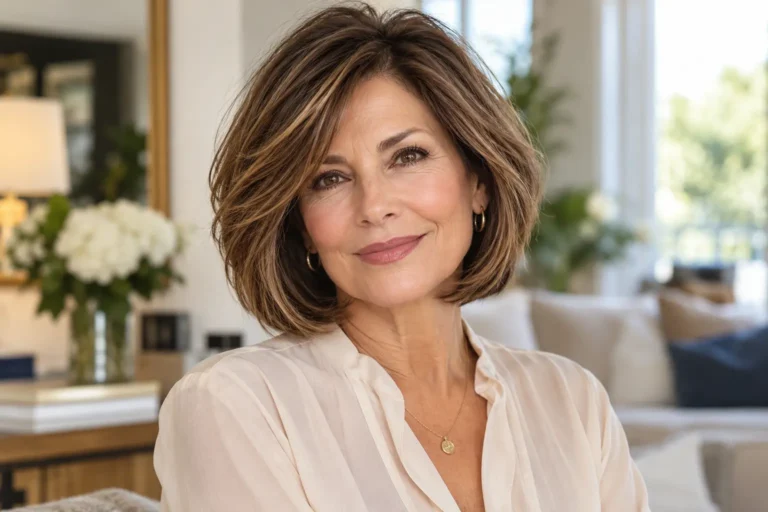
7. Chin-Length Layered Bob
A chin-length bob with soft layers offers a classic shape with added movement. The layers help prevent the perimeter from looking too solid, particularly in hair with natural texture. Because the length sits close to the jaw, the exact placement matters: your stylist can adjust the front and side sections to suit your features. This cut can be worn smooth, softly bent, or lightly tousled.
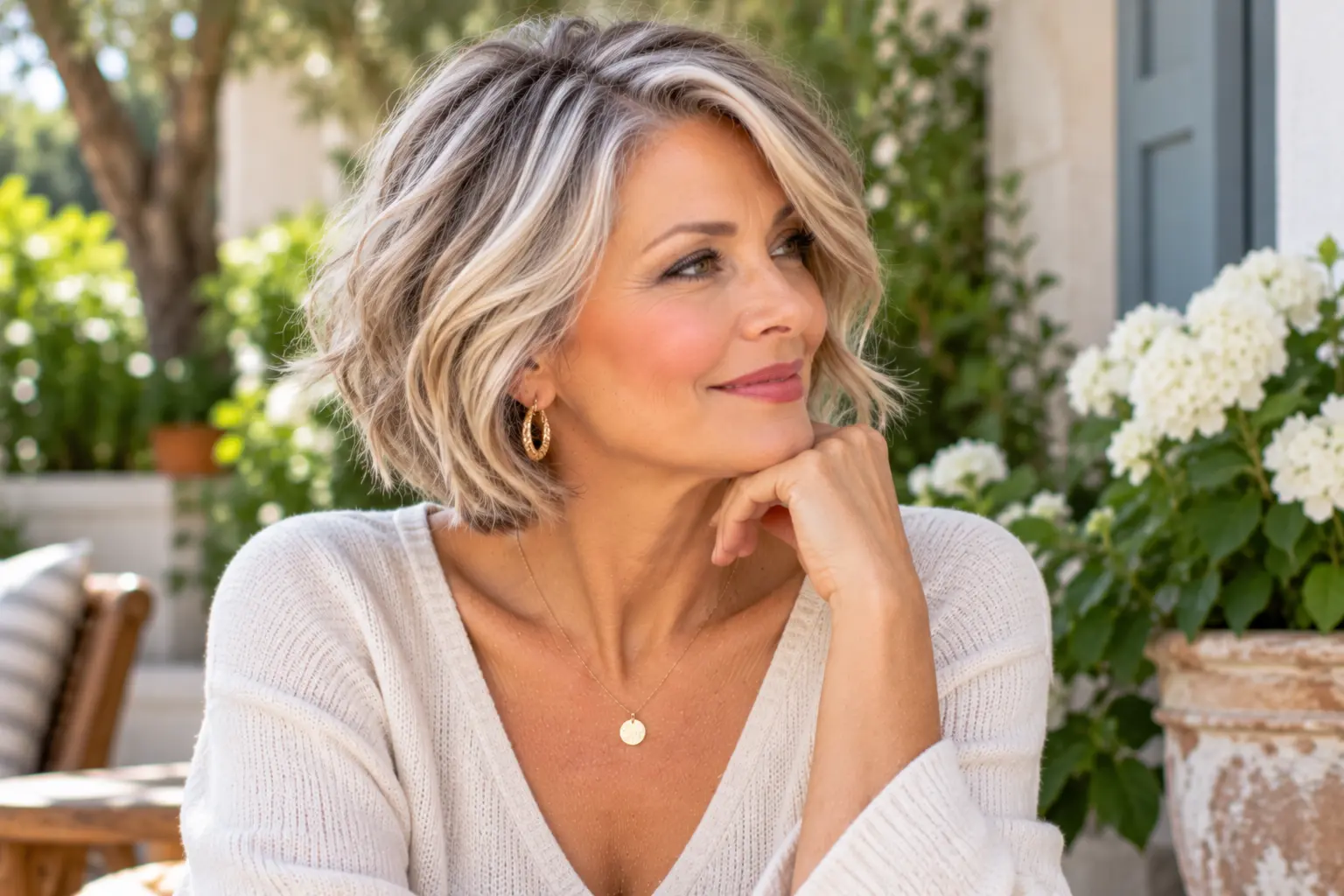
8. Short Angled Bob
A short angled bob is typically a little shorter at the back and longer toward the front. That gradual forward line gives the haircut structure without requiring dramatic layers. It can be worn sleek or with a soft bend through the ends. If your hair is thick, ask about removing internal bulk while preserving a clean outline.
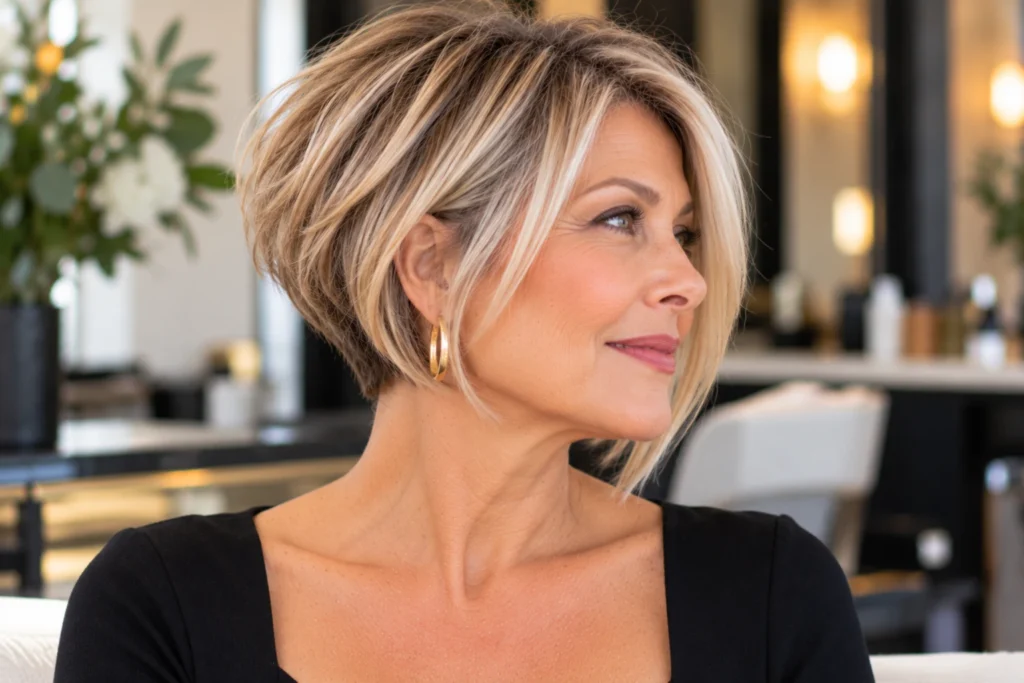
9. Side-Parted Bob with Movement
A side part changes the way a bob frames the forehead and cheeks. Combined with lightly layered ends, it creates movement without making the haircut complicated. You can wear the part deep for a more defined sweep or closer to the center for a softer effect. This is a practical choice if you want a familiar bob shape with a simple styling change.
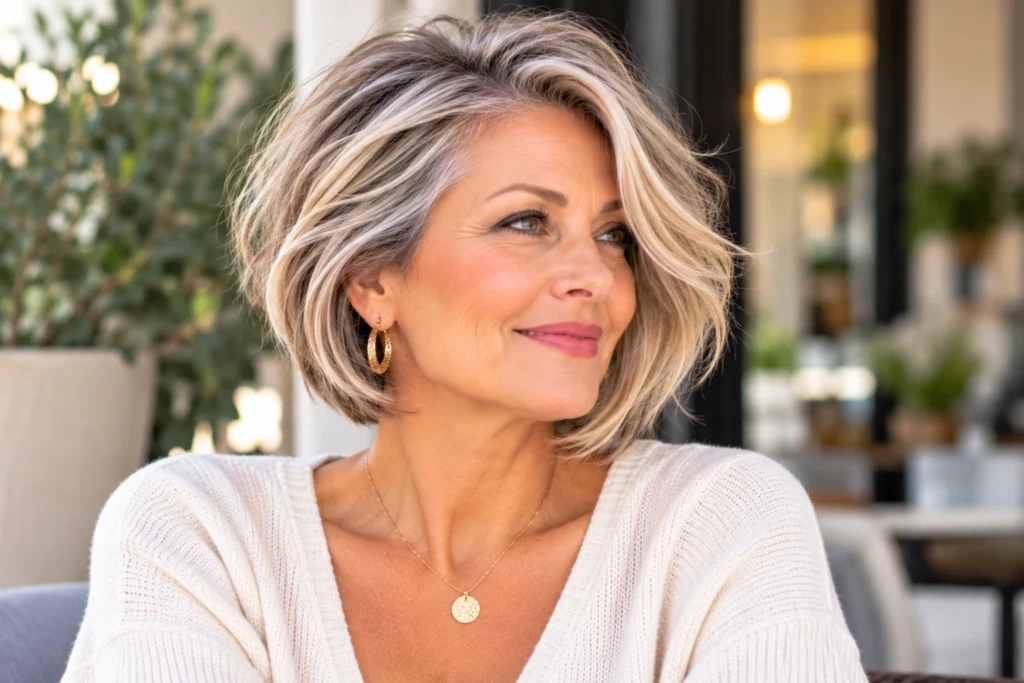
10. Short Shag with Wispy Layers
A short shag uses layers throughout the crown and sides to create an intentionally relaxed finish. Wispy pieces around the forehead and temples keep the shape from feeling too heavy. The cut often works well with natural waves, although straight hair can also wear it with the help of a light texturizing product. Ask for a version that suits your density so the layers do not leave the ends looking sparse.
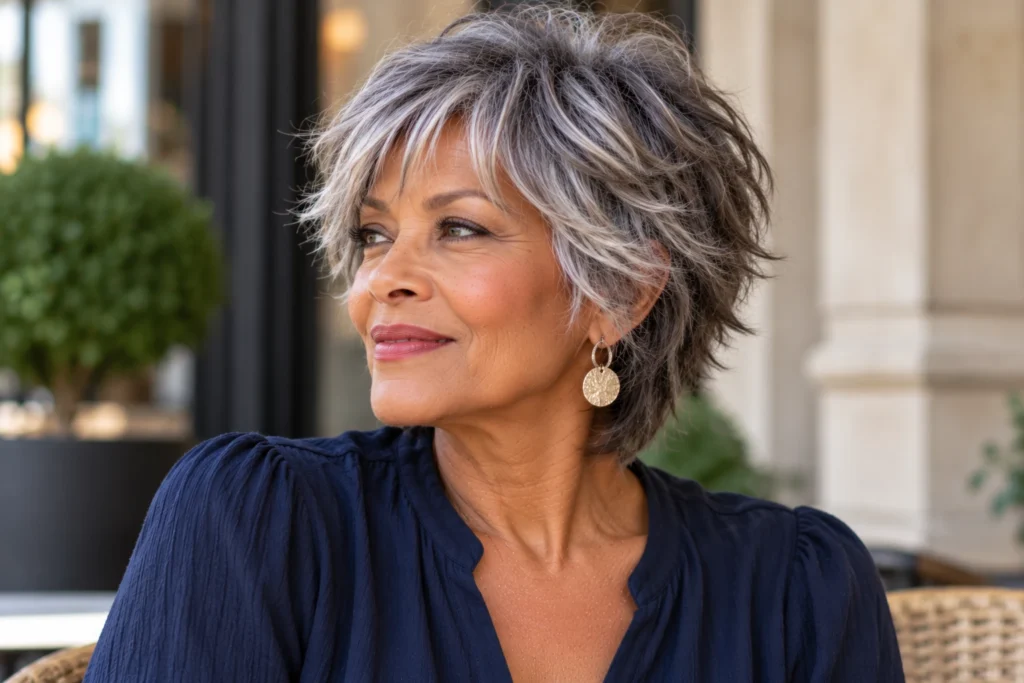
11. Feathered Short Bob
Feathered layers give a short bob a soft, airy finish. Rather than forming a blunt edge, the ends are shaped to move away from or toward the face. This can add lightness to thick hair and gentle movement to straighter textures. A round brush or a quick blow-dry with the fingers can help define the feathered direction.
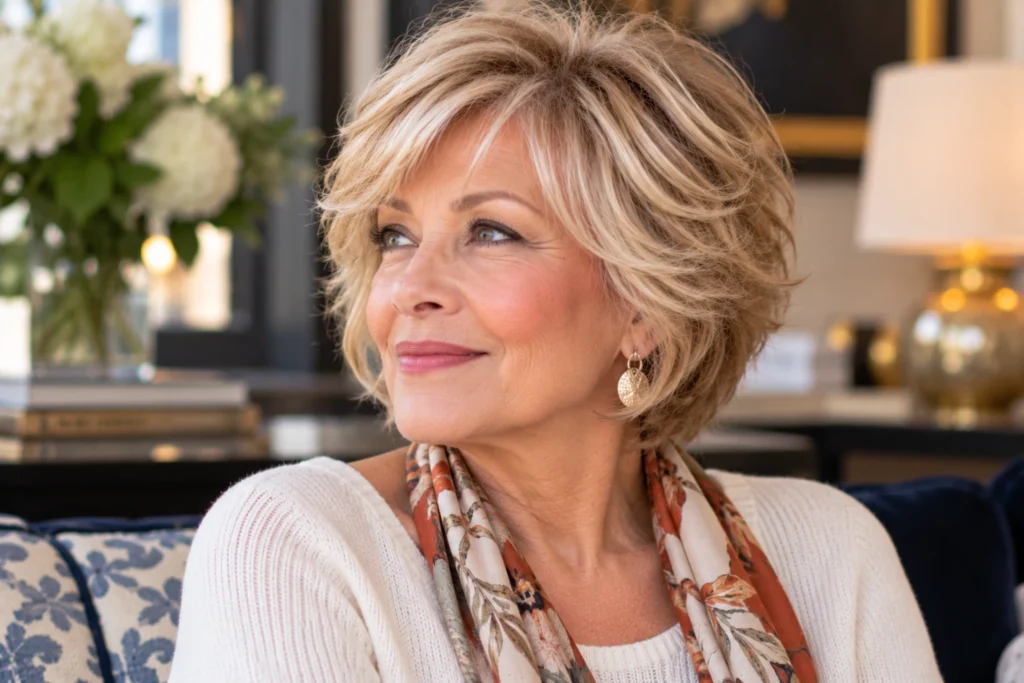
12. Wavy Short Bob
A wavy short bob embraces natural bends instead of trying to make every strand lie flat. A length around the jaw or slightly below can give waves room to form, while subtle layers help distribute volume. Use a lightweight curl or wave product and allow the hair to dry naturally when possible. Your stylist should account for how much the hair springs up when dry.
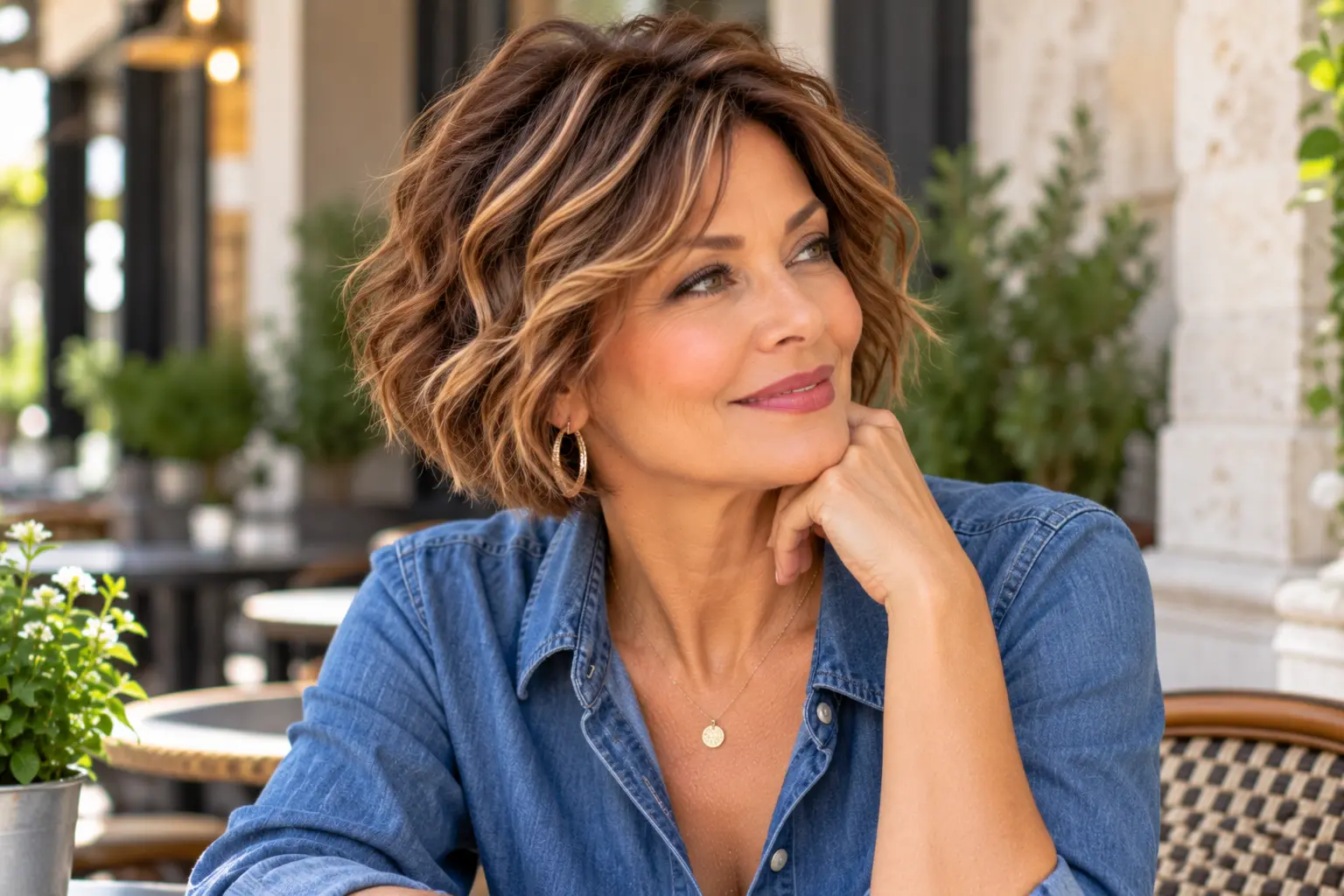
13. Curly Short Bob
A curly bob can look lively and full of personality when it is shaped for your curl pattern. The most important detail is the balance between the crown, sides, and perimeter. A stylist experienced with curls can assess the hair dry or use a curl-aware cutting method to avoid unexpected shrinkage. Keep the routine focused on moisture and gentle definition rather than heavy products that weigh curls down.
14. Layered Bob with Curtain Bangs
Curtain bangs part near the center and blend outward into the sides. On a layered bob, they create a soft frame that can be adjusted to sit around the cheekbones or grow into longer face-framing pieces. This look usually needs some styling at the front, especially if your hair has a strong growth pattern. Ask for bangs that can still be tucked away on days when you prefer an open forehead.
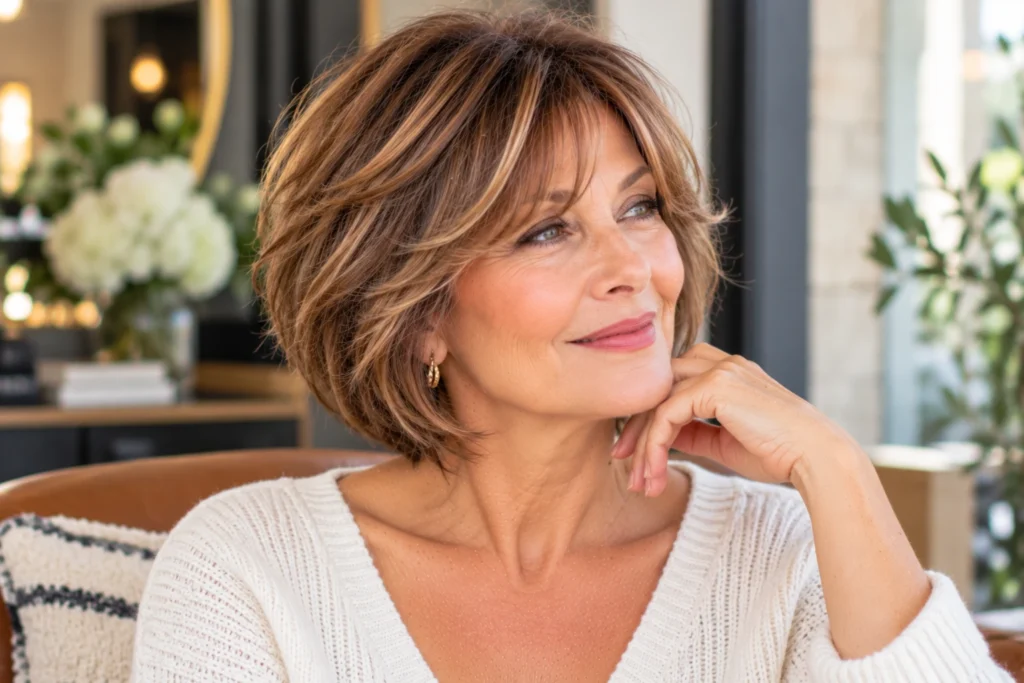
15. Silver Textured Pixie-Bob
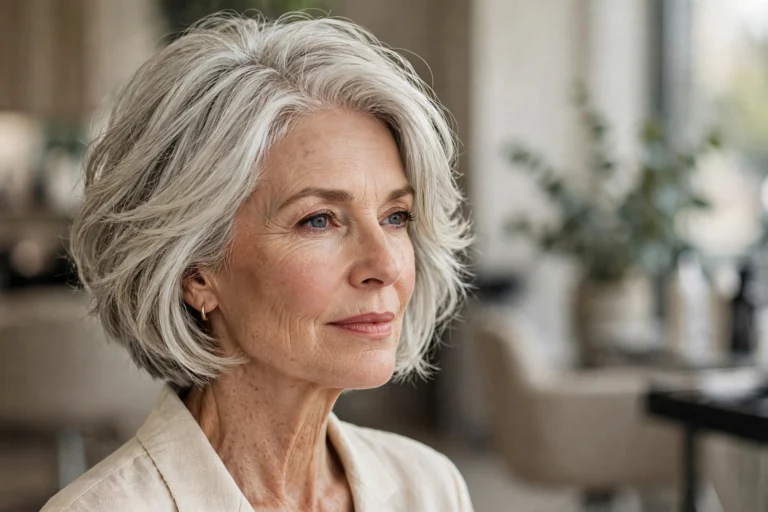
A silver pixie-bob combines a short nape with longer, textured sections through the top and front. It lets natural gray or silver tones become part of the overall style rather than something to disguise. You can emphasize texture with a small amount of styling paste, while a soft side part offers another option. The best length and layering pattern depend on your hair density and how your silver hair grows.
Choosing a Short Cut for Your Hair Type
Fine hair
For fine hair, ask for a shape that preserves fullness at the ends. A soft pixie, compact bob, or lightly layered bixie may be easier to style than a cut with many disconnected layers. Avoid removing too much weight if your hair already looks thin at the perimeter. If you want more ideas, explore our guide to short haircuts for women over 50 with fine hair.
Thick hair
Thick hair can hold sculpted shapes, but it may become wide or bulky if the internal weight is not managed. A layered bob, angled bob, or textured pixie can work when the layers are placed carefully. Tell your stylist whether you prefer a smooth finish or want to keep your natural volume.
Wavy and curly hair
Waves and curls bring built-in movement. Choose a cut that works with the natural pattern and ask how the shape will look once the hair dries and contracts. A curly bob or short shag can be expressive, while a longer pixie may be easier if you prefer less length to manage.
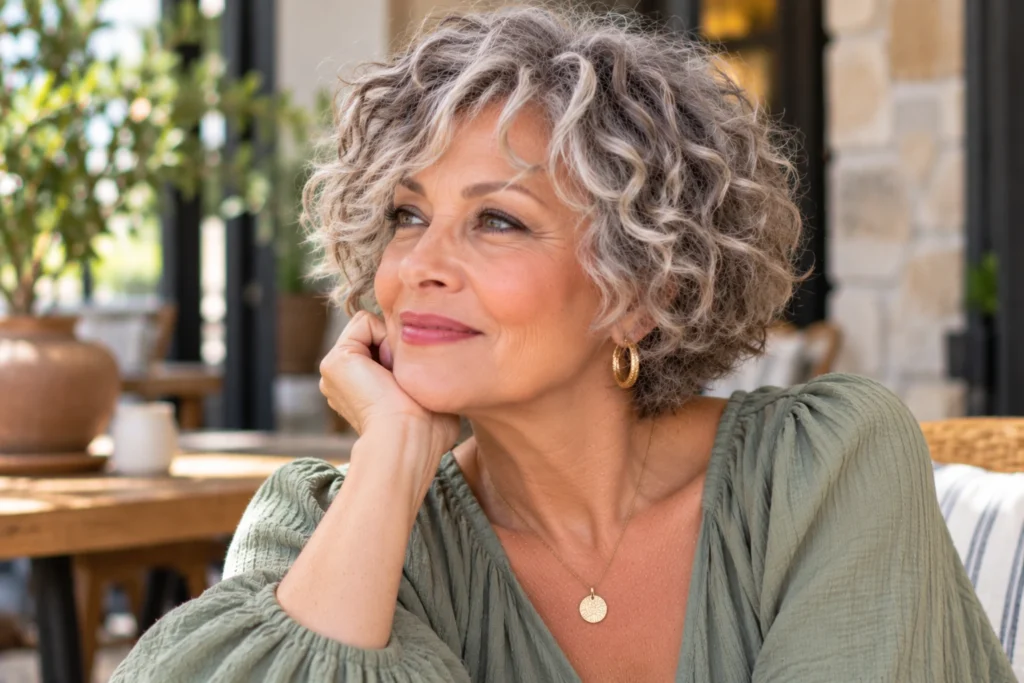
Gray and silver hair
Gray and silver hair can be styled in any of these silhouettes. Texture, shine, and the condition of the ends are more important than the color itself. Use products suited to your hair’s needs, and ask your stylist whether the cut should be adjusted for changes in density or coarseness.
Short Hairstyles with Bangs: What to Consider
Bangs can change the character of a short haircut, but they are not essential for a round face. Side-swept bangs offer a diagonal line and are often flexible to style. Curtain bangs create a parted frame and can blend into a bob. Wispy bangs keep the forehead area lighter, while a textured fringe gives a pixie a more casual finish.
Before choosing bangs, consider your hairline, cowlicks, forehead height, and how much time you want to spend styling. Ask your stylist to start with a longer version if you are unsure. You can always shorten the fringe at a later appointment.
How to Maintain a Short Haircut After 50
Short hair can be quick to style, but its outline may become noticeable as it grows. The time between trims depends on the haircut and how precise you want it to look. Cropped pixies often need more frequent shaping than a longer bob. Ask your stylist for a maintenance schedule that fits your budget and routine. For general advice on keeping your hair and scalp healthy, see the American Academy of Dermatology’s hair-care guidance.
Use a shampoo and conditioner suited to your scalp and hair texture. Apply styling products sparingly, particularly if your hair is fine. A lightweight mousse can add body, while a small amount of cream or paste can define layers. Heat protectant is useful whenever you use hot tools, and a lower heat setting may help limit unnecessary damage.
If you prefer a low-effort routine, choose a haircut that works with your natural texture and ask your stylist to demonstrate a simple everyday finish. You may also like our guide to low-maintenance short hairstyles for women over 50.
What to Ask Your Hairstylist Before Choosing a Cut
- How will this shape sit around my cheekbones and jawline?
- Will the cut work with my natural texture and hair density?
- How much daily styling will it need?
- Where will the shortest and longest sections fall when my hair is dry?
- How often will I need a trim to maintain the shape?
- Can you show me a softer or longer version before cutting it shorter?
Bring a few reference photos, but remember that the same haircut can look different depending on hair texture, density, and styling. A good consultation adapts the idea to your features rather than copying a photograph exactly.
Frequently Asked Questions
What is the best short haircut for a woman over 50 with a round face?
There is no single best cut for everyone. A side-swept pixie, layered bixie, angled bob, or short shag may be worth considering, depending on your hair texture, density, and preferred styling routine. These flattering short haircuts for round faces over 50 are starting points, not strict rules; choose the silhouette that feels comfortable and works with your natural hair.
Are pixie cuts suitable for round faces?
Yes. Pixie cuts can be adapted with a longer fringe, soft side sections, or texture at the crown. The details matter more than the haircut label, so ask your stylist to tailor the proportions to your features.
Should women with round faces avoid chin-length bobs?
No. A chin-length bob can be a good choice when its shape and layers are customized. Consider a side part, soft movement, or longer front pieces if you want a less solid outline around the jaw.
Are bangs a good idea for a round face?
Bangs can work well, but the right type depends on your features and hairline. Side-swept, curtain, and wispy bangs are flexible options. Discuss the amount of styling they require before choosing a fringe.
Which short hairstyles work well for fine hair and a round face?
A soft pixie, long pixie, or compact layered bob may work if the cut preserves enough fullness. Avoid removing too much weight from the ends, and ask for layers that support your hair rather than making it look sparse.
Can naturally curly hair be cut into a short bob?
Yes. A curly short bob can be shaped around your curl pattern. Ask a stylist experienced with curls to account for shrinkage and how the hair sits when dry.
How often should a short hairstyle be trimmed?
It depends on the cut and how defined you want its outline to remain. A closely cropped pixie usually needs shaping more often than a longer bob. Your stylist can recommend a schedule based on your specific haircut and rate of growth.
Find a Short Hairstyle That Feels Like You
The most successful short hairstyle is one that suits your hair, fits your routine, and makes you feel comfortable. A round face does not rule out pixies, bobs, shags, bangs, or textured cuts. Compare the 15 ideas, think about the details you like, and work with your hairstylist to adapt the shape to your features. A few thoughtful adjustments can make a familiar haircut feel distinctly your own.