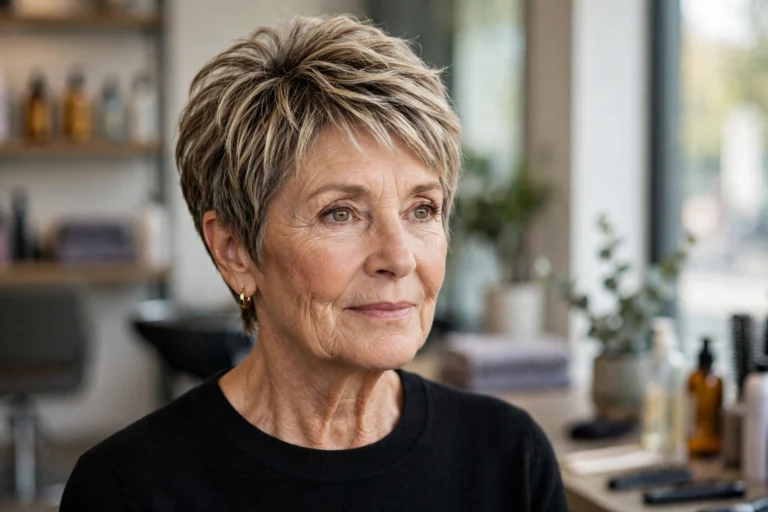
Modern Shag Haircuts for Women Over 50: 17 Soft, Wearable Ideas
Modern shag haircuts for women over 50 offer a flattering way to add movement, texture, and softness without sacrificing everyday wearability. From layered shags with curtain bangs to shorter, textured cuts, these 17 ideas can help you find a style that suits your hair type and personal taste.
A modern shag haircut can add movement, texture, and a relaxed shape without making hair look overly styled. For women over 50, the most wearable versions are not necessarily the shortest or most heavily layered. They are tailored to your hair’s density, natural bend, face-framing preferences, and how much time you want to spend styling.
This guide focuses on soft, adaptable shag variations, what to ask your stylist for, and how to maintain the shape between appointments. If your main concern is fine hair, also explore our guide to short haircuts for women over 50 with fine hair. Use the ideas as inspiration rather than strict templates: the same haircut can look different depending on hair texture, density, and length.
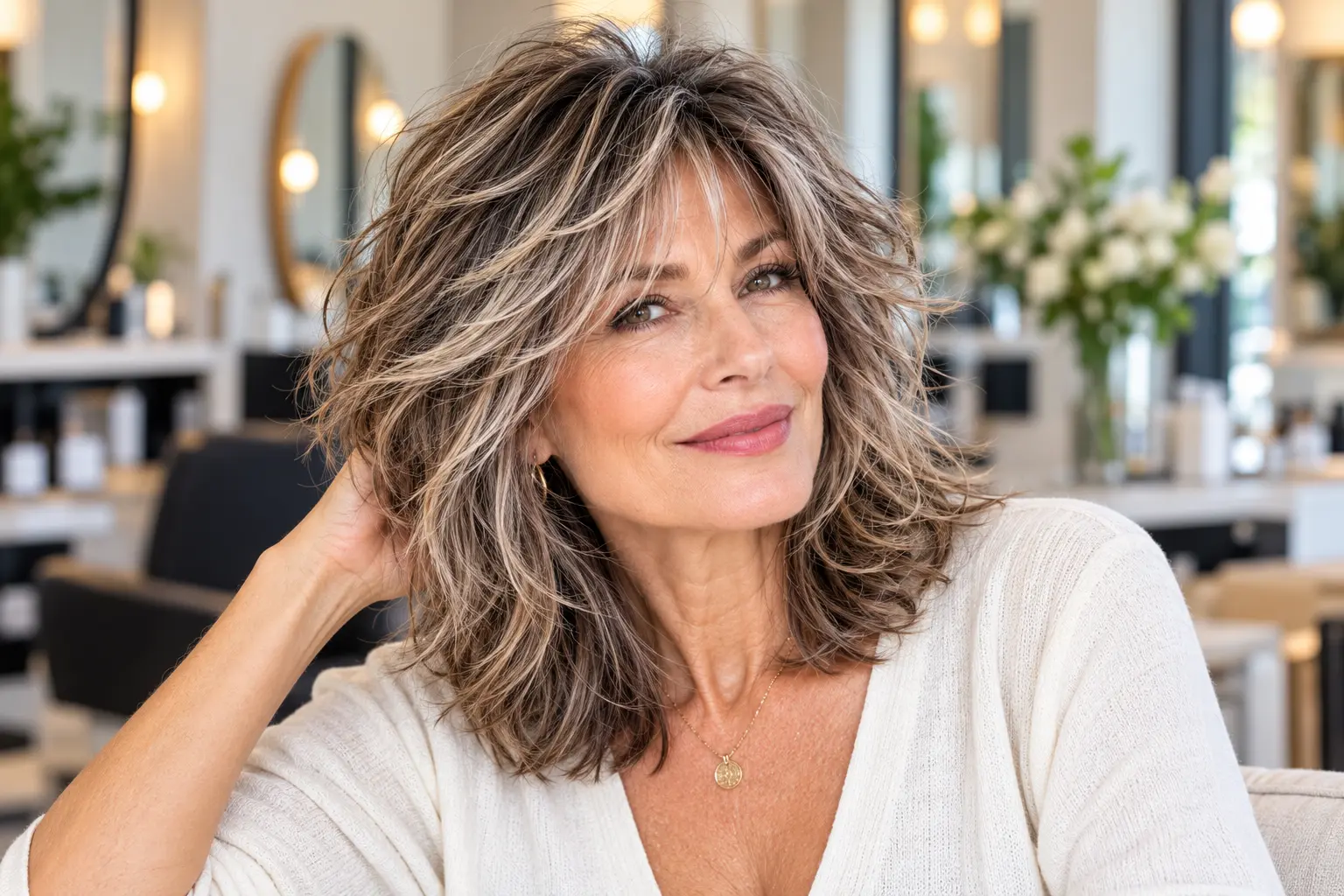
Table of Contents
What makes a modern shag different?
A modern shag hairstyle for women over 50 usually combines shorter layers around the crown and face with longer, blended lengths. The result is movement and a slightly undone finish. Compared with a strongly layered retro shag, today’s versions can be softer, more polished, and easier to adapt to fine, thick, straight, wavy, or curly hair.
- Soft layers: create movement without removing too much fullness.
- Face-framing pieces: help the haircut blend around the cheekbones and jaw.
- Flexible fringe: curtain bangs, wispy bangs, or no fringe can all work.
- Natural texture: the cut should work with your usual styling habits, not against them.
17 modern shag haircut ideas
1. Soft shoulder-length shag
A shoulder-grazing shape with long, blended layers is a versatile starting point. It adds movement to straight or wavy hair while keeping enough length to tuck behind the ears or tie back.
2. Shag with curtain bangs
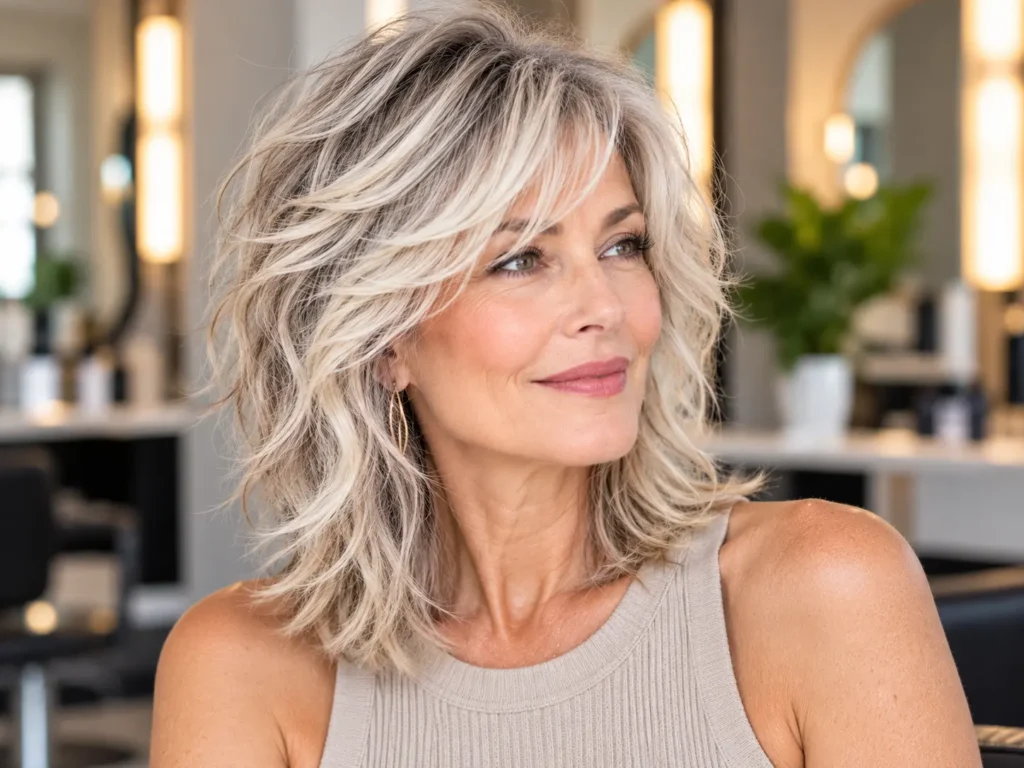
Longer curtain bangs open around the center part and blend into cheekbone-length layers. Ask for a fringe that can be swept aside on days you do not want to style it forward.
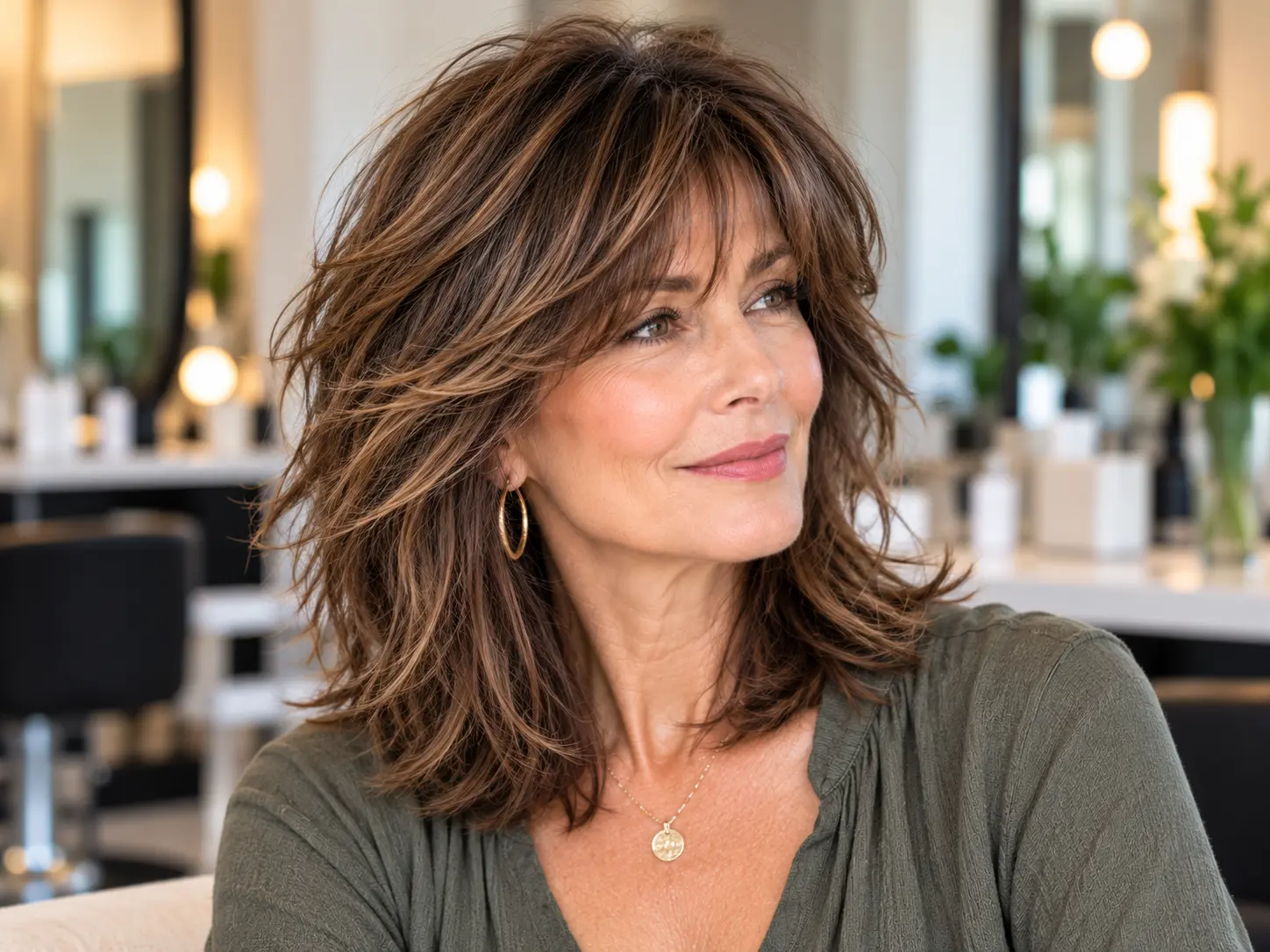
3. Collarbone shag
This mid-length version sits around the collarbone and can feel lighter than a one-length cut. It suits people who want visible shape without committing to a short haircut.
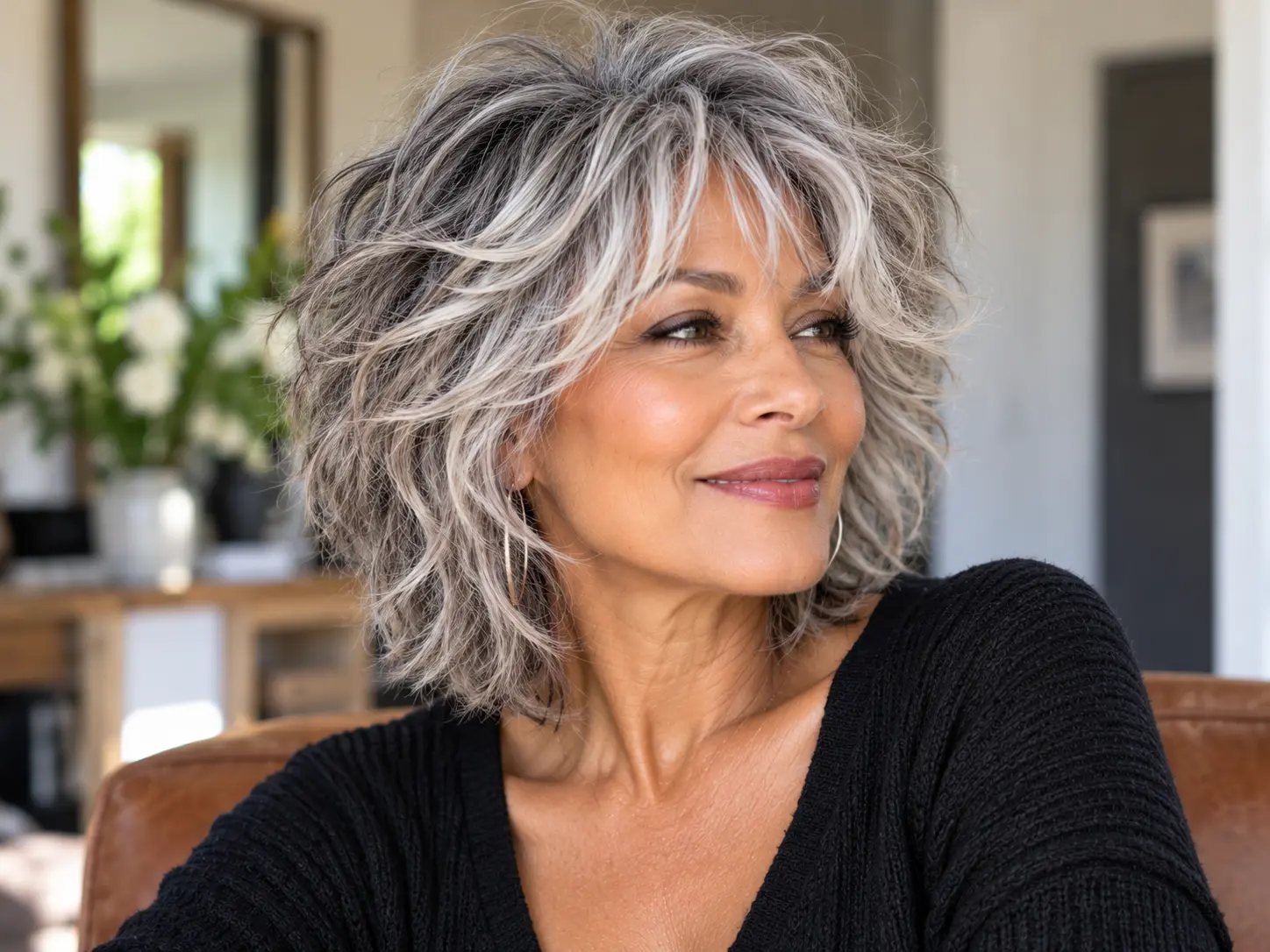
4. Soft shag for fine hair
Fine hair often benefits from fewer, more strategic layers rather than aggressive thinning. Keep the perimeter relatively full and let the stylist add subtle movement around the crown and front.
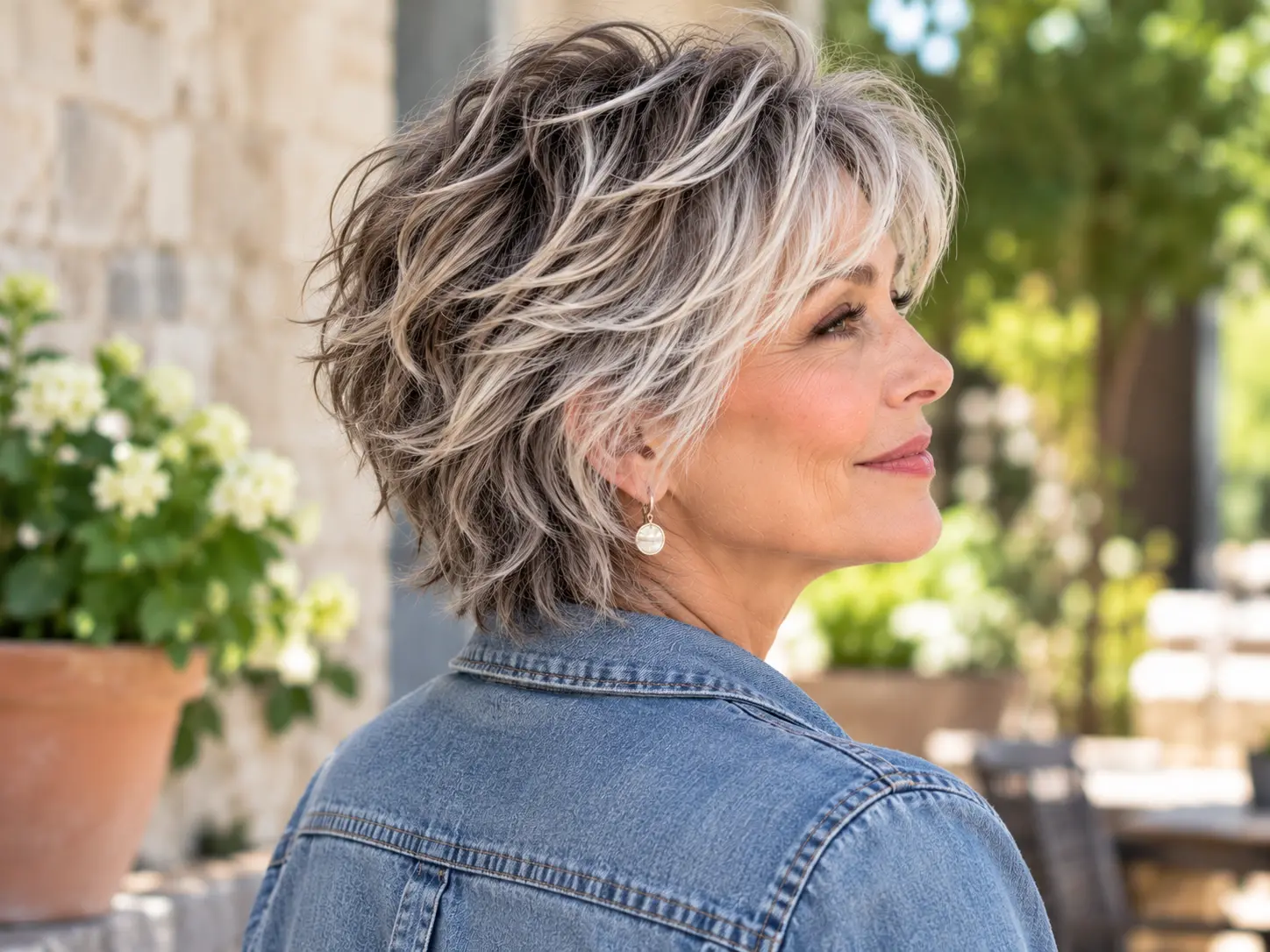
5. Airy shag for thick hair
For dense hair, internal layers can reduce bulk while preserving a balanced outline. Ask your stylist to avoid over-thinning the ends if you want the haircut to keep its shape as it grows.
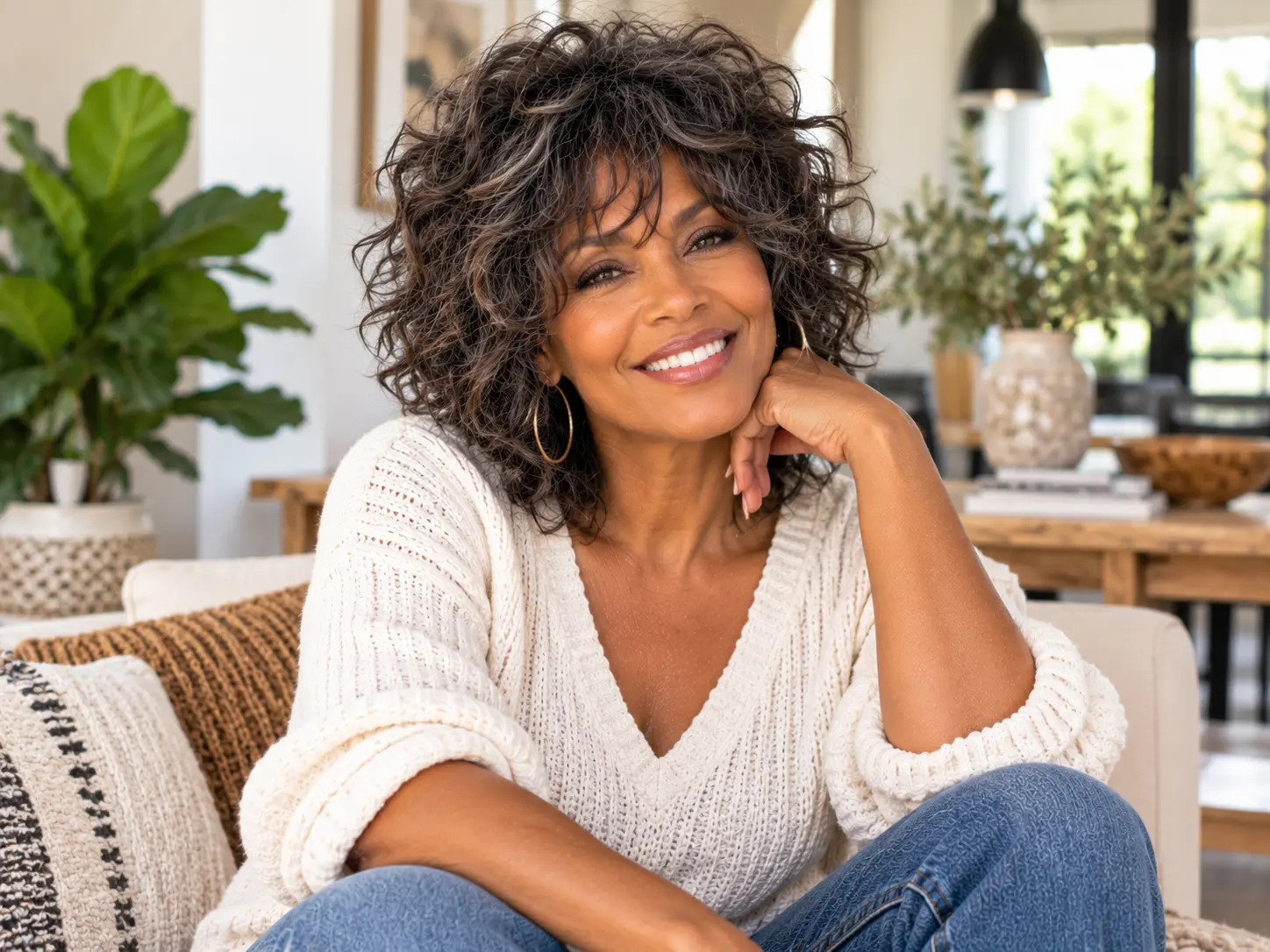
6. Wavy silver shag
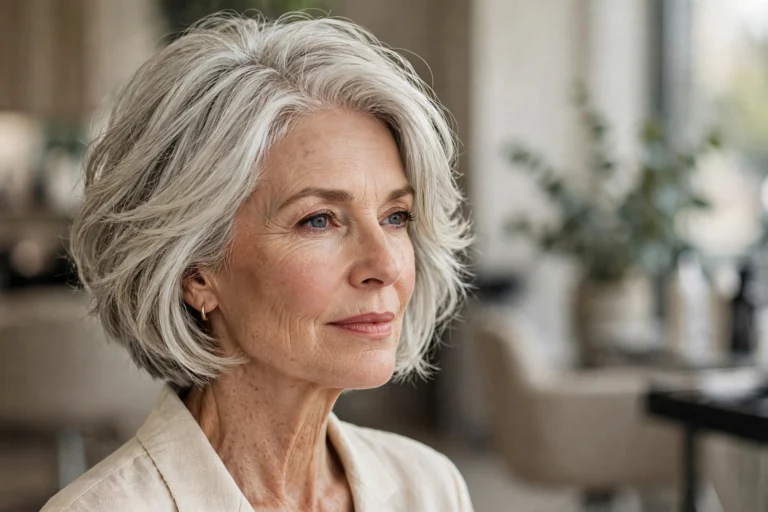
Natural waves and silver strands can give a shag beautiful texture. A light curl cream or mousse may be enough to define the wave pattern without making the finish stiff.
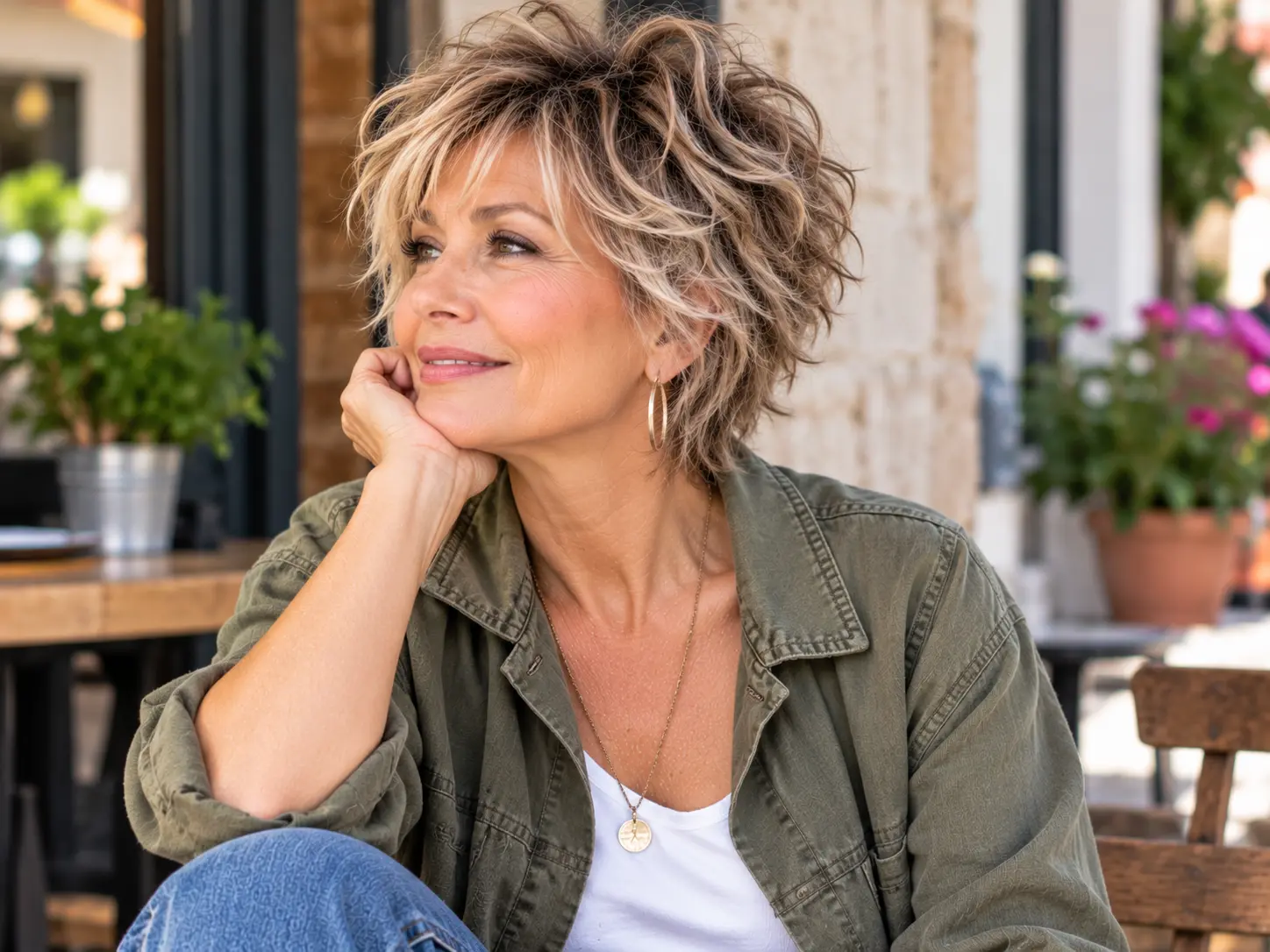
7. Long shag with face-framing layers
Keep the length below the shoulders and concentrate the shortest layers around the face. This is a useful option if you like long hair but want more movement.
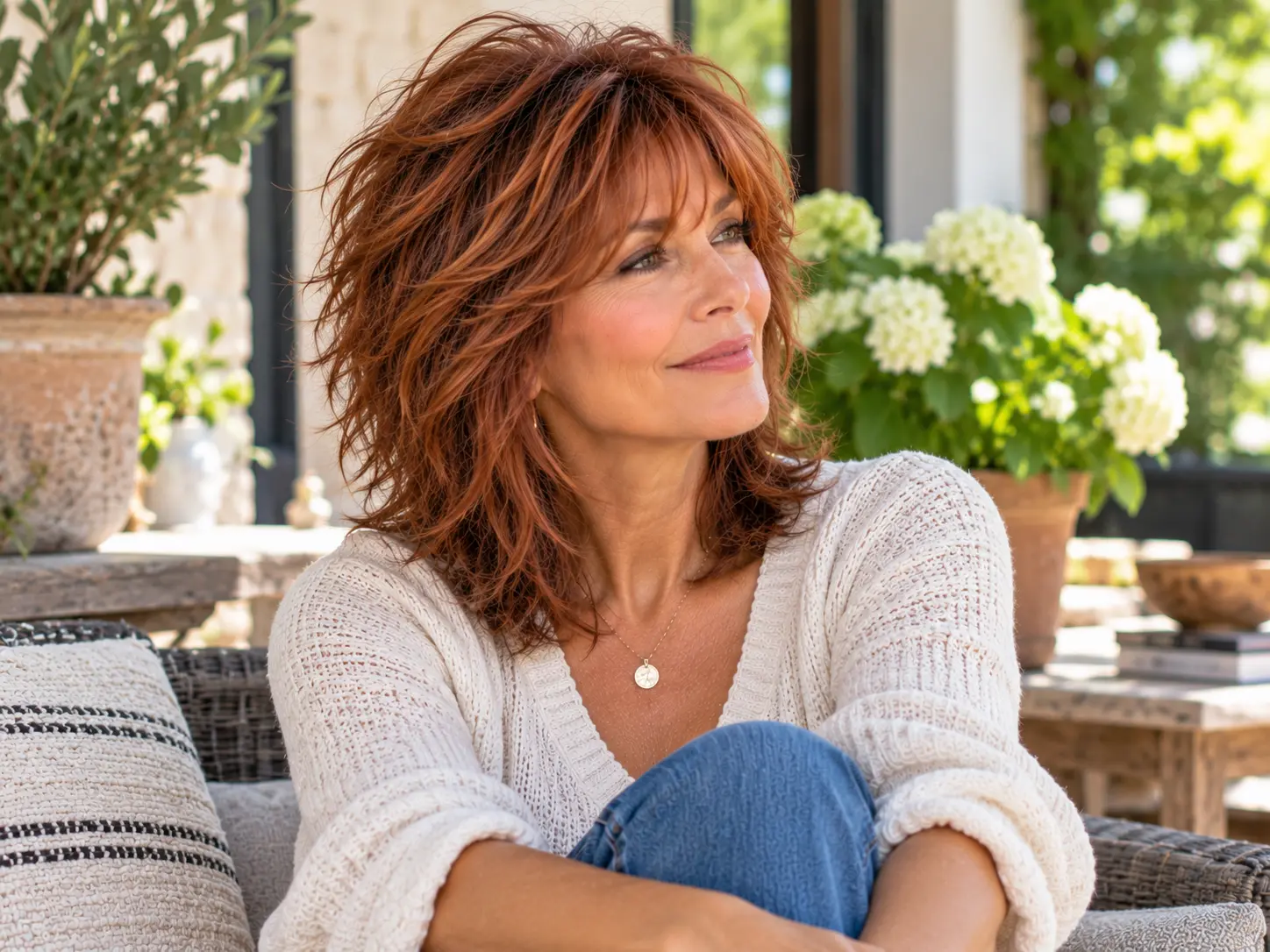
8. Shaggy lob
A long bob with shag-inspired layers offers structure at the ends and texture through the top. It is a good middle ground between a classic bob and a longer layered cut.
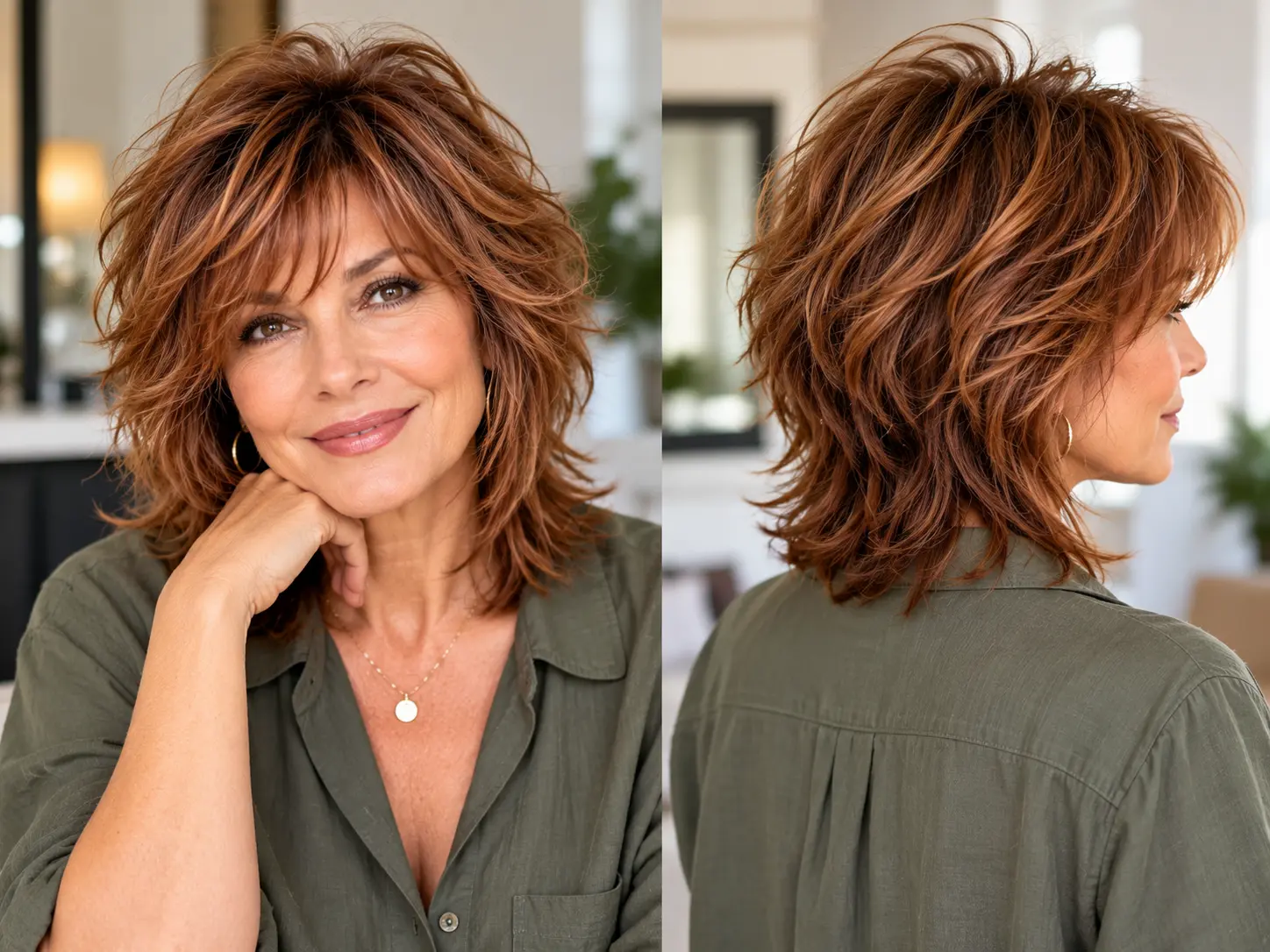
9. Shag with wispy bangs
Light, separated bangs create a softer finish than a dense blunt fringe. They may need a quick brush or blow-dry, so discuss how they will behave with your natural growth pattern.
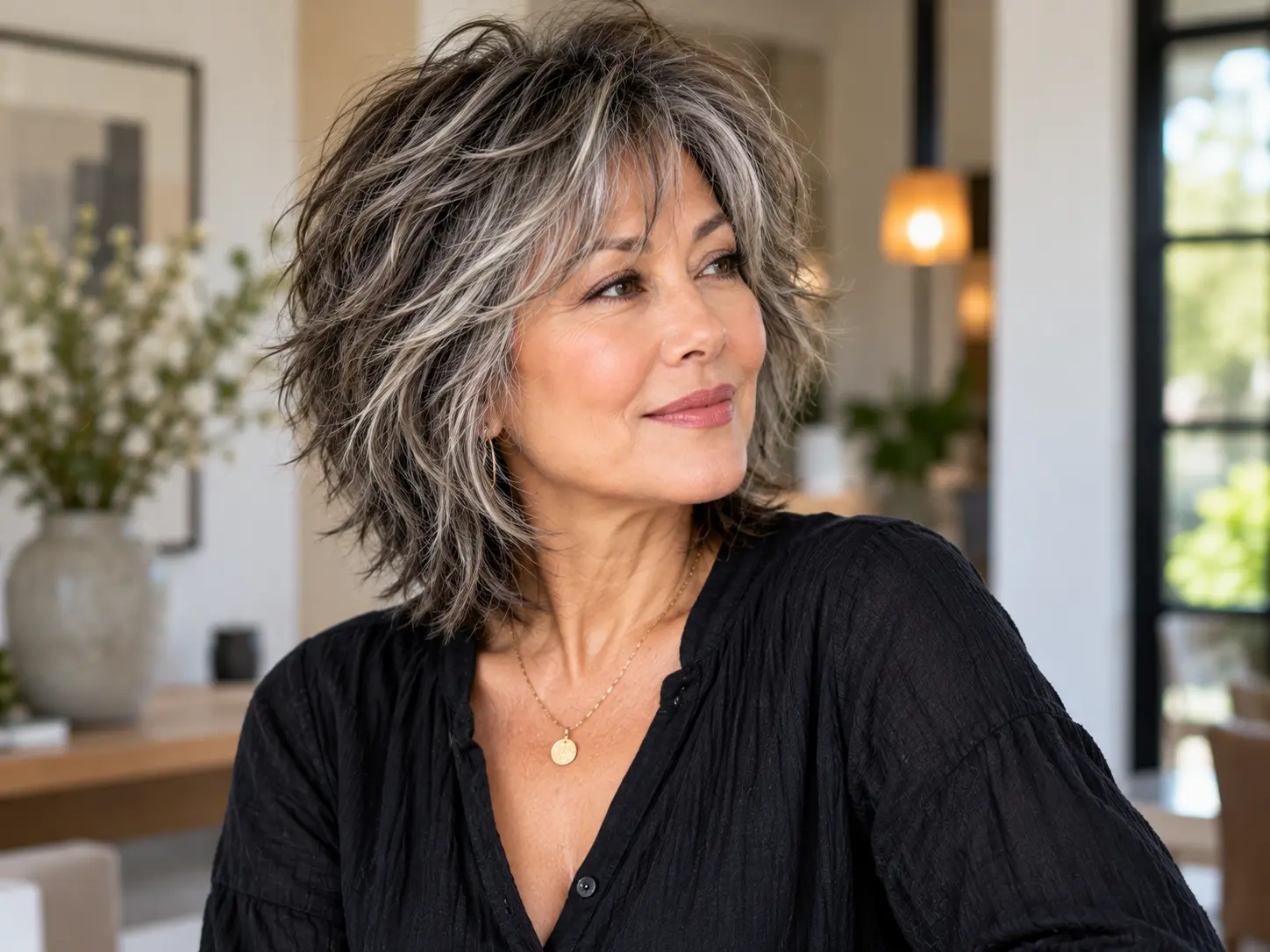
10. Curly shag
Curly hair needs layers planned around its spring and shrinkage. Ask for a dry-cutting or curl-aware approach if your stylist uses one, and confirm how the shape will sit when the curls are dry.
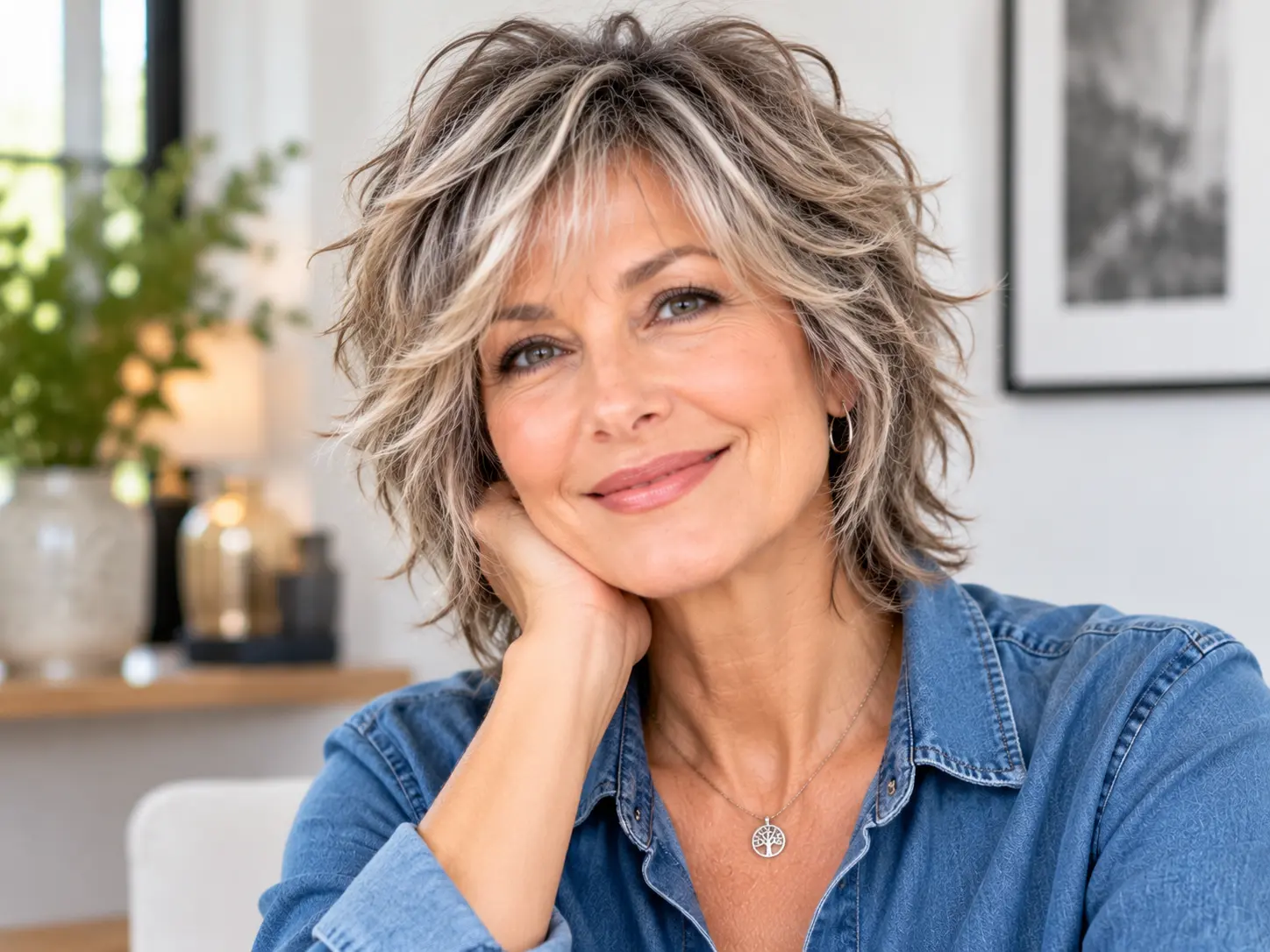
11. Shag with a side part
A side part can shift volume and give a familiar haircut a different feel. The stylist can adjust the fringe and front layers so the style still works when you change the part.
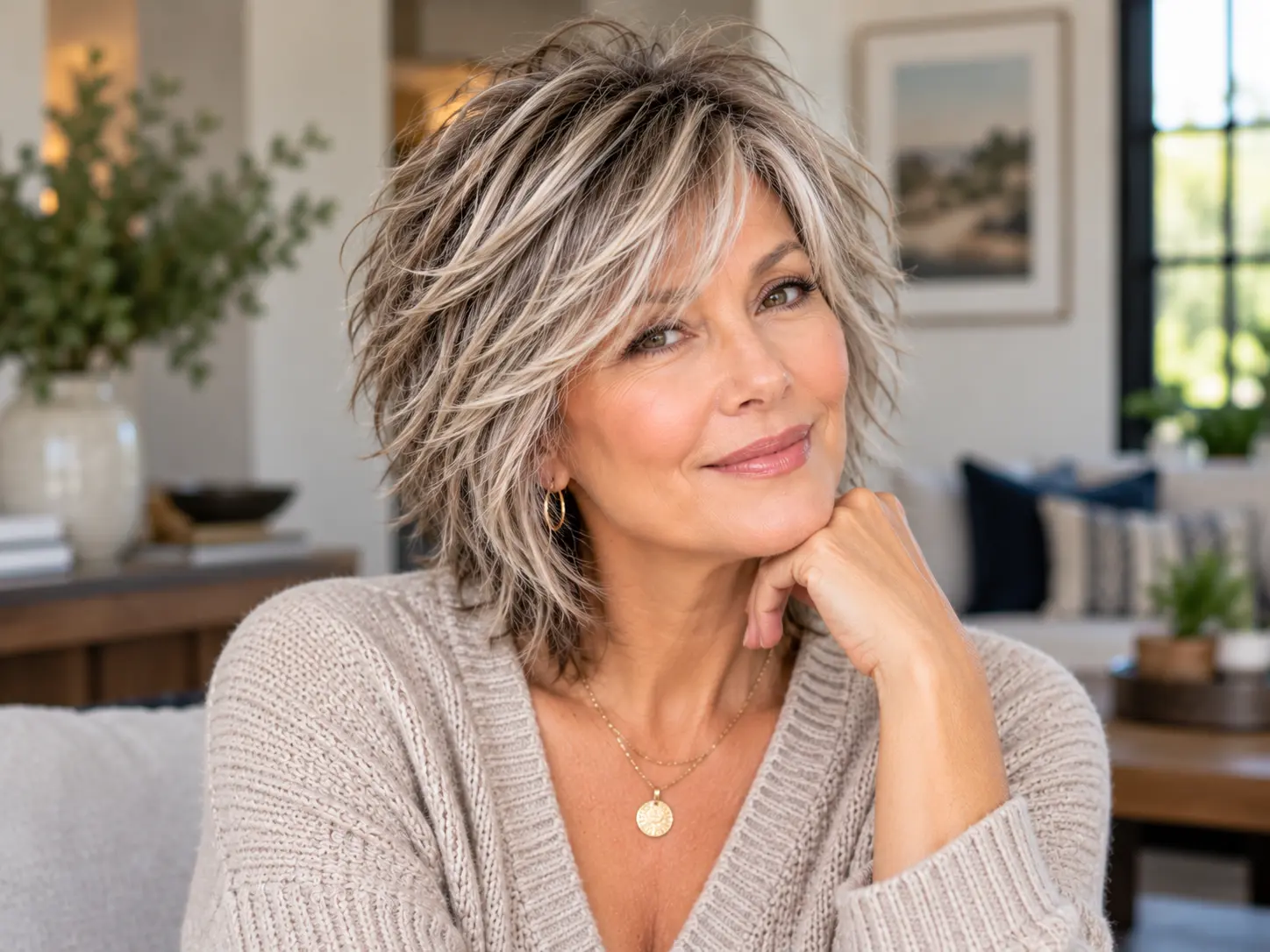
12. Polished soft shag
For a more classic finish, keep the layers blended and the ends smooth. A round brush or large-barrel brush can create gentle movement without a deliberately messy texture.
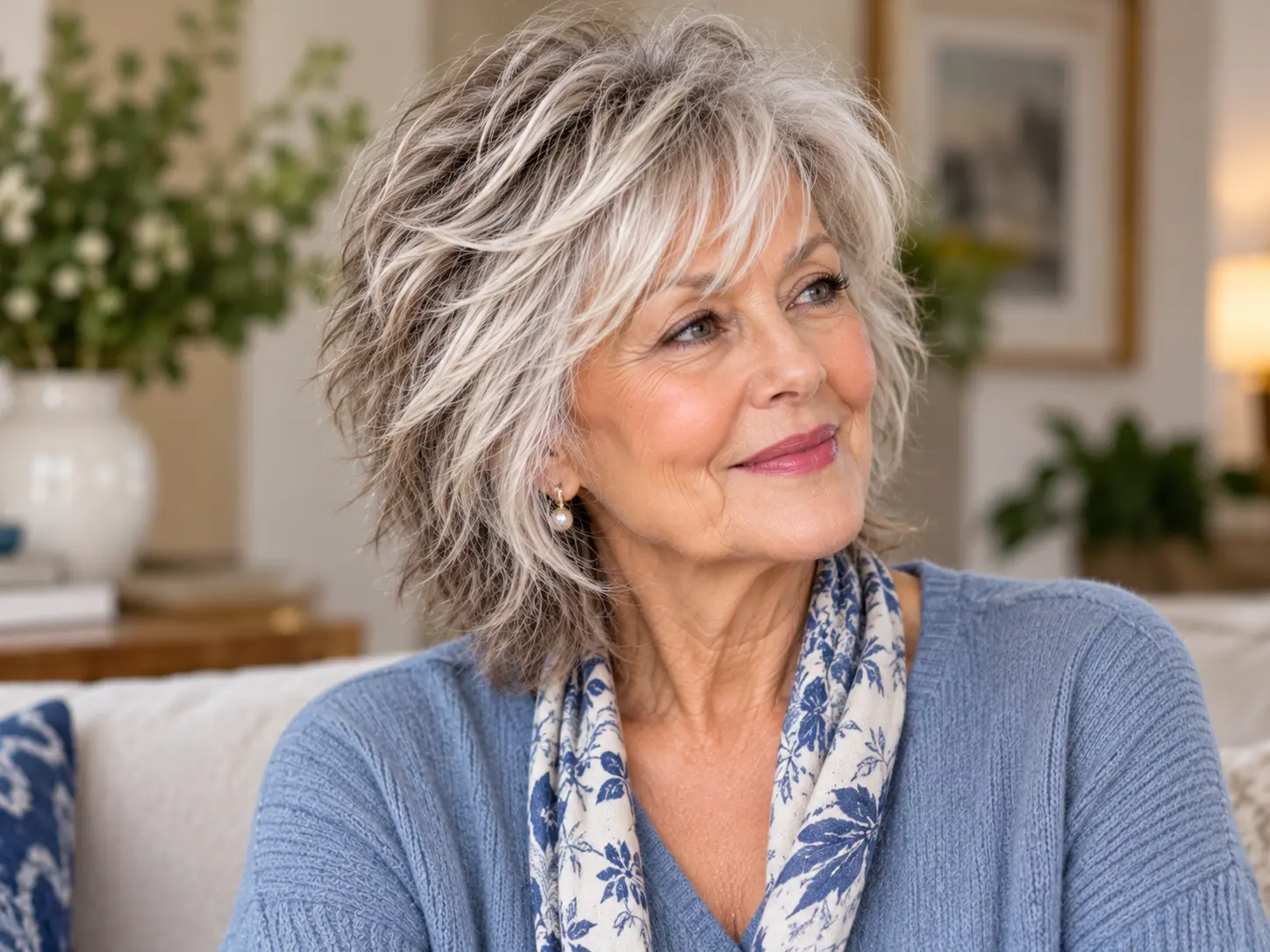
13. Textured short shag
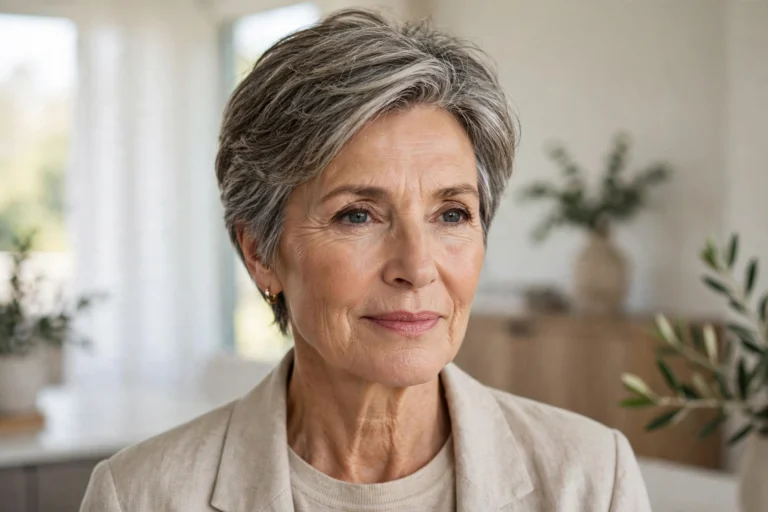
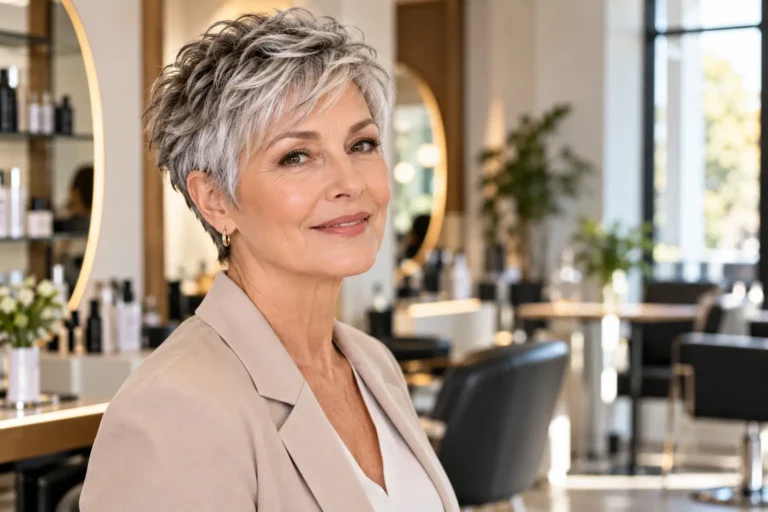
A shorter shag adds lift around the crown and texture near the ears and nape. It is best planned around cowlicks and hairline growth so the short pieces fall naturally.
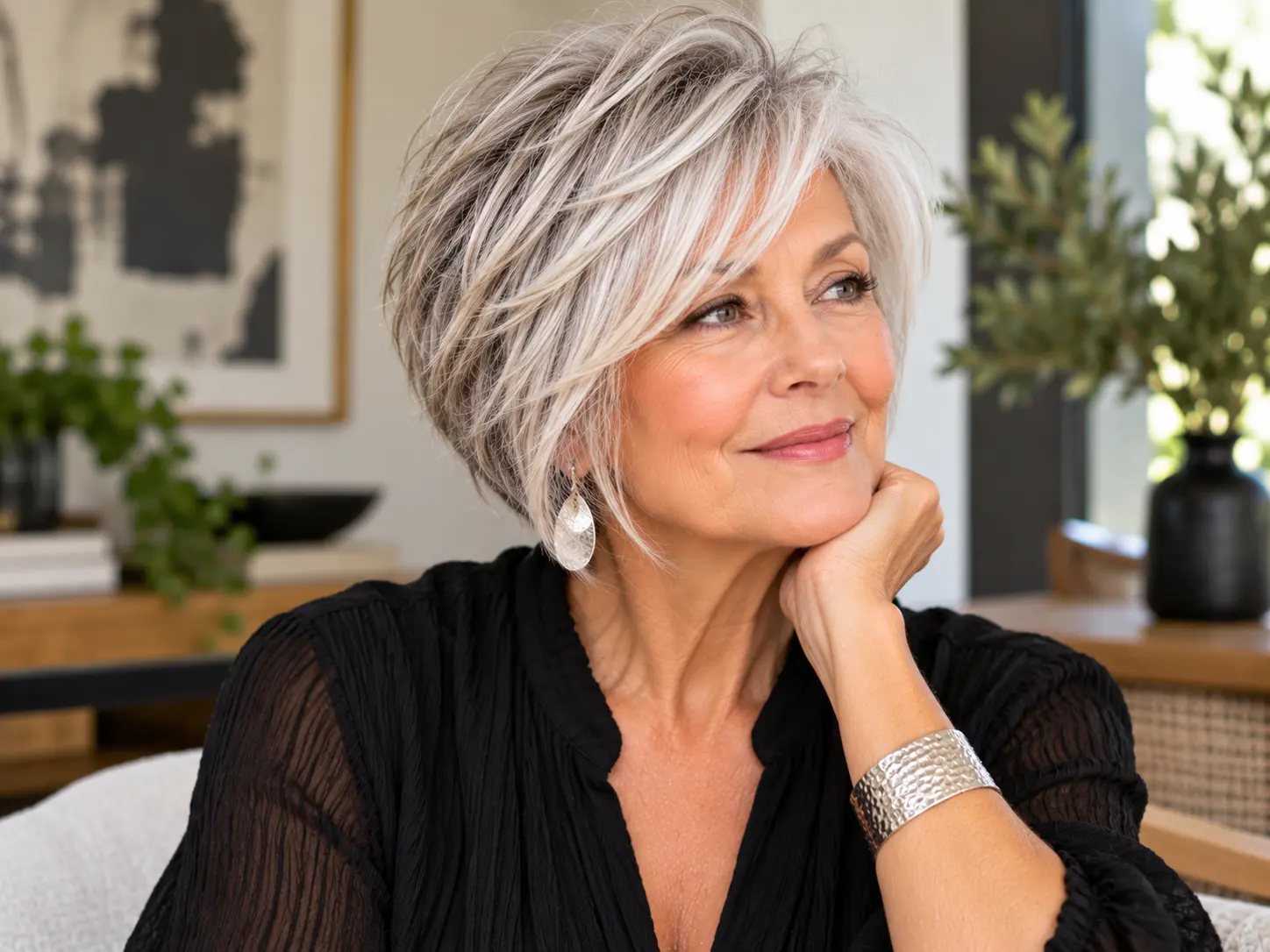
14. Shag with a long fringe
A longer fringe can be swept to either side and blended into the cheekbone layers. It offers flexibility if you are unsure about committing to traditional bangs.
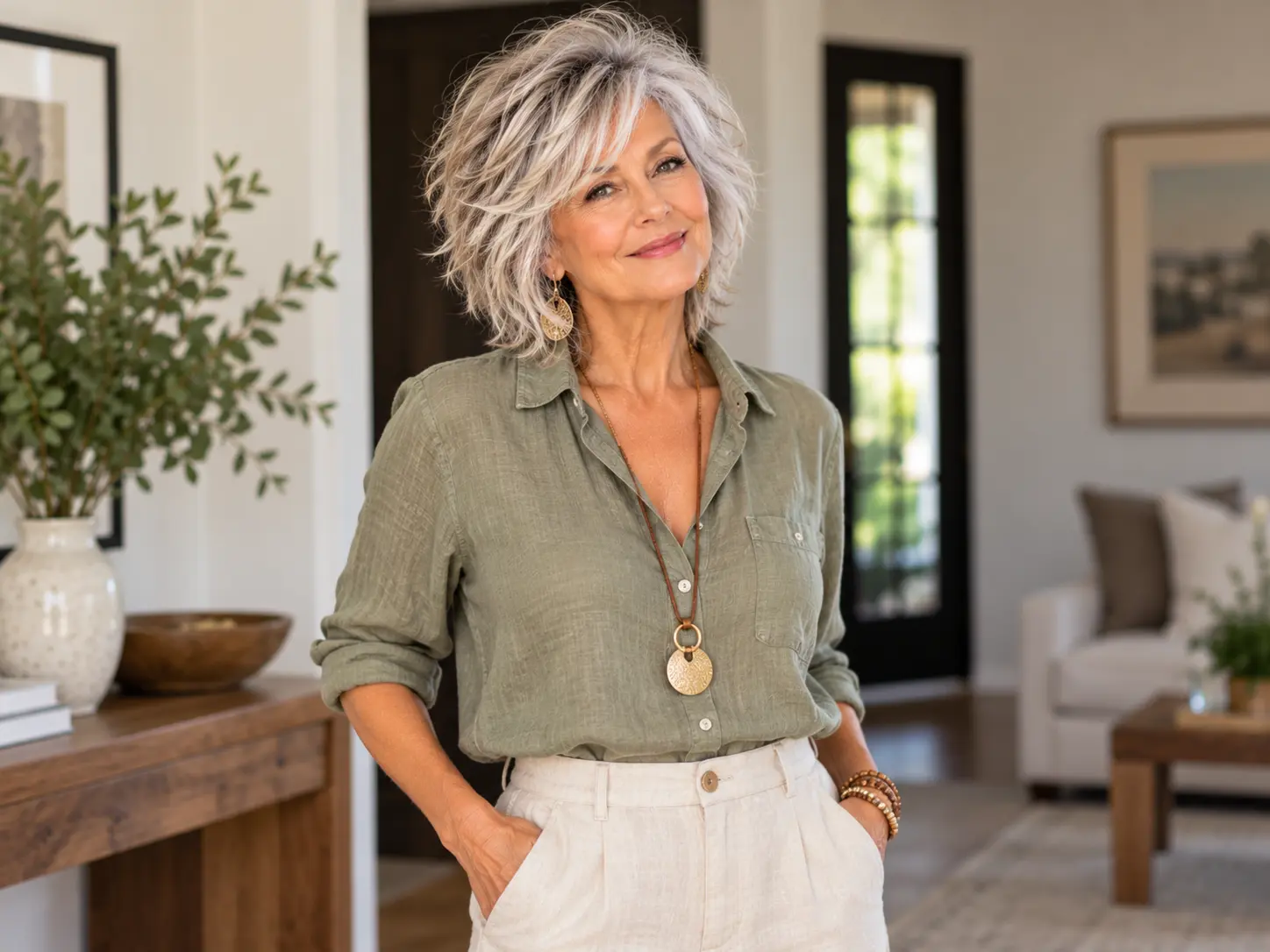
15. Low-maintenance air-dried shag
This version relies on a cut that supports your natural wave or bend. Ask your stylist to demonstrate a simple air-dry routine using a small amount of lightweight product.
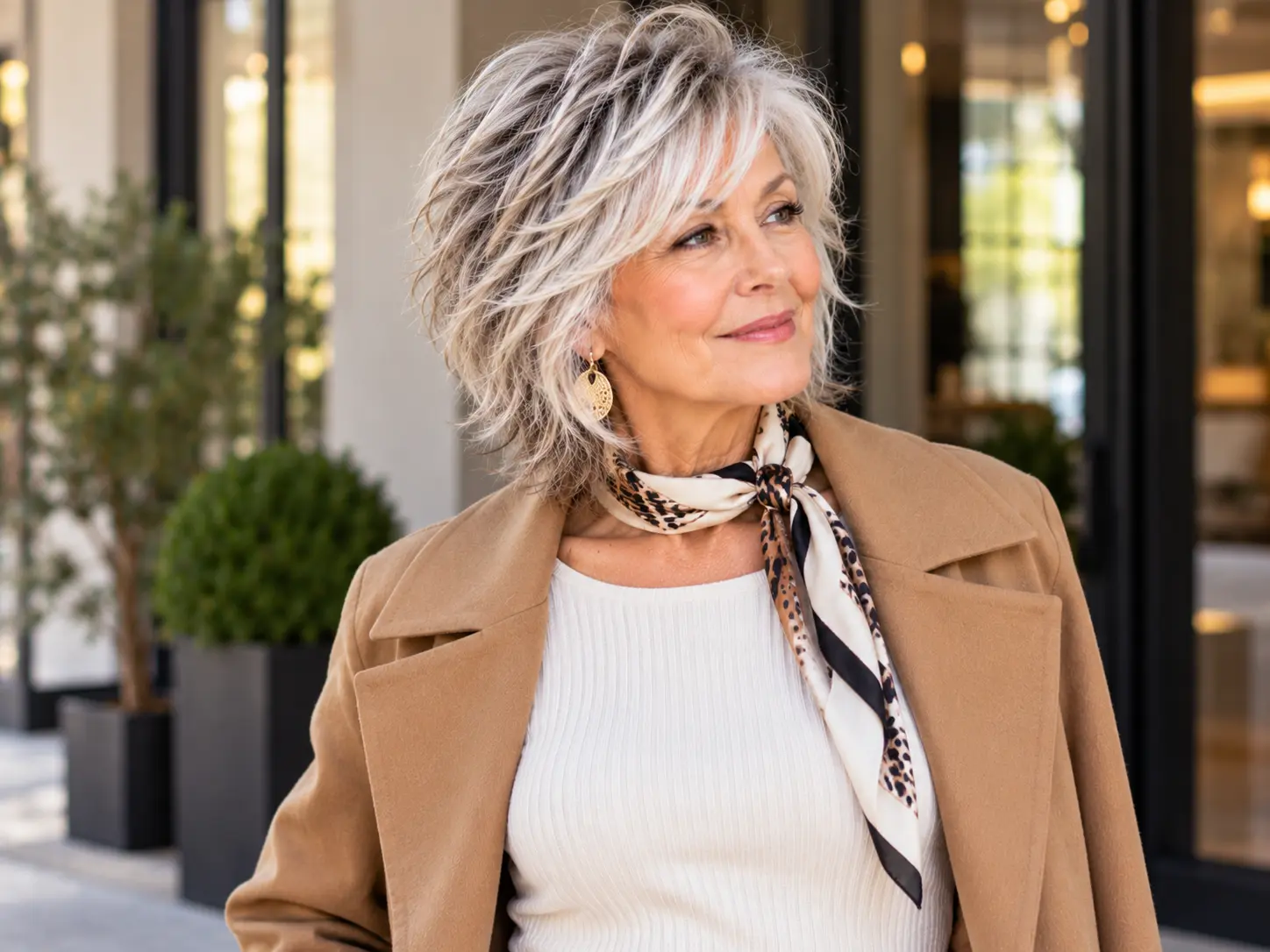
16. Shag for straight hair
On straight hair, the shape depends on precise layering and a balanced outline. Soft bends can be added with a blow-dryer or large curling iron, but the cut should still look intentional when worn straight.
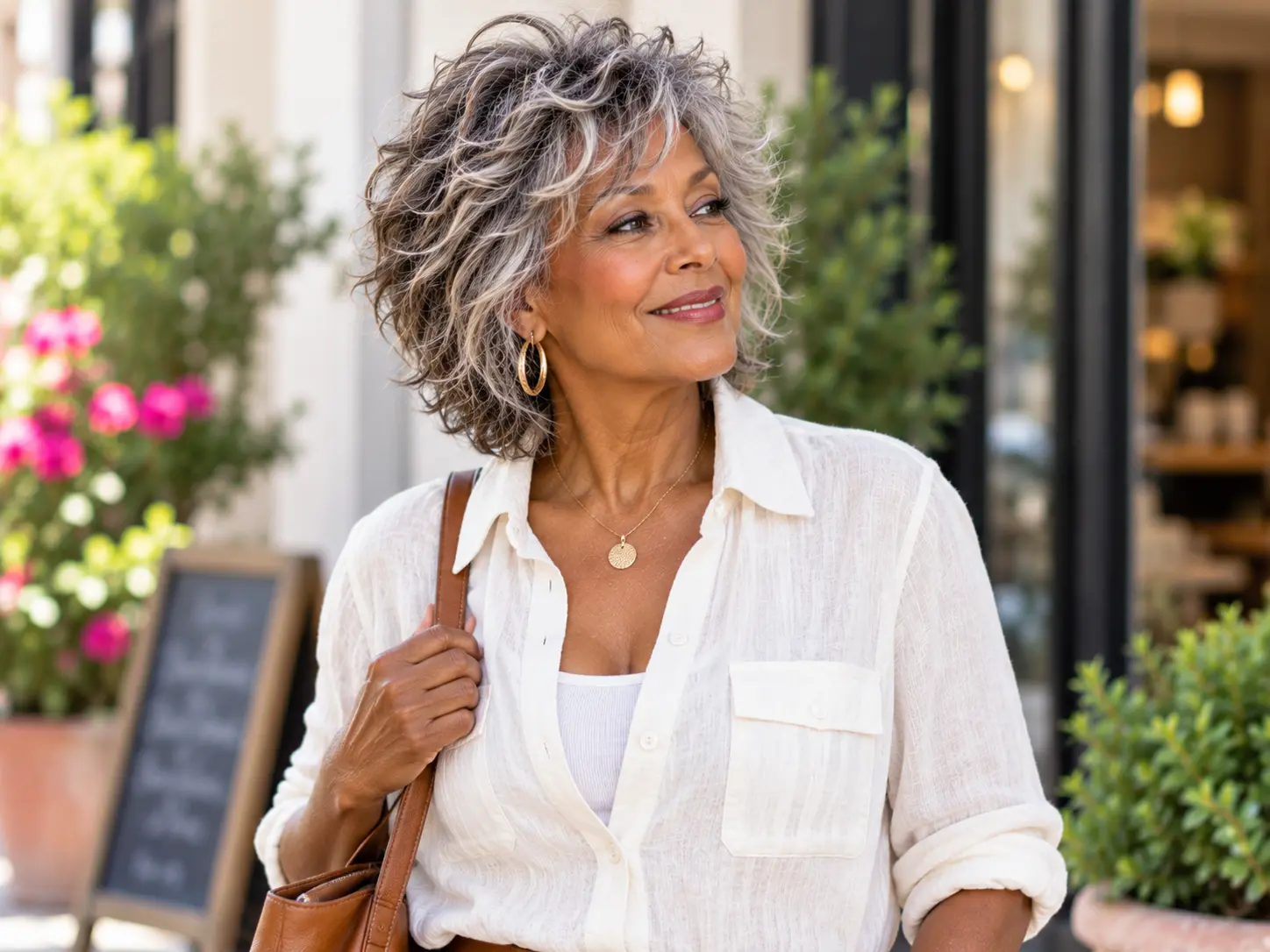
17. Soft shag with subtle highlights
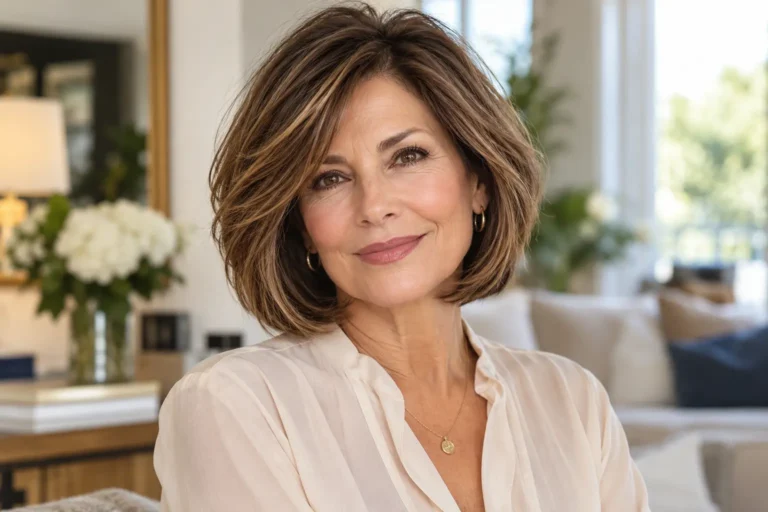
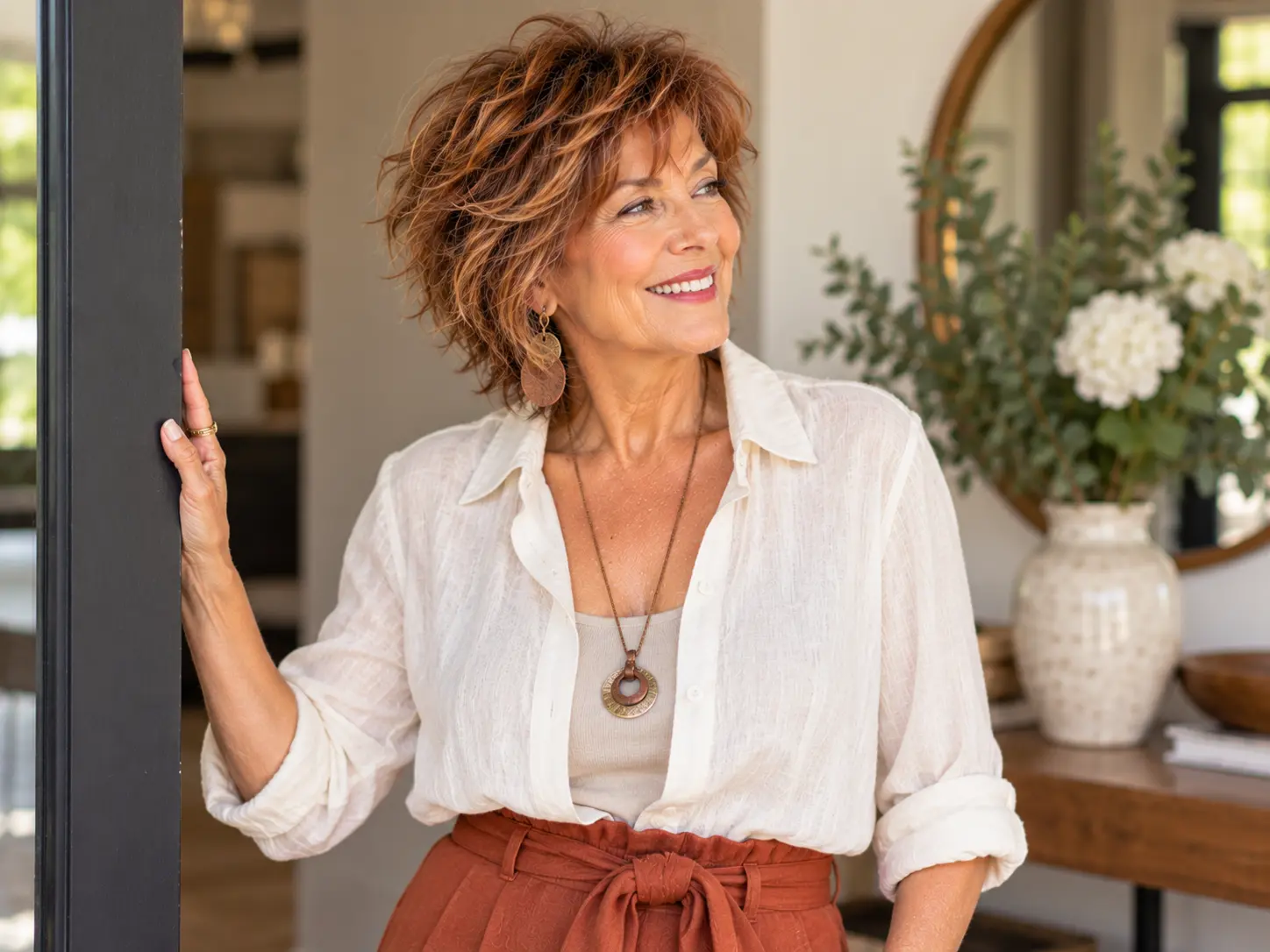
Dimensional color can make the layers easier to see, but it is optional. Natural gray, silver, brunette, blonde, and red tones can all work; the haircut should remain the focus.
How to choose the right shag for your hair
If your hair is fine or thinning
Prioritize a fuller outline and restrained layers. Too many short layers or excessive texturizing can make the ends appear sparse. Bring photos showing a similar hair density to yours, not just a similar face shape.
If your hair is thick
Discuss where bulk needs to be removed and where you want fullness to remain. Layers should help the hair sit comfortably rather than creating a wide, triangular silhouette.
If your hair is wavy or curly
Choose a stylist who understands your curl pattern. A shag can encourage natural movement, but the length and placement of layers should account for how much the hair springs up when dry.
If you prefer very little styling
Ask for a version that works with your normal routine. A fringe that needs daily heat styling may not be low-maintenance for you, even if the rest of the haircut is easy.
What to ask your hairstylist
- Can we keep the ends looking full while adding movement?
- Where should the shortest layers sit with my natural texture?
- Would curtain bangs or a longer side fringe work with my growth pattern?
- How will this shape look air-dried?
- How often should I book a trim to keep the outline balanced?
Simple styling and upkeep
Start with a lightweight volumizing mousse for fine hair or a curl cream for waves and curls. Dry the roots in the direction you want them to sit, then let the ends keep some natural movement. Avoid adding several heavy products at once, which can flatten fine hair or make layers look separated.
Trim frequency depends on length, fringe, and how precise you want the shape to remain. A shorter shag or fringe may need attention sooner than a longer, softly blended version. Ask your stylist for a realistic maintenance interval based on your haircut.
Frequently asked questions
Is a shag haircut flattering after 50?
It can be, especially when the layers and fringe are adapted to your hair texture and personal style. Age alone does not determine which haircut will suit you.
Does a shag make fine hair look thicker?
Strategic layers can create movement and lift, but too much texturizing may reduce the appearance of fullness. A fuller perimeter and restrained layering are often worth discussing with your stylist.
Can I wear a shag without bangs?
Yes. Face-framing layers can provide a shag-like shape without a fringe, and they may be easier to maintain if you prefer hair away from your forehead.
How do I make a shag look polished rather than messy?
Keep the layers blended, use a small amount of product, and define only a few pieces. A smooth blow-dry with soft bends can make the haircut look refined while preserving movement.
Final thoughts
The best modern shag is the one that works with your real hair and daily routine. Save one or two reference photos, note what you like about the layers or fringe, and ask your stylist to adapt the shape rather than copy it exactly.