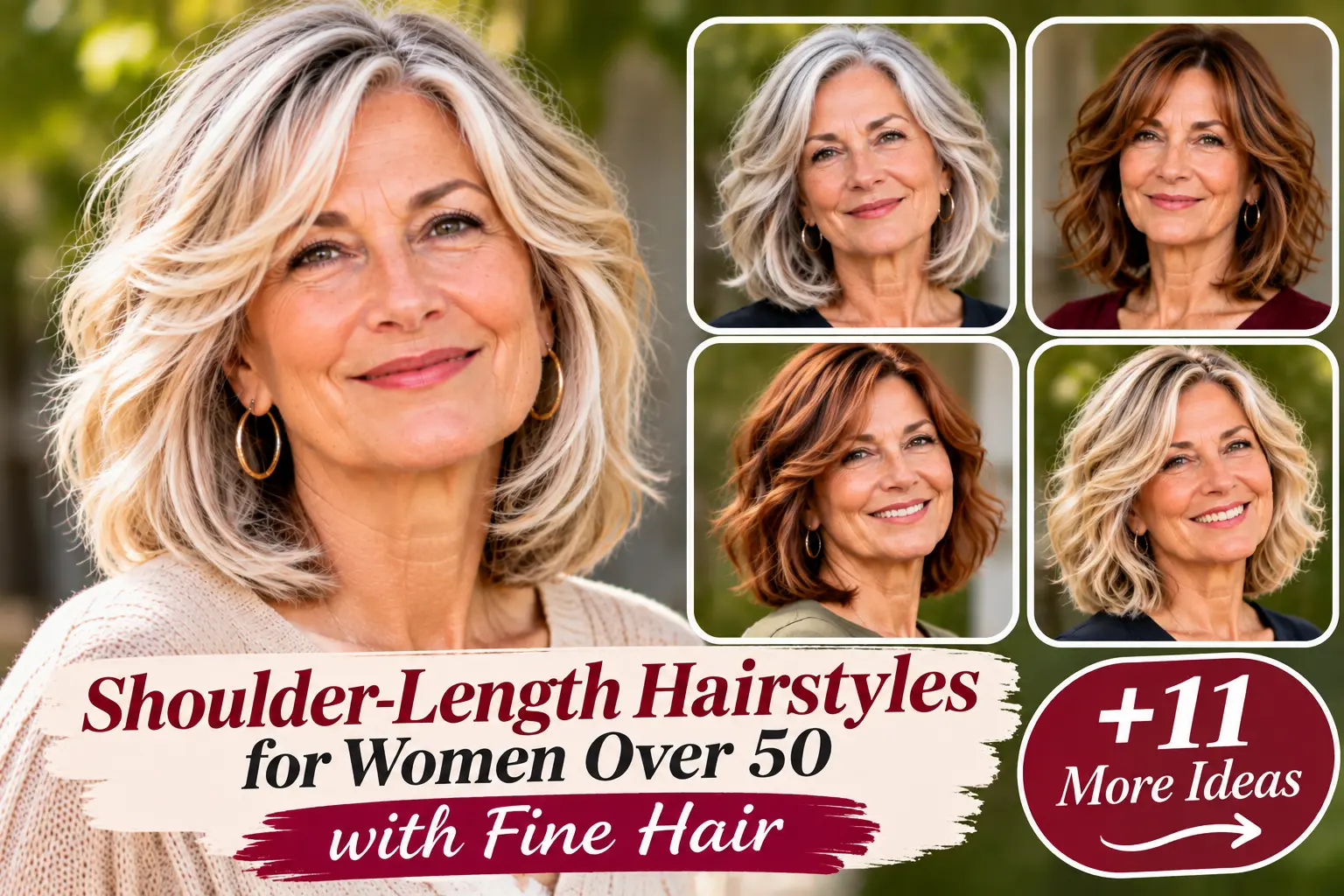
Shoulder-Length Hairstyles for Women Over 50 with Fine Hair: 15 Flattering Ideas
13. Rounded Shoulder-Length Shape
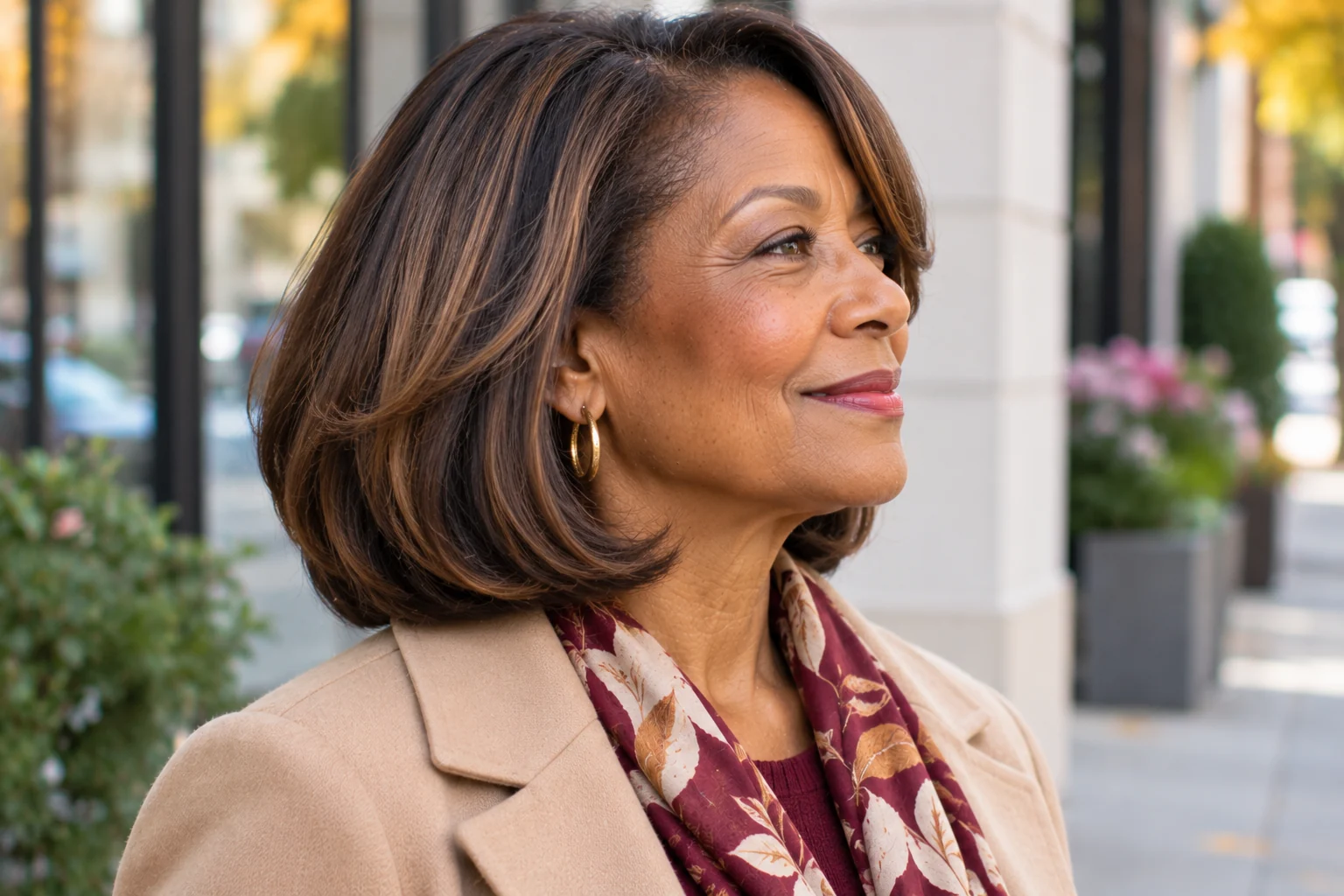
A rounded shoulder-length haircut has a softly curved outline rather than a completely straight bottom edge. The shape can create a gentle, balanced appearance and works with different styling preferences, from smooth finishes to loose waves.
Why you might like it: It offers a softer alternative to a sharply blunt cut while keeping a recognizable shape.
What to ask your stylist: Ask for a subtle rounded outline with minimal internal layering. Your stylist can adjust the curve to complement your natural hair texture.
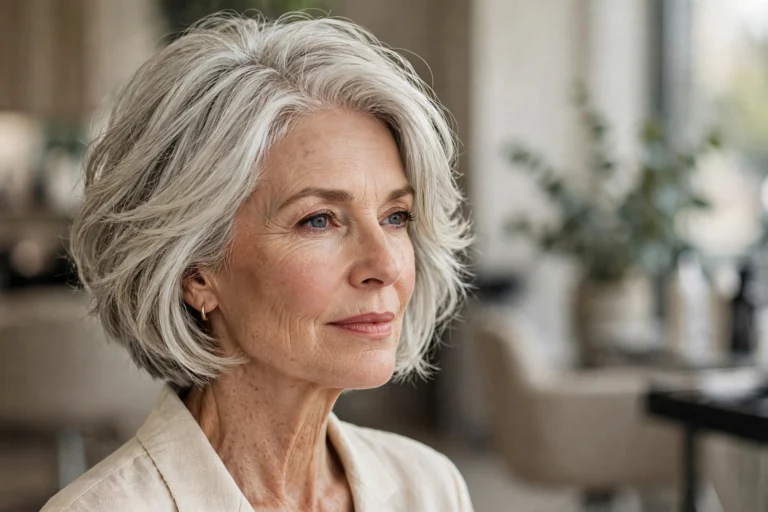
14. Silver Shoulder-Length Hair with Subtle Layers
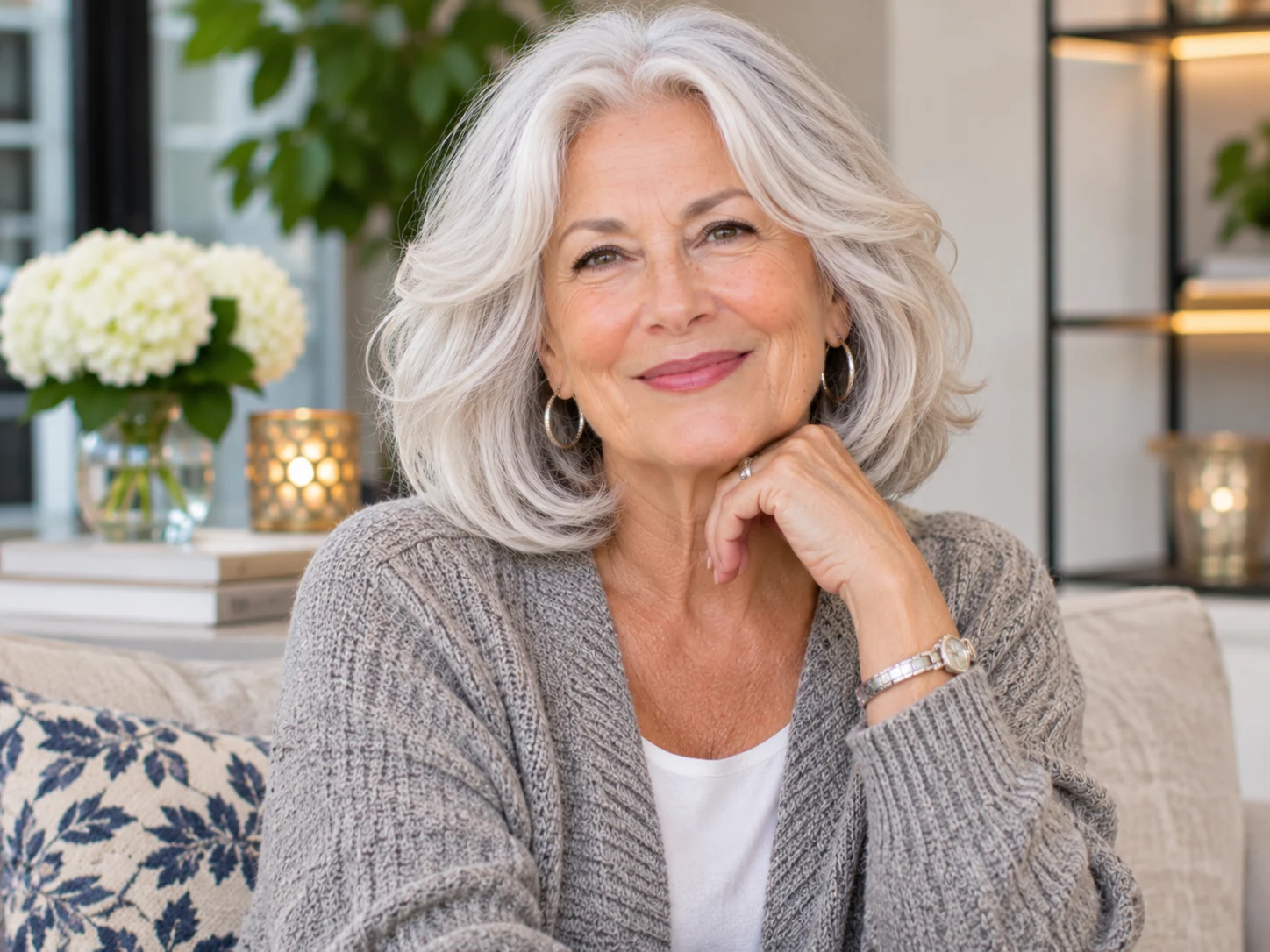
Natural silver or gray hair can look beautiful at shoulder length. A clean shape and restrained layers help keep the style looking intentional and well maintained. The result can be elegant and modern without requiring a complicated styling routine.
Why you might like it: It allows you to embrace your natural silver color while keeping enough length for versatile styling.
What to ask your stylist: Request a shoulder-length shape with subtle layers and a defined perimeter. Discuss any changes in your hair’s texture or density since going gray.
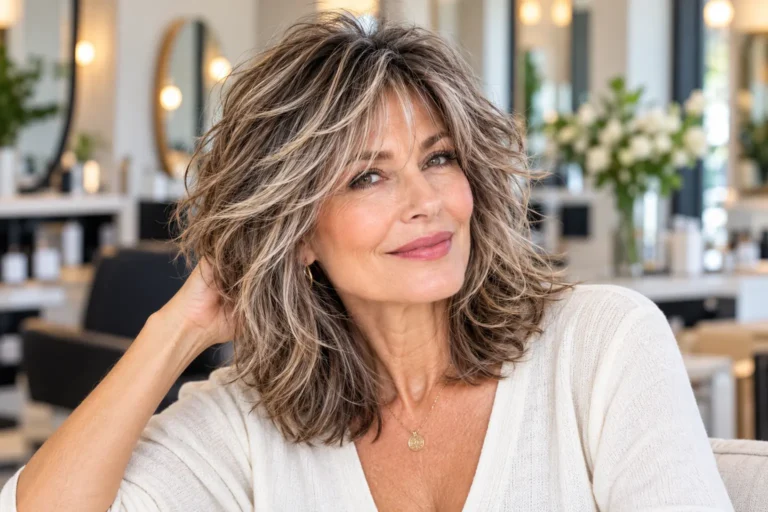
15. Airy Shoulder-Length Cut with Minimal Internal Layers
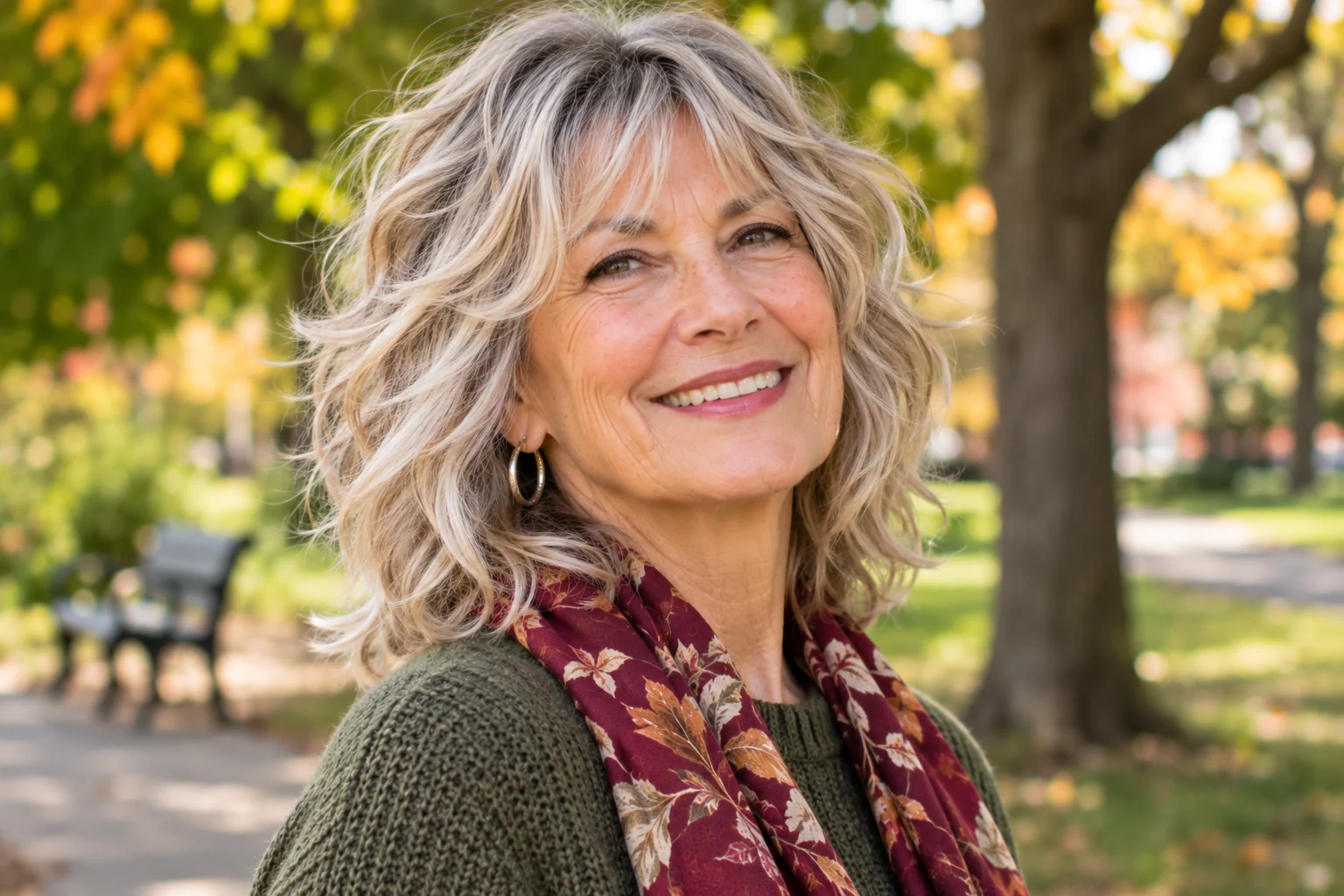
This style combines a relatively full outer shape with a few carefully placed internal layers for movement. Unlike the long-layered option above, the emphasis here is on keeping internal layering minimal and preserving the outline. It can be worth considering if you want a natural-looking finish without extensive layering.
Why you might like it: It balances a soft appearance with a shape that does not rely on extensive layering.
What to ask your stylist: Explain that you want an airy finish but still need the ends to look full. Ask for minimal internal layering and carefully blended face-framing.
How to Choose the Right Shoulder-Length Cut for Fine Hair
Not every shoulder-length haircut will work equally well for every person. The best choice depends on your hair’s natural characteristics, styling habits, and preferred appearance.
Consider Your Hair Density
Fine hair and thin hair are not the same thing. Fine hair refers to the thickness of individual strands. Thin hair generally describes lower density, meaning fewer strands across the scalp.
If your hair is fine but relatively dense, you may have more flexibility with layers and texture. If your hair is also low in density, preserving a fuller perimeter and avoiding excessive thinning may be especially important.
For more inspiration on shorter options, see our guide to short haircuts for women over 50 with fine hair.
Think About Your Natural Texture
Your natural texture should influence the haircut.
- Straight hair: A blunt or slightly rounded cut can create a clean, defined outline.
- Wavy hair: Soft layers can help the natural movement fall more comfortably.
- Naturally textured hair: The stylist should consider how much the hair contracts or changes shape when dry.
A haircut that looks good when freshly styled should also work with your normal routine.
Choose Face-Framing That Feels Comfortable
Face-framing layers, curtain bangs, and side bangs can all change the appearance of a shoulder-length cut. However, they are not essential. If you prefer a simple hairstyle, a clean perimeter with minimal shaping may be all you need.
Discuss the amount of hair you want around your face before deciding on a fringe or shorter front sections.
Pay Attention to the Ends
The condition and density of your ends can influence how much layering your haircut can support. If your ends already look wispy, a heavily layered cut may make them appear even less substantial. A more defined perimeter may be a better starting point.
Your stylist can assess the condition of your hair and recommend a shape that works with its current length and density.
Should Fine Hair Have Layers at Shoulder Length?
Fine hair can benefit from layers, but the result depends on how they are cut and where they are placed.
When layers can help
- When the hair needs movement around the face.
- When a one-length shape feels too heavy or rigid.
- When natural waves need a little shaping.
- When the stylist can add movement without removing too much from the ends.
When fewer layers may be better
- When the ends are already sparse.
- When the hair has low overall density.
- When the hairstyle loses its shape after layering.
- When you prefer a fuller, more defined outline.
The goal is not to add as many layers as possible. It is to find the right balance between movement and a shape that looks healthy and intentional.
If you are considering a longer layered style, you can also explore our guide to long layered bob haircuts for women over 50.
How to Style Shoulder-Length Fine Hair for More Volume
A good haircut is only part of the result. Your styling routine can also influence how full and lively your hair appears.
1. Lift the Roots While Blow-Drying
For a little extra root lift, direct the airflow toward the roots while gently lifting sections with your fingers or a brush. Avoid pulling the hair too tightly or applying excessive heat. For more dermatologist-backed guidance, read the American Academy of Dermatology’s guide to hair styling without damage.
2. Choose Lightweight Styling Products
Heavy creams, oils, and styling products can weigh down some fine hair types. Consider lightweight mousse or root-lifting products if your hair responds well to them. Start with a small amount and adjust according to the result.
3. Try Loose Waves
Soft waves can create movement and visual dimension. A curling iron or heatless method can help, depending on your preferred routine. Keep the finish relaxed rather than making every section look identical.
4. Experiment with Your Part
A slight change in your part can create a different shape at the roots. Try a soft side part or move your part slightly away from its usual position. You may find that a small adjustment gives your hairstyle a fresher appearance.
5. Avoid Overloading the Ends
Applying too much product to the lower sections can make fine hair look flat or separated. Use only what you need, and pay attention to how your hair responds after styling.
For a shorter, easier-care alternative, take a look at our guide to low-maintenance short hairstyles for women over 50.
What to Ask Your Hairstylist
Before getting a shoulder-length haircut, it helps to explain what you want to achieve rather than simply asking for a particular trend.
- Would a blunt perimeter or soft layers work better with my hair density?
- How much layering can my ends support?
- Should I choose shoulder length or collarbone length?
- Would face-framing layers suit my preferred styling routine?
- Can this cut work with my natural texture?
- How much daily styling will this haircut require?
- What products would help me style my hair without weighing it down?
If possible, bring two or three reference photos. Choose examples with a similar hair density and texture, not just a similar haircut. Your stylist can then adapt the shape to your individual hair rather than trying to reproduce a photograph exactly.
Frequently Asked Questions
Is shoulder-length hair good for fine hair over 50?
Shoulder-length hair can be a good option for fine hair because it offers styling flexibility while keeping a manageable length. The best result depends on hair density, texture, condition, and the way the cut is shaped.
Do layers make fine hair look thinner?
Not necessarily. Carefully placed layers can create movement, but excessive layering may make the ends look less full. The right approach depends on the amount of hair you have and the shape you want.
Is a blunt cut better for fine hair?
A blunt cut can help create a more defined, full-looking perimeter. However, it is not automatically the best choice for everyone. Some people prefer subtle layers to create movement or soften the outline.
Should fine hair be cut at the shoulders or collarbone?
Both lengths can work. A shoulder-length cut offers a slightly shorter shape, while a collarbone-length cut preserves a little more length. Your stylist can help you decide based on your ends, natural texture, and preferred styling options.
Can women over 50 with fine hair wear bangs?
Yes. Curtain bangs, wispy side bangs, and other lightweight fringe styles can complement shoulder-length hair. The amount of hair used for the bangs should be chosen carefully, particularly if the front sections are sparse.
How can I make shoulder-length fine hair look fuller?
A suitable haircut, lightweight styling products, gentle root lifting, and soft waves may help create the appearance of fuller hair. Keeping the ends in good condition and avoiding excessive layering can also make a difference.
Final Thoughts
Shoulder-length hair offers plenty of possibilities for women over 50 with fine hair. From a classic blunt cut to soft waves, subtle layers, and a modern collarbone-length shape, there are many ways to find a style that feels comfortable and suits your preferences.
The most important thing is choosing a haircut that works with your natural hair density and texture. You do not need dramatic layers or complicated styling to achieve a beautiful result.
Start with a shape that makes you feel confident, discuss your priorities with your stylist, and choose the amount of layering and face-framing that works best for your hair. The right shoulder-length hairstyle is the one that makes you feel like yourself.