15 Curly Hairstyles for Women Over 50: Beautiful Cuts for Natural Curls
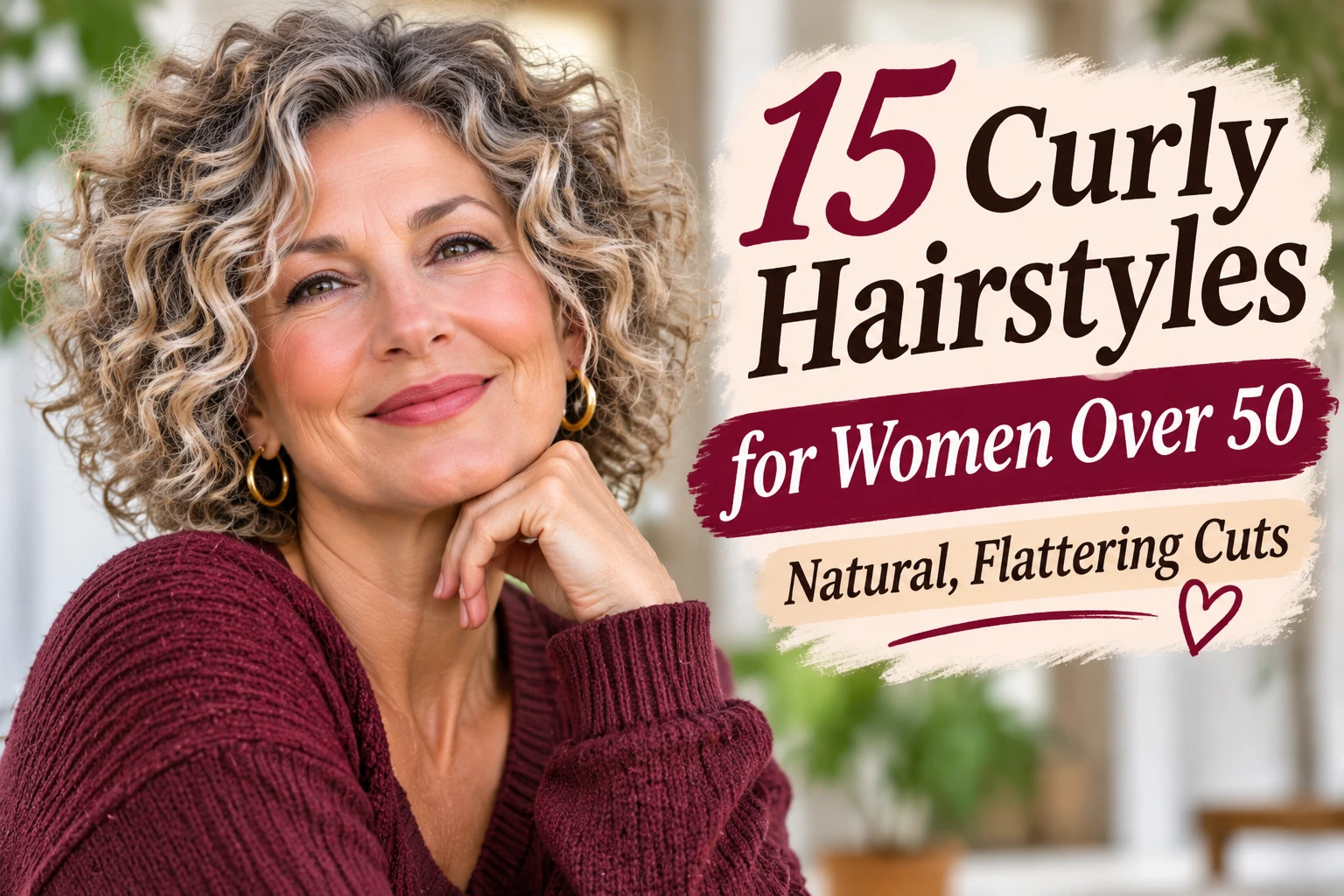
Naturally curly hair has its own personality, texture, and movement. The right haircut can bring out those qualities while making everyday styling more manageable. For women over 50, choosing a curly hairstyle is less about following age-related rules and more about finding a shape that works with natural curl patterns, hair density, face shape, and personal style.
Whether your curls are loose and flowing, springy and defined, or naturally tight, there are many ways to wear them. You might prefer a soft curly pixie, a structured bob, a layered shoulder-length style, or longer curls with plenty of movement.
The most important thing is to choose a haircut that works with your curls rather than constantly fighting against them.
In this guide, you will discover 15 curly hairstyles for women over 50, along with practical advice on choosing a cut for different curl patterns, fine or low-density hair, and face shapes. You will also find styling tips, maintenance suggestions, and helpful questions to ask your hairstylist before your next appointment.
15 Curly Hairstyles for Women Over 50
These hairstyle ideas feature different silhouettes, lengths, and cutting techniques. Some create a compact shape, while others preserve length, emphasize natural volume, or add movement around the face. The best option depends on how your curls behave when dry and how much styling you want to do.
1. Rounded Short Curly Cut
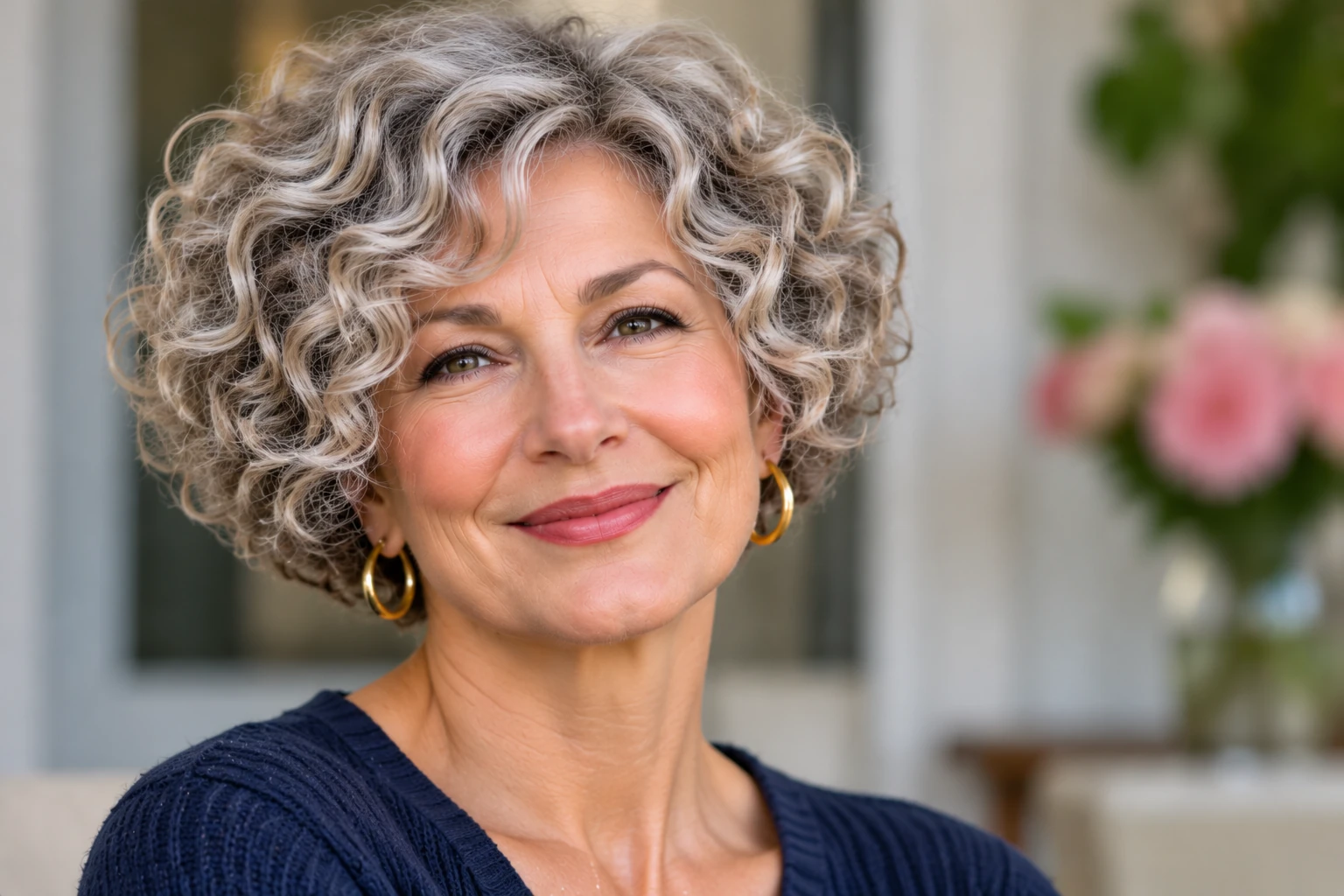
A rounded short curly cut creates a soft, balanced silhouette around the head. The curls are kept relatively short but retain enough length to form a rounded shape rather than appearing flat or tightly cropped.
This style can work beautifully with naturally springy curls that hold their shape. The rounded outline gives the haircut a finished appearance while allowing individual curls to remain visible.
It may suit women who want a shorter hairstyle without choosing an extremely close crop. The stylist should consider how much the curls shrink as they dry, especially around the crown and sides.
What to ask your stylist: Request a rounded shape that follows your natural curl pattern, with enough length to prevent unwanted shrinkage around the sides.
2. Soft Curly Pixie
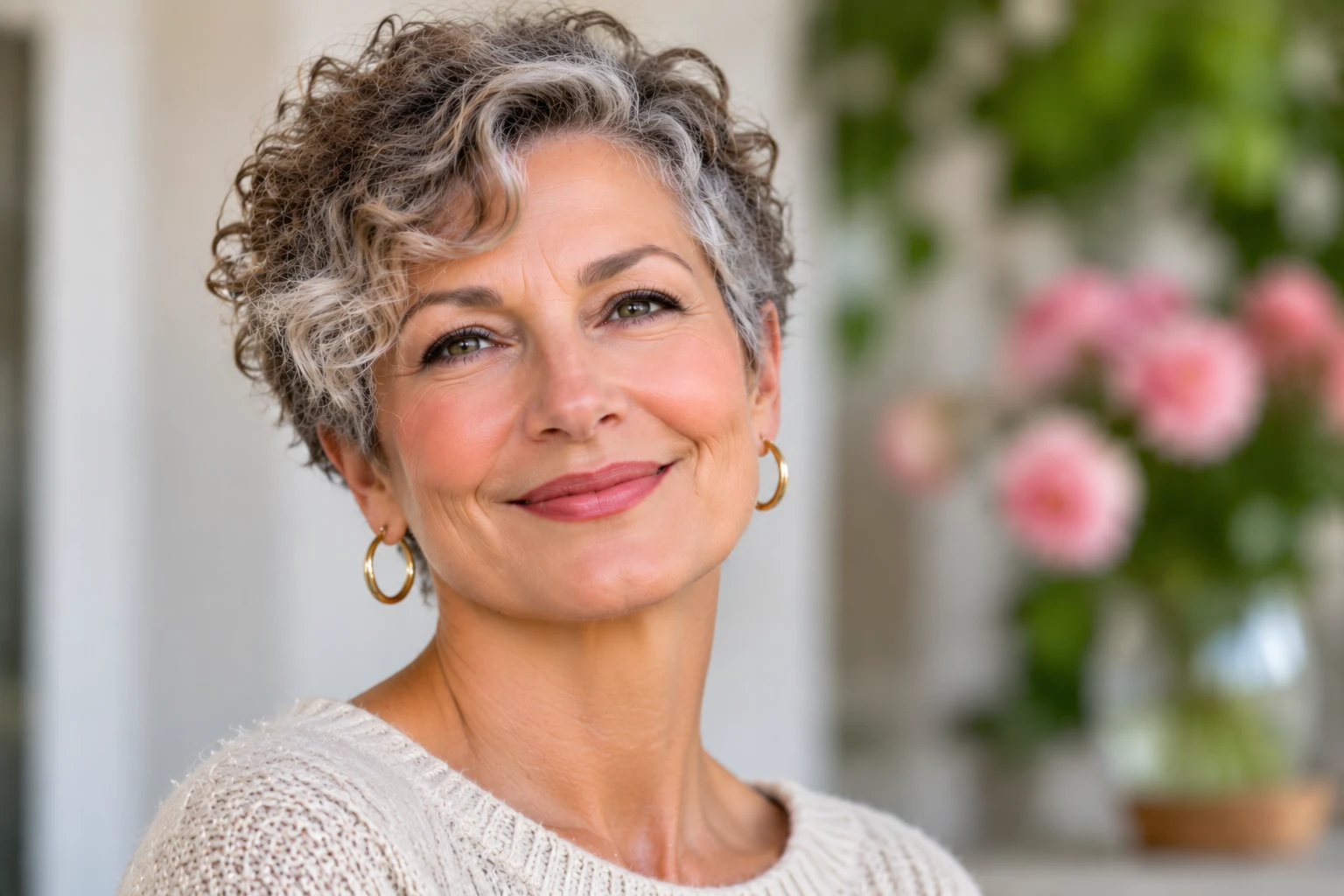
A soft curly pixie keeps the sides and back relatively short while leaving more length through the top. The longer curls on top create texture and movement, giving the haircut a relaxed rather than sharply cropped appearance.
This style can be practical if you prefer shorter hair and want less length to wash and detangle. However, the shape may need regular trims to maintain its proportions.
It can work with several curl patterns, provided the stylist understands how your curls behave at shorter lengths.
What to ask your stylist: Ask for a soft pixie that preserves natural curl definition on top instead of cutting the entire hairstyle to one short length.
3. Curly Bixie
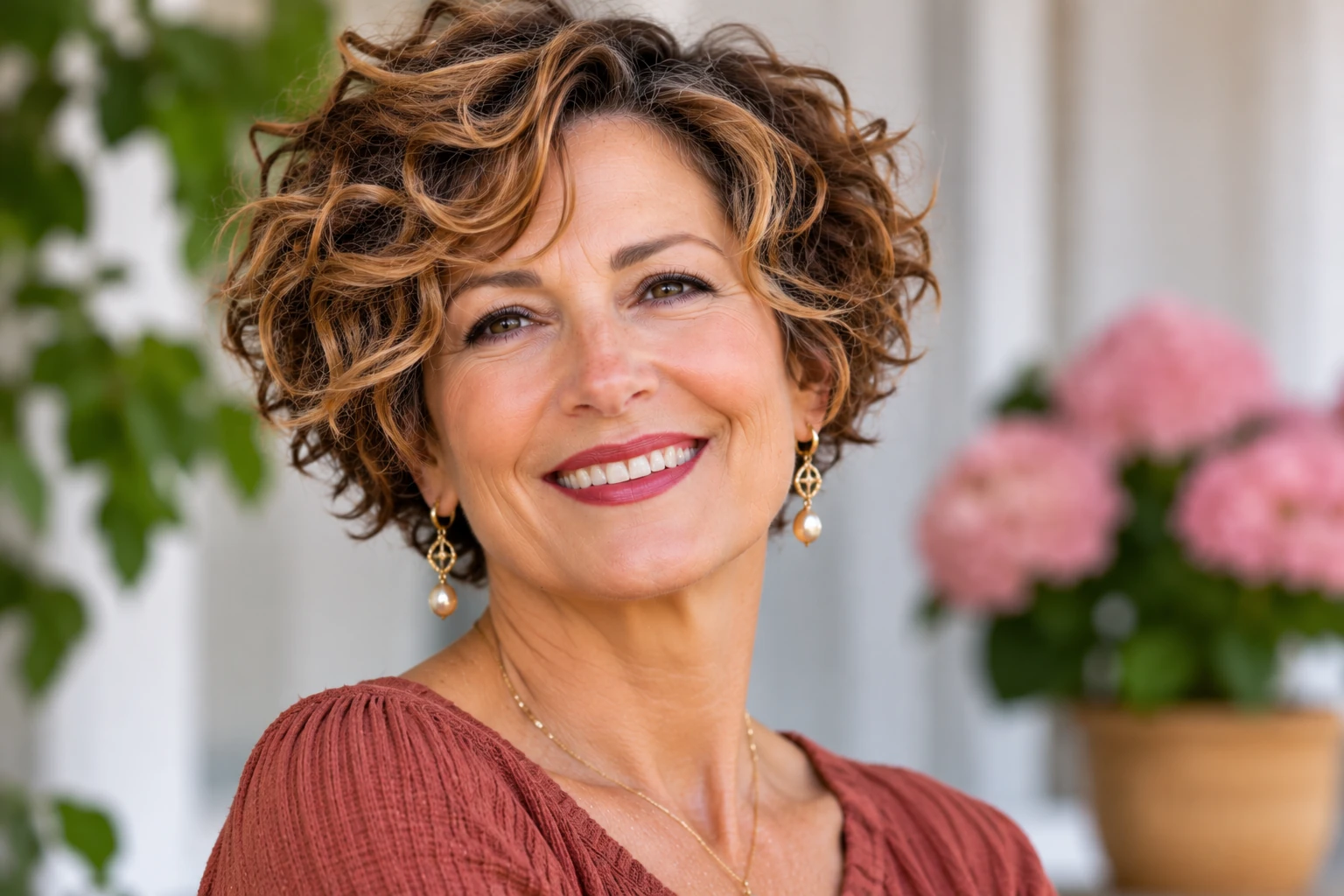
A curly bixie combines elements of a pixie and a bob. It is shorter and more textured than a traditional bob but keeps additional length around the ears, sides, and nape.
The result is a flexible haircut with more movement than a classic short pixie. The curls can create a softly layered outline, while the extra length gives you more styling possibilities.
This option may appeal to women who want to move toward shorter hair without committing to a very cropped style.
What to ask your stylist: Discuss a bixie shape that leaves enough length around the sides to accommodate your curl pattern and natural shrinkage.
For more short-hair inspiration, explore our guide to modern bixie haircuts for women over 50.
4. Chin-Length Curly Bob
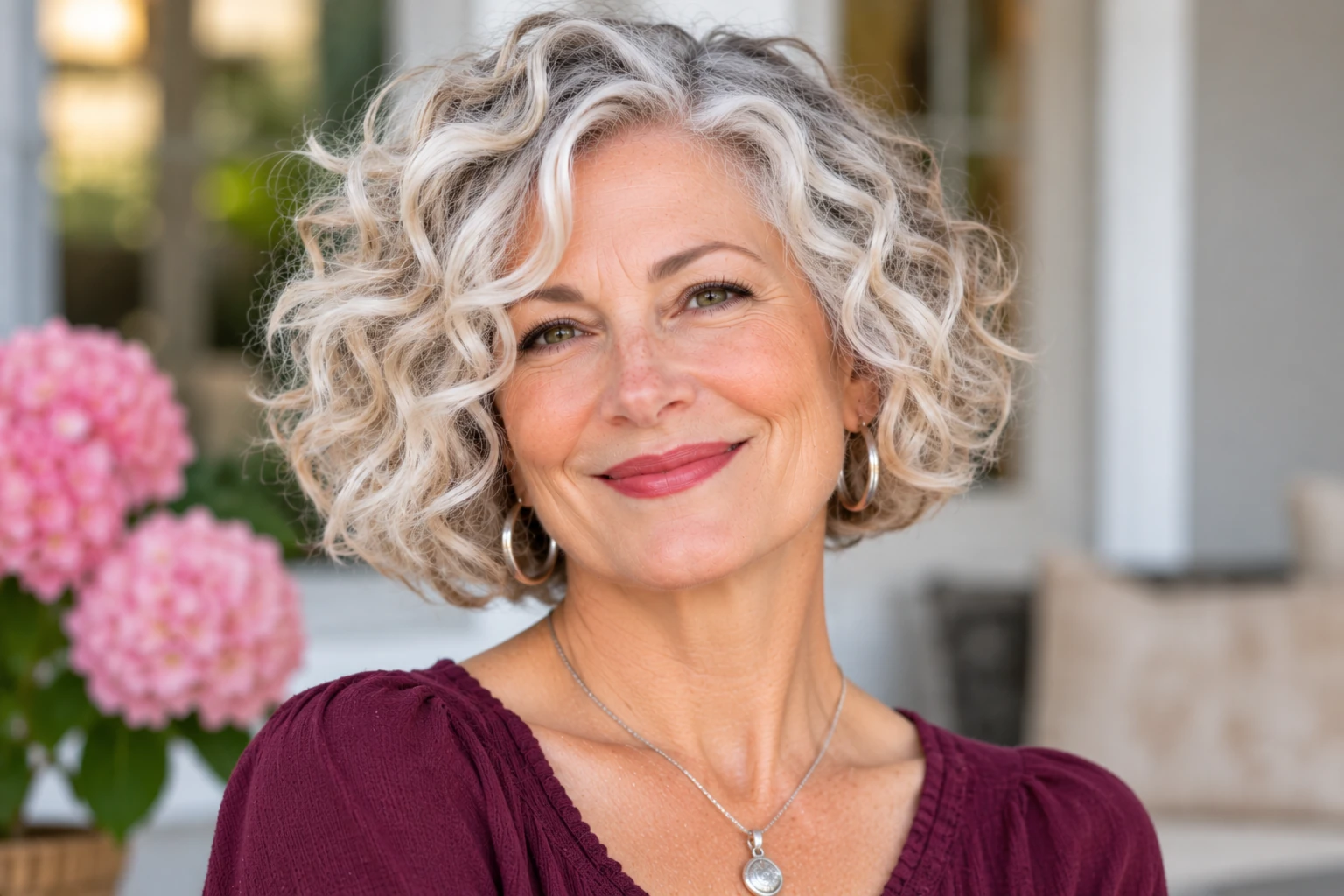
The chin-length curly bob is a classic choice that places the ends around the jawline. Its defining feature is the compact bob silhouette, which allows natural curls to frame the face.
Depending on your curl pattern, the finished shape may appear softly rounded or more defined and structured. The haircut can be worn with a center part, a side part, or a slightly uneven natural parting.
Women with dense curls may need carefully planned shaping to prevent the sides from becoming too bulky. Those with finer curls may prefer a more conservative approach to layering.
What to ask your stylist: Request a bob that takes your dry curl length into account, so the finished haircut does not end up shorter than expected.
5. Asymmetrical Curly Bob
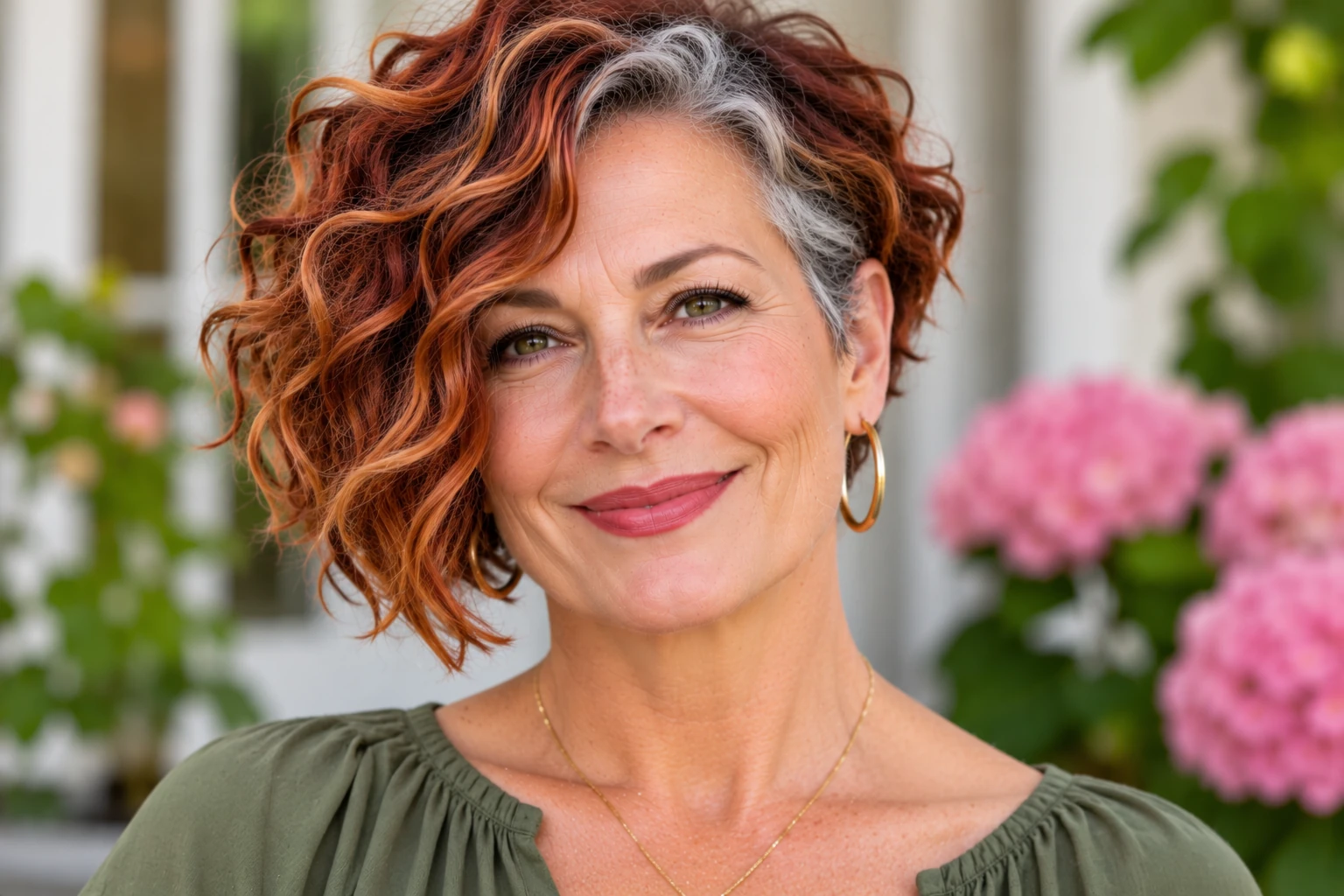
An asymmetrical curly bob has an intentionally uneven outline, with one side slightly longer than the other. This creates a distinctive shape that differs from a traditional balanced bob.
The asymmetry can be subtle, with only a small difference between the two sides, or more noticeable for a stronger visual effect.
This haircut can be interesting if you enjoy a modern shape with natural texture. It is particularly important to work with a stylist who can account for the way your curls fall on each side.
What to ask your stylist: Bring a reference photograph and discuss how the asymmetrical line will look when your curls are fully dry.
6. Stacked Curly Bob
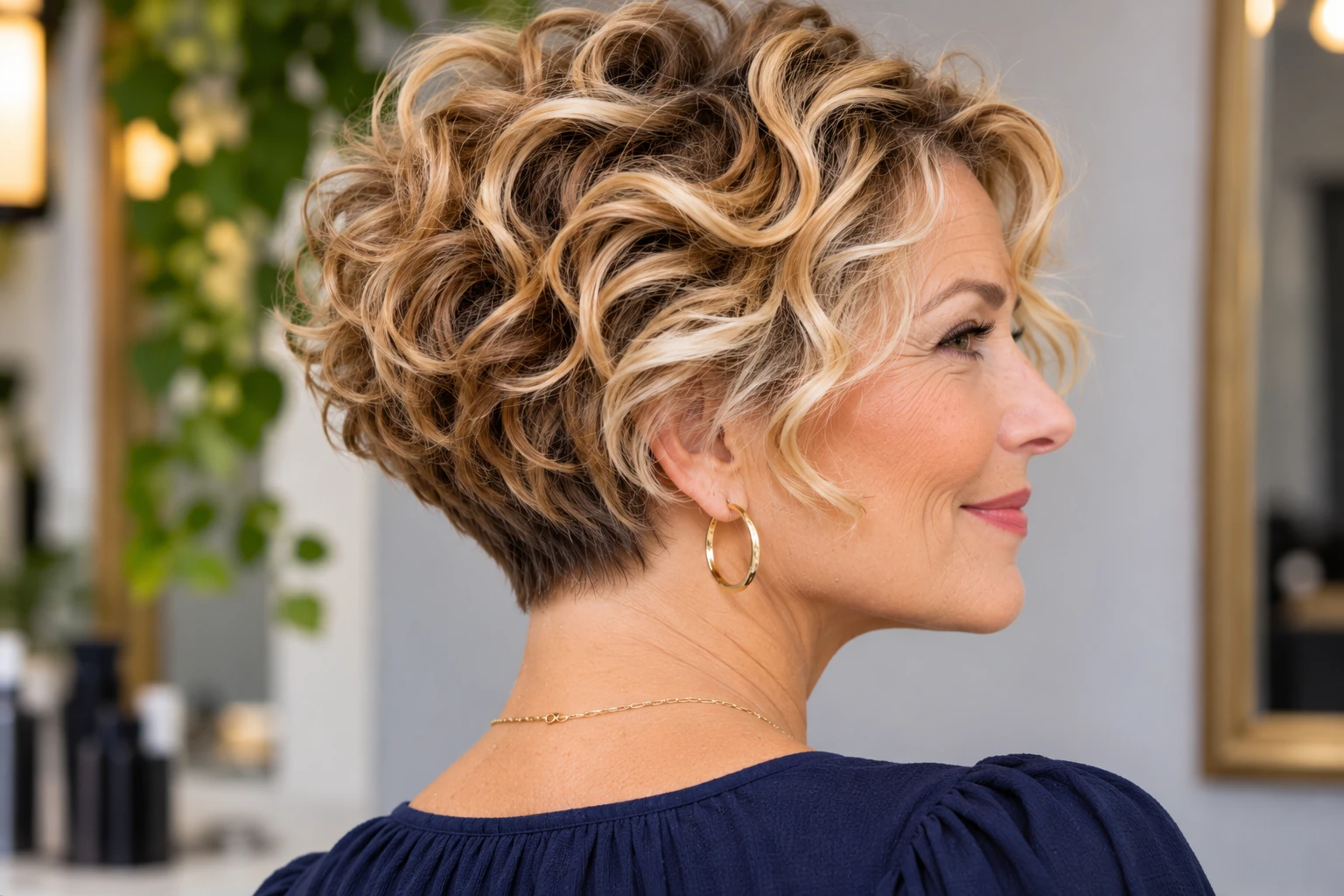
A stacked curly bob features shorter, graduated layers through the back, creating a more lifted shape at the nape while preserving additional length toward the front.
Unlike a conventional bob with a relatively even outline, the stacked shape has a noticeable difference between the back and front. Natural curls add texture and softness to the graduated silhouette.
The amount of stacking should be adapted to your curl density. Too much removal at the back may create an uneven result, particularly when tight curls shrink.
What to ask your stylist: Ask how the graduated layers will sit when your hair is dry and whether the back will retain enough fullness to blend naturally with the sides.
7. Soft Curly Shag
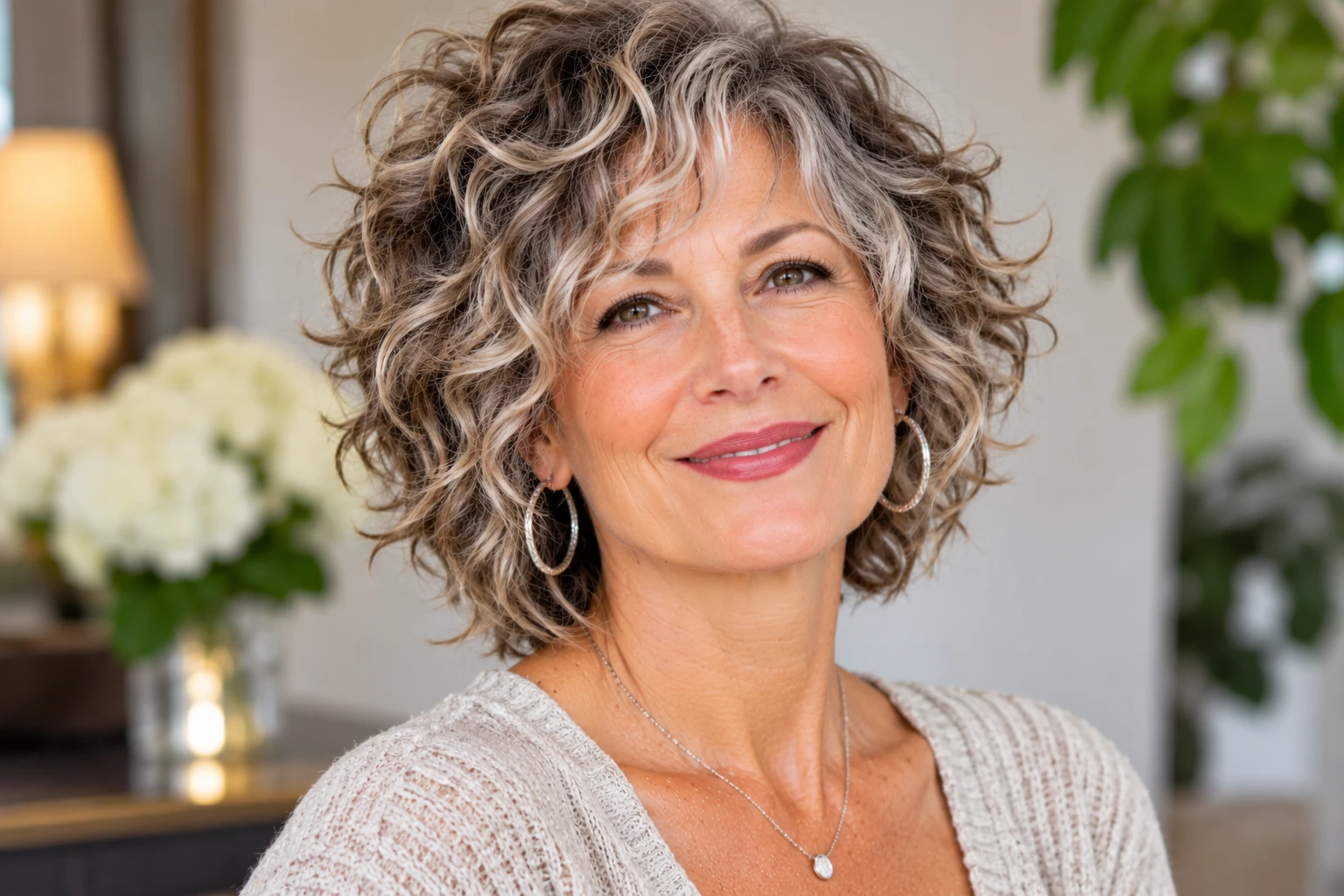
A soft curly shag features layers throughout the haircut, with a relaxed, textured outline. The shape typically has movement around the crown and sides rather than a uniform rounded silhouette.
Natural curls can give this haircut plenty of texture without requiring every strand to be styled separately.
However, the amount of layering should depend on your hair density. If your hair is already fine or low in density, excessive layering can make the ends look sparse.
What to ask your stylist: Request a softer shag with carefully controlled layers that preserve enough fullness through the ends.
You can also explore our guide to modern shag haircuts for women over 50.
8. Shoulder-Length Natural Curls
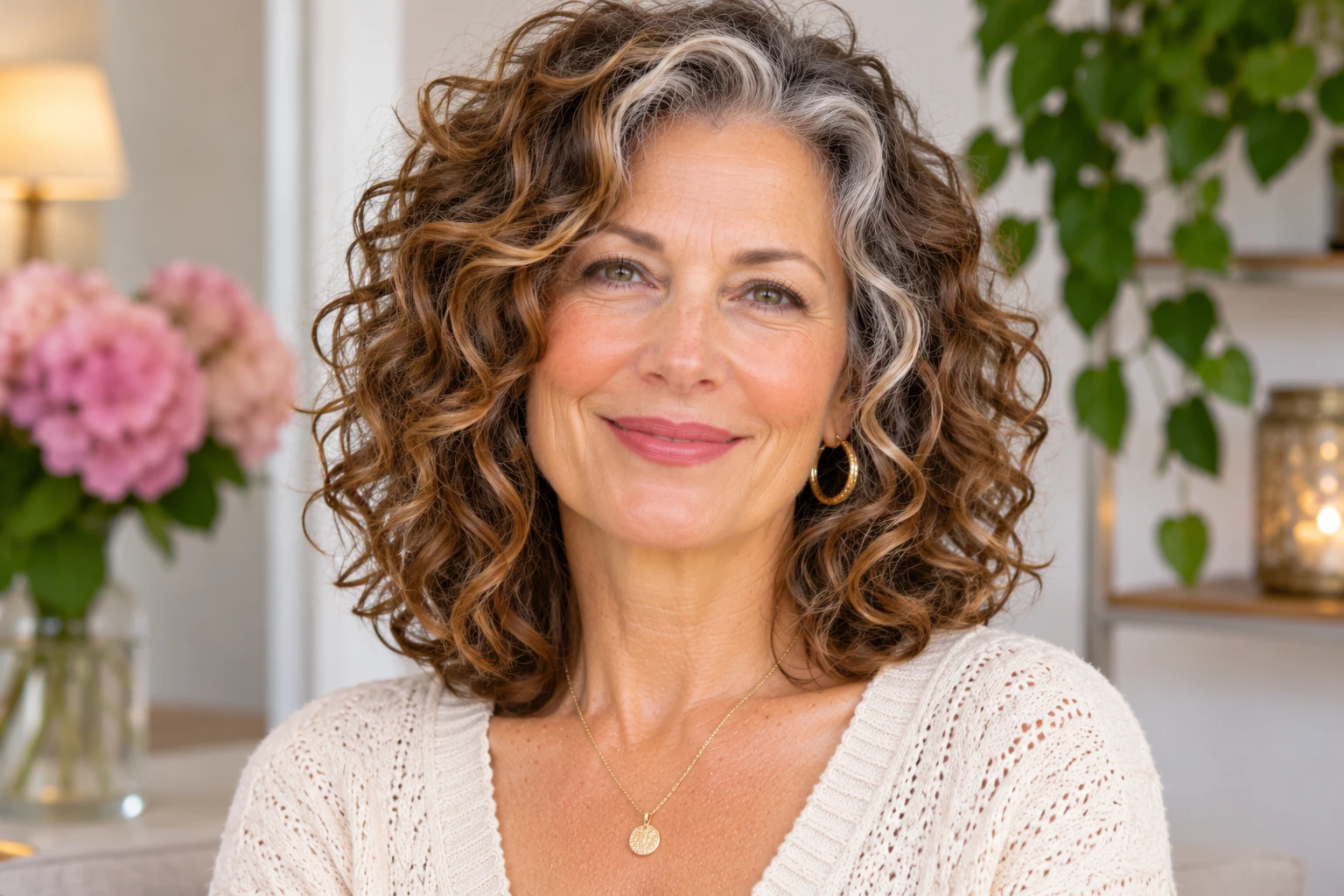
Shoulder-length natural curls preserve more length while allowing the curls to form a defined shape around the shoulders.
This option is worth considering if you enjoy wearing your hair down but want a manageable length. The haircut can be relatively uniform or include subtle layers, depending on how much movement you want.
Keep in mind that curly hair often appears shorter than its stretched length. A stylist should assess your curls in their natural state before deciding where the finished ends should fall.
What to ask your stylist: Explain how you normally wear your curls and request a length that accounts for natural shrinkage.
9. Long Layered Curly Hair
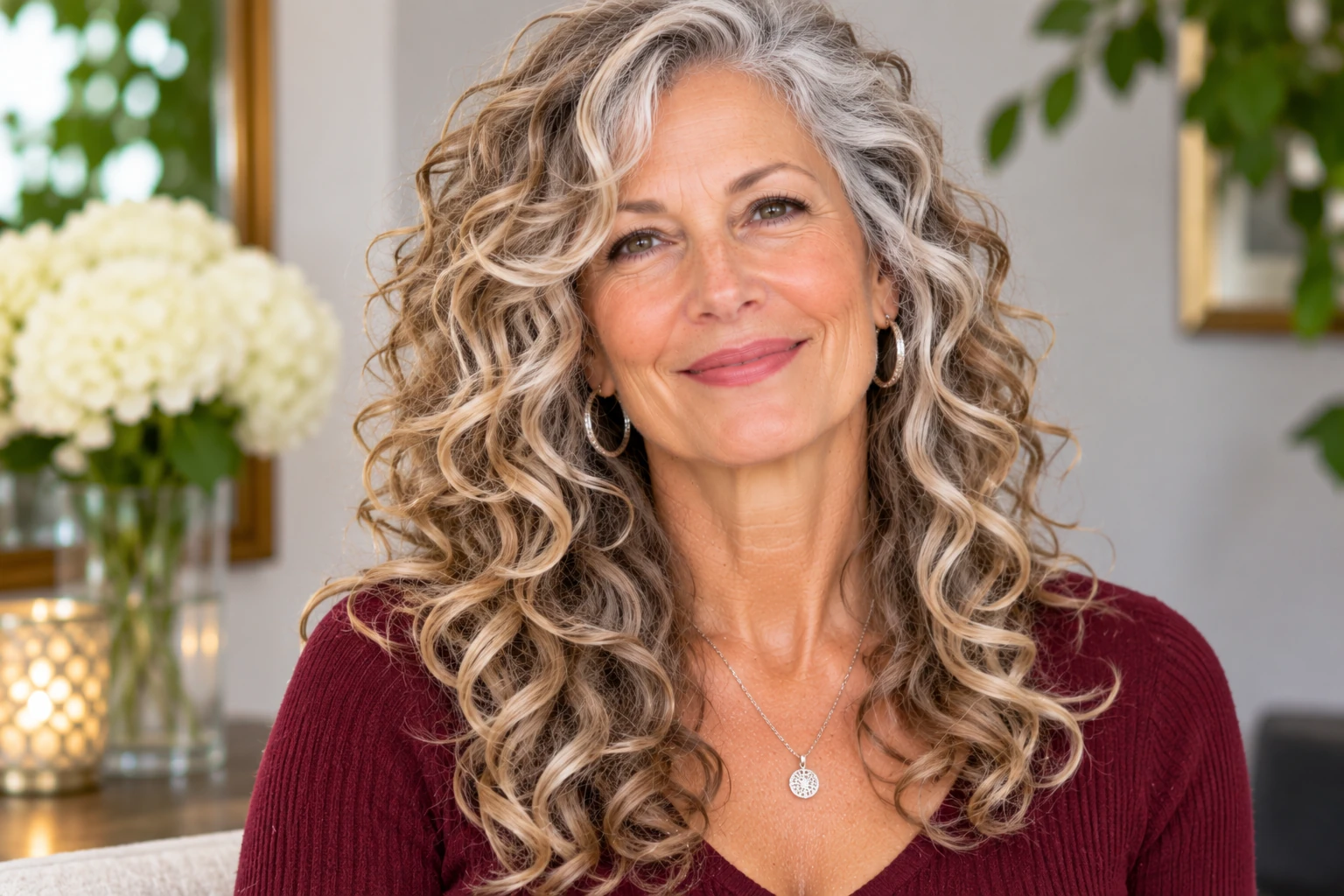
Long layered curly hair keeps the overall length while using graduated layers to distribute weight. This can help prevent long curls from forming a heavy, triangular shape.
The layers should follow the natural curl pattern rather than being added randomly. Their placement can influence how the curls fall around the face, crown, and back.
This is a good option if you enjoy longer hair and are comfortable with the additional washing, conditioning, and detangling it may require.
What to ask your stylist: Discuss long layers that maintain enough length at the ends while allowing your curls to move naturally.
10. Curly Long Bob (Lob)
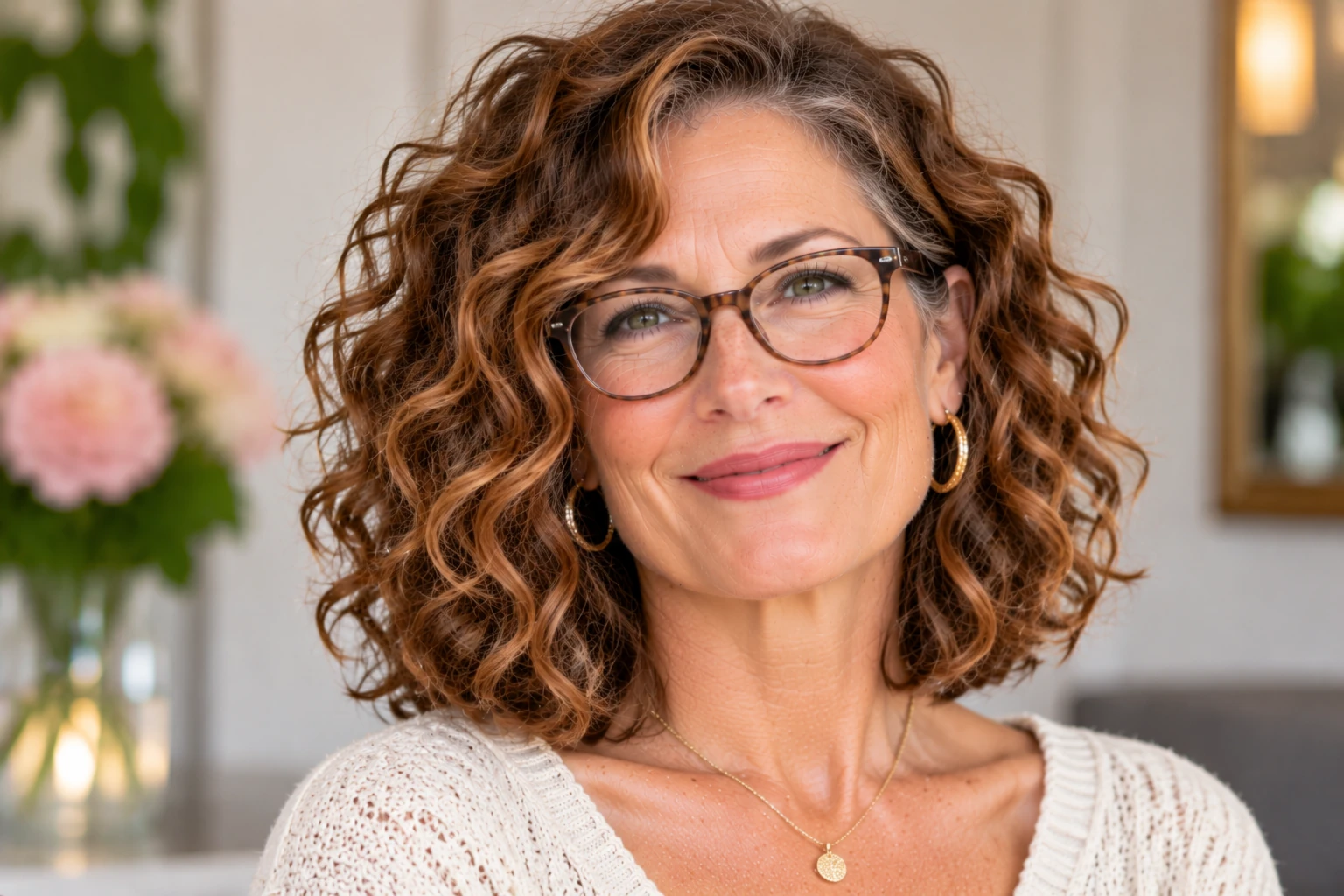
A curly lob falls somewhere between chin and shoulder length, depending on your proportions and curl shrinkage. It offers more length than a traditional chin-length bob without the weight of a longer hairstyle.
The lob can be cut with a relatively even outline or subtle layers. Its versatility makes it worth considering if you want a medium-length curly style that can be worn naturally or styled differently for special occasions.
It may also be easier to transition into a longer haircut as your hair grows.
What to ask your stylist: Choose the finished length together, considering how much shorter your curls appear after drying.
For another medium-length option, see our guide to long layered bob haircuts for women over 50.
11. Side-Parted Curly Cut
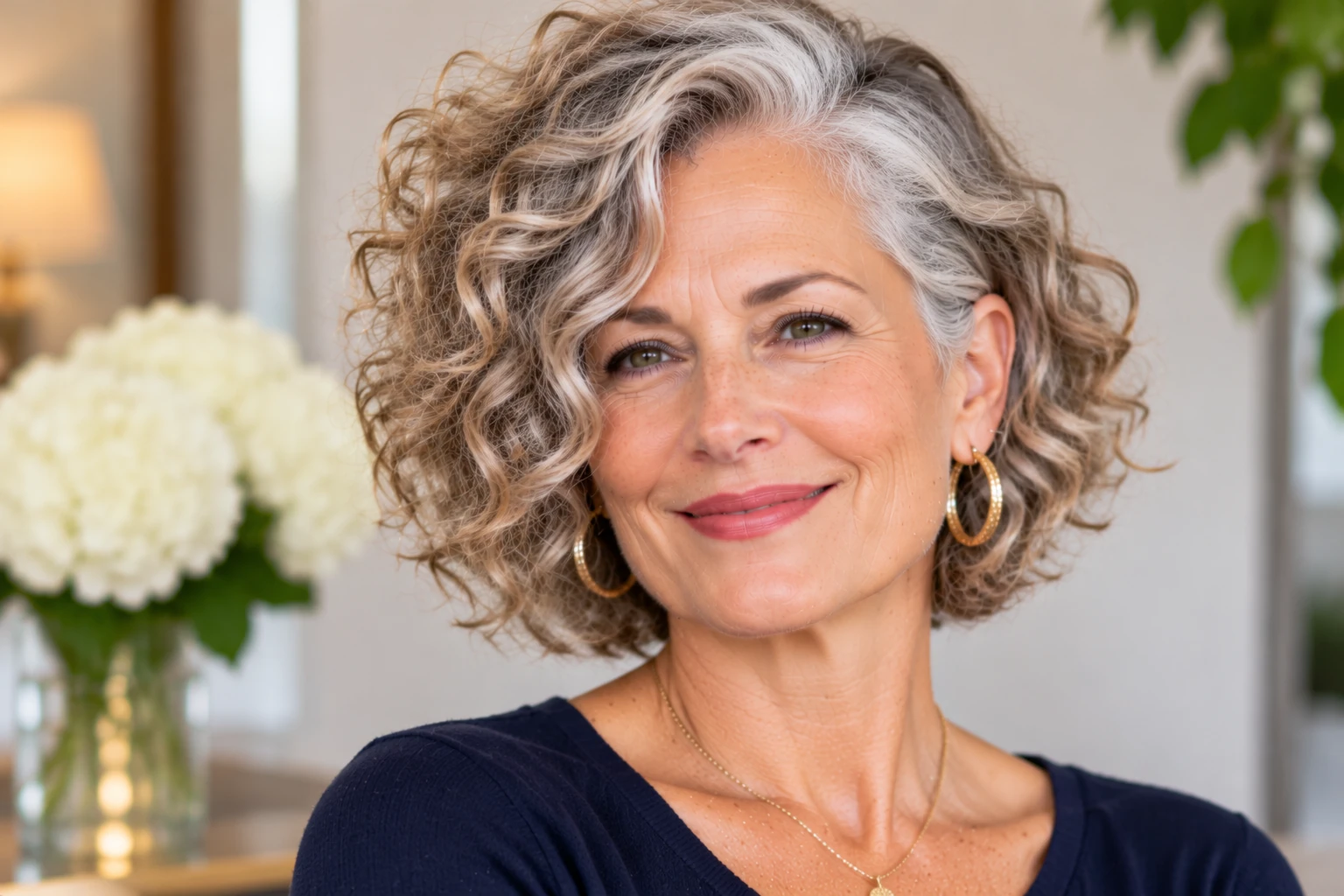
A side-parted curly cut uses a side parting to change how the curls are distributed around the face. Unlike a haircut defined by a particular length, this style focuses on the direction and balance of the hair.
A deeper side part can create a fuller-looking section on one side, while a softer side part offers a more relaxed effect.
This approach can be adapted to short, medium, or longer curly hair. It is especially useful if your natural part already falls to one side.
What to ask your stylist: Ask for a haircut that works with your natural parting rather than requiring you to restyle your hair in the opposite direction every morning.
12. Tapered Curly Cut
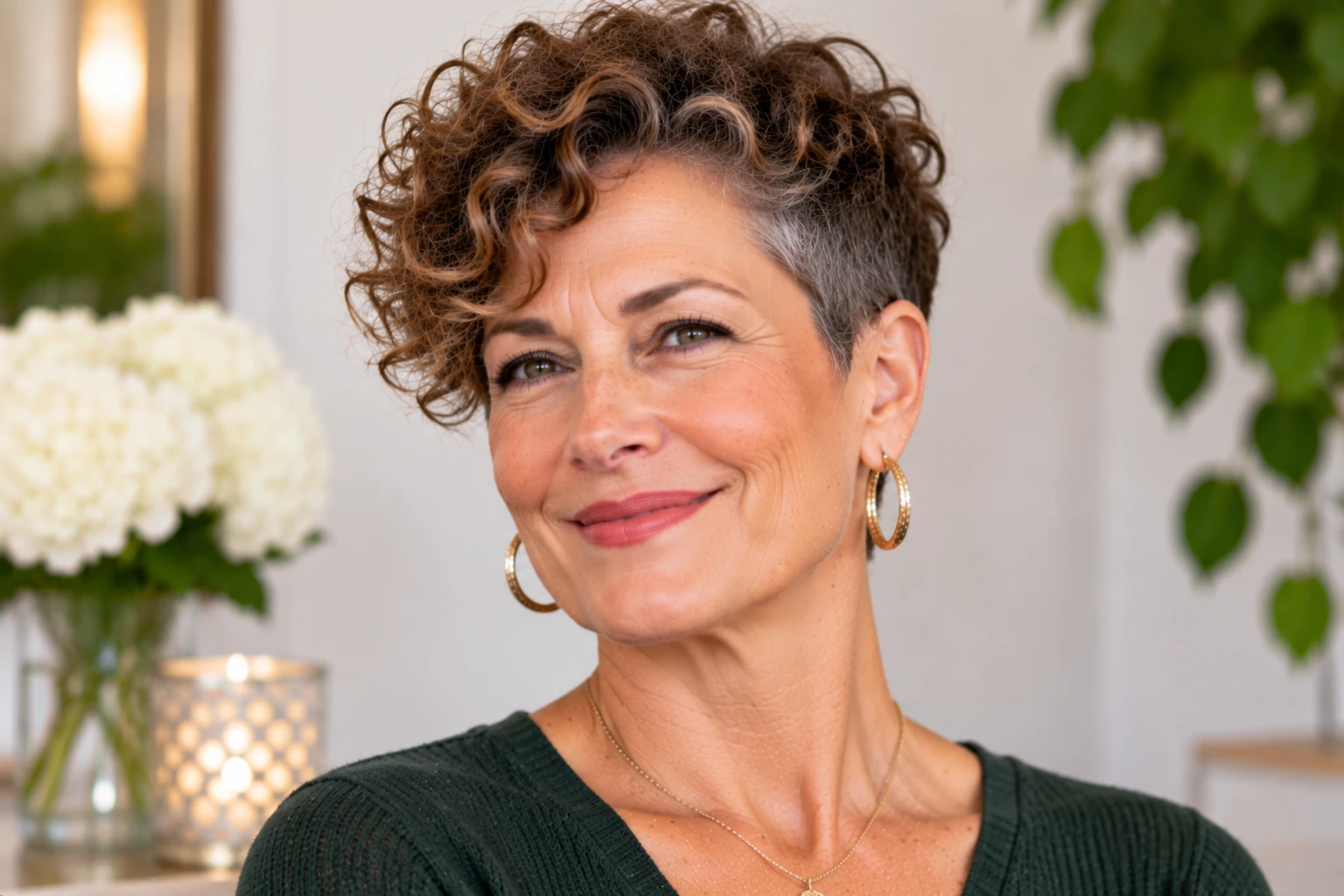
A tapered curly cut has shorter sides and a shorter nape, with more length preserved on top. The transition between the lengths creates a clean outline while keeping the natural curls as the main feature.
This style offers a different silhouette from a rounded short cut. Instead of distributing volume evenly around the head, it concentrates more of the visible curl texture toward the top.
It may be a good choice if you enjoy short hairstyles with a defined shape and relatively open sides.
What to ask your stylist: Discuss how closely you want the sides and nape tapered, and how much length you want to retain on top.
13. Curly Fringe with Layers
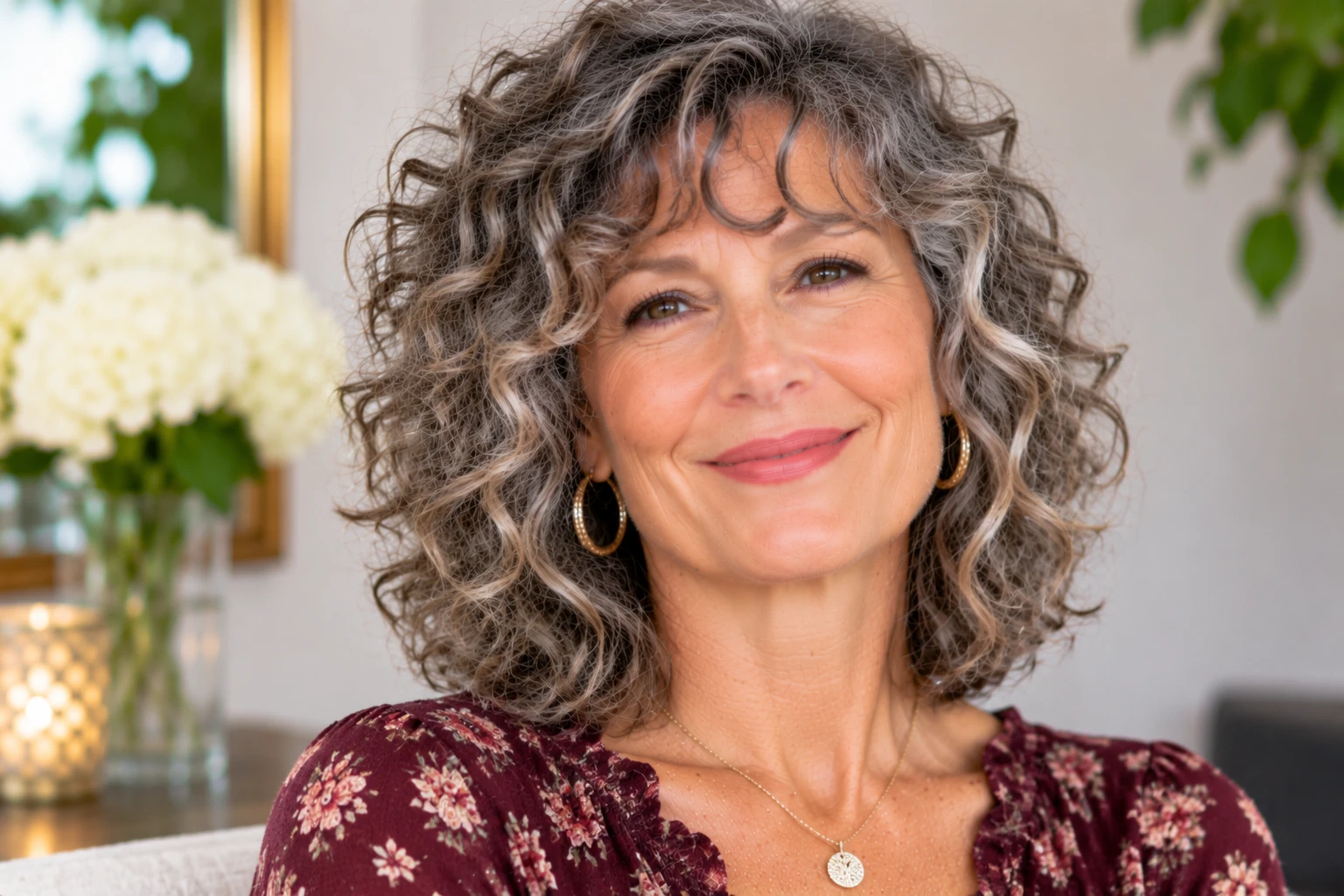
A curly fringe with layers combines a natural curly fringe with a shaped haircut that allows the front curls to blend into the sides.
Unlike a separate side fringe, the front curls can be cut to form a softer frame across the forehead. The surrounding layers help the fringe feel connected to the overall hairstyle.
The length and density of the fringe should be chosen carefully. Curly strands can spring up as they dry, making a fringe appear shorter than expected.
What to ask your stylist: Request a fringe shaped for your natural curl pattern and discuss its dry length before cutting. Ask how it will blend into the layers around your face.
14. Natural Gray Curly Bob
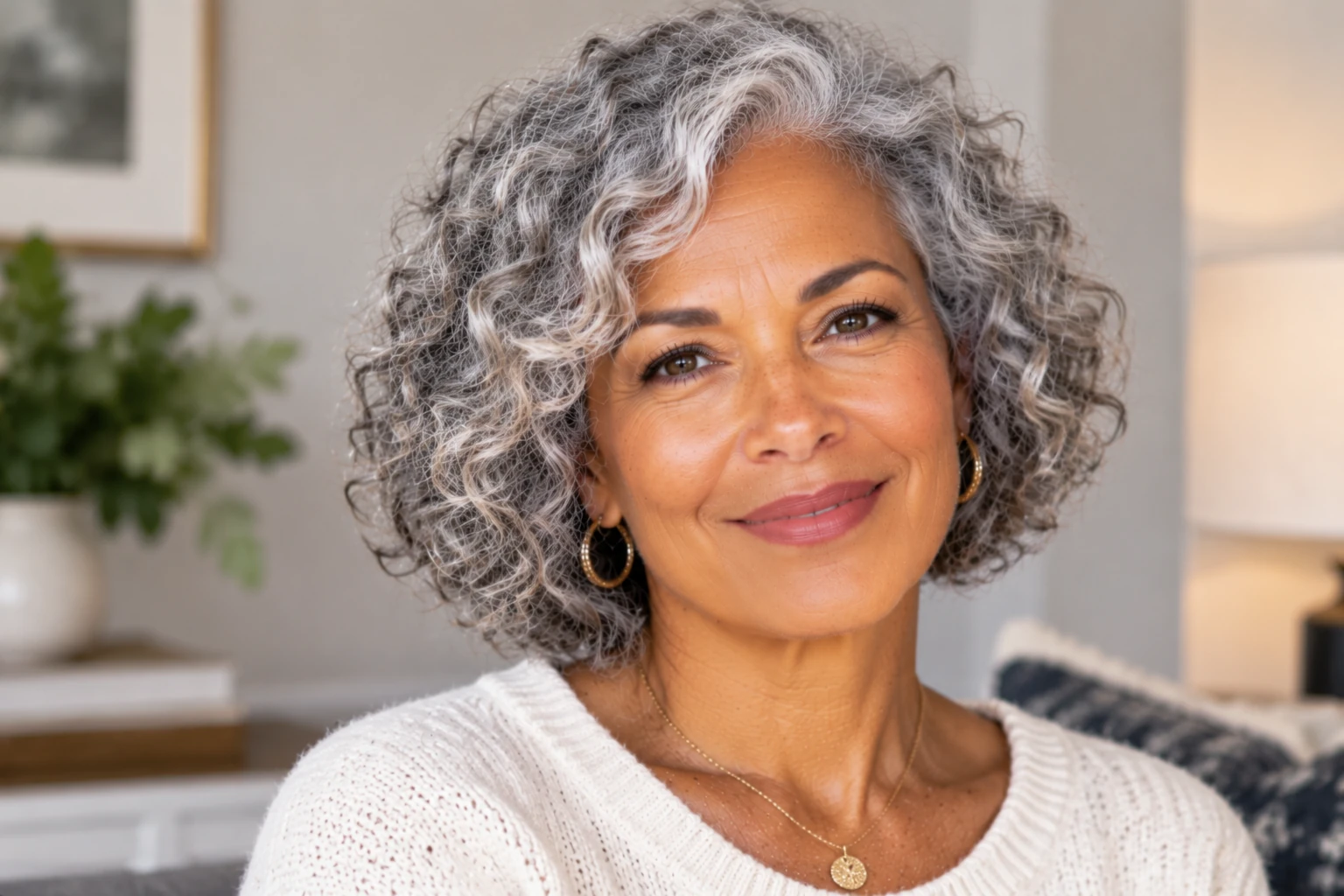
A natural gray curly bob combines a bob silhouette with silver, gray, or white curls. The focus is on embracing the natural hair color while keeping the curls shaped and well-defined.
The bob can be chin-length or slightly longer, depending on your preference. Subtle shaping can help the curls form a balanced outline without removing too much fullness.
Gray hair does not always have the same texture. Some women find that their curls become drier or behave differently over time, while others notice little change.
What to ask your stylist: Discuss how your current gray hair texture behaves and choose a bob shape that works with its natural movement.
15. Curly Halo Shape
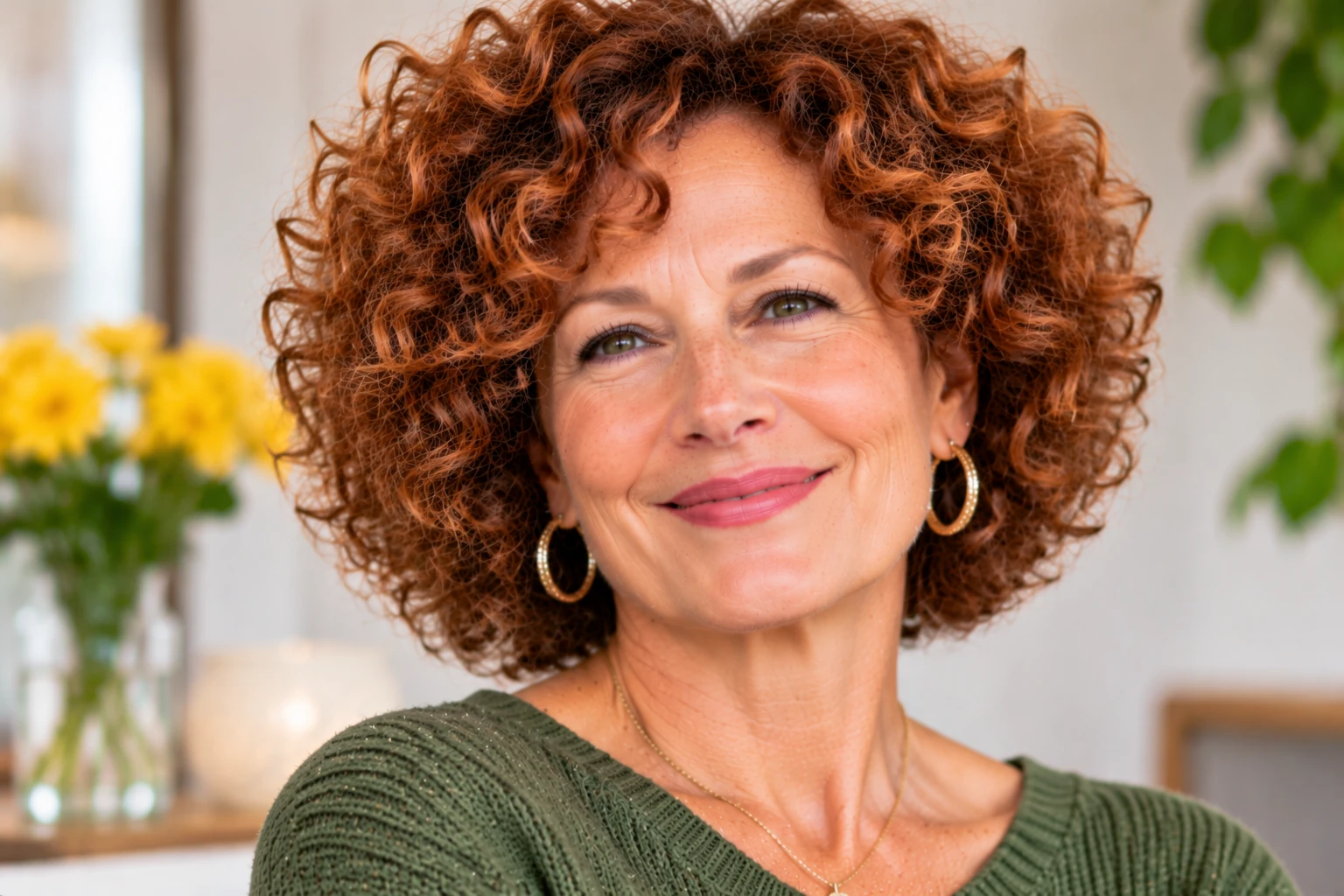
A curly halo shape creates a rounded silhouette with curls distributed around the head. Rather than emphasizing a particular length, the goal is to create a balanced outline that allows the natural curl pattern to stand out.
This style can look particularly striking with well-defined curls and enough density to support the rounded shape.
The stylist may need to adjust the length and layering according to the curl pattern. A shape that works beautifully for springy curls may look quite different on looser waves or tighter coils.
What to ask your stylist: Request a rounded shape that follows your natural curl pattern without removing too much fullness from the sides or crown.
How to Choose a Curly Haircut for Your Curl Type
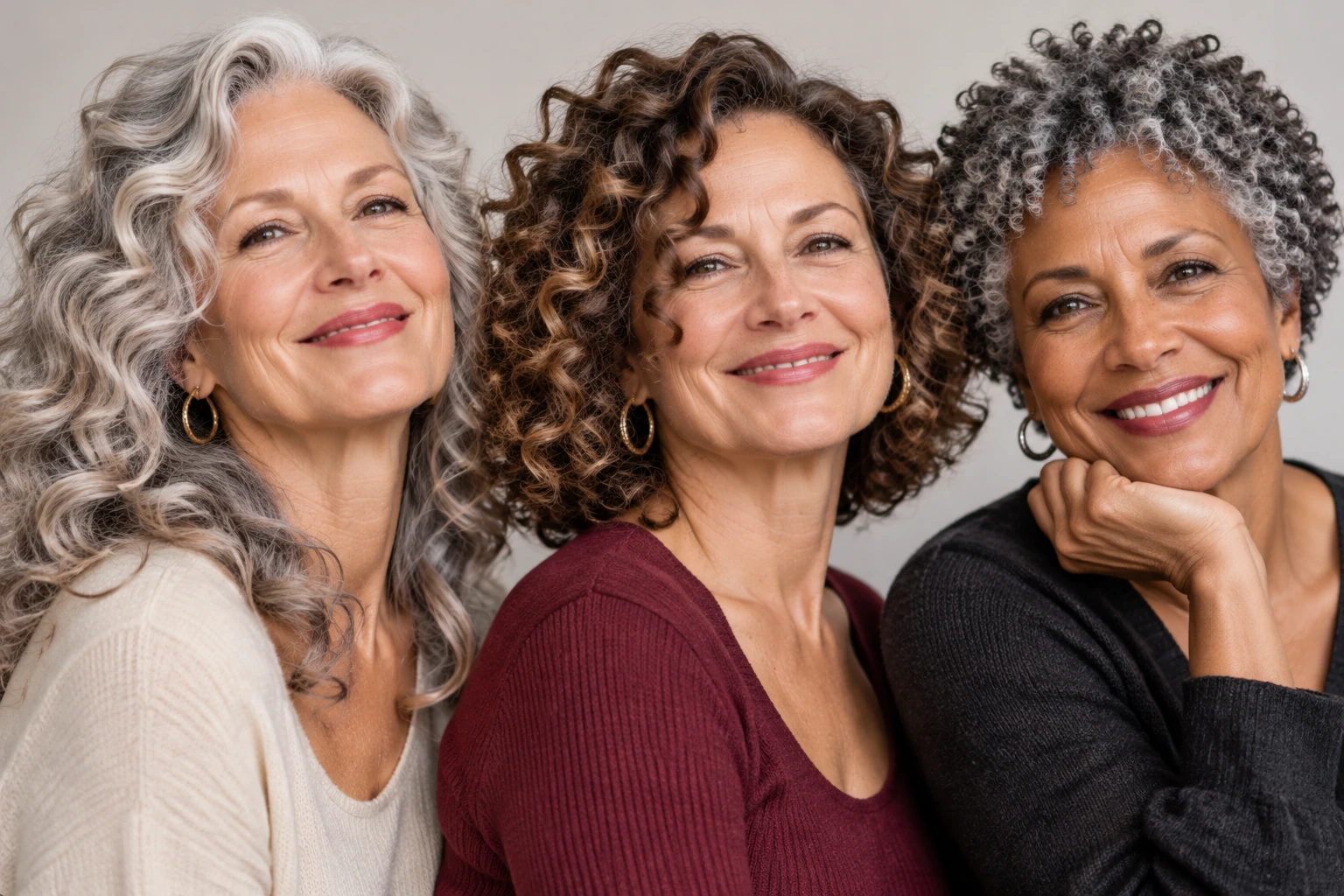
Not all curls behave in the same way. The shape of your haircut should take your natural curl pattern into account, as well as the way your hair responds to moisture, styling, and drying.
Loose Curls
Loose curls form larger, more open spirals. They may fall more easily under their own weight, particularly when the hair is long.
A layered bob, curly lob, or shoulder-length cut may be worth considering. The goal is to maintain enough structure without adding unnecessary layers that make the ends look thin.
If you prefer a longer style, ask your stylist whether subtle layers can help the curls move without removing too much fullness.
Defined Medium Curls
Medium curls often form visible spirals with a springier shape. They can support rounded bobs, layered cuts, and shorter styles, depending on their density.
The stylist should consider how much the curls contract as they dry. This is especially important when choosing a chin-length or shorter haircut.
A useful approach is to discuss the finished dry shape before deciding on the cutting length.
Tight Curls and Coils
Tighter curl patterns often have more visible shrinkage, meaning the hair can appear considerably shorter when dry than when stretched.
A stylist familiar with your specific curl pattern can help determine the right length and layering approach. Tight curls and coils may also have different moisture and detangling needs from looser curls.
The most important point is not to choose a haircut based only on a photograph of a different curl pattern. Look for examples that resemble your own natural texture.
Best Curly Hairstyles for Fine or Low-Density Hair
Fine hair and thin hair are not the same thing.
Fine hair describes the diameter of individual strands. Low-density hair refers to having fewer hairs growing across the scalp. You can have fine hair with high density, or thicker individual strands with lower density.
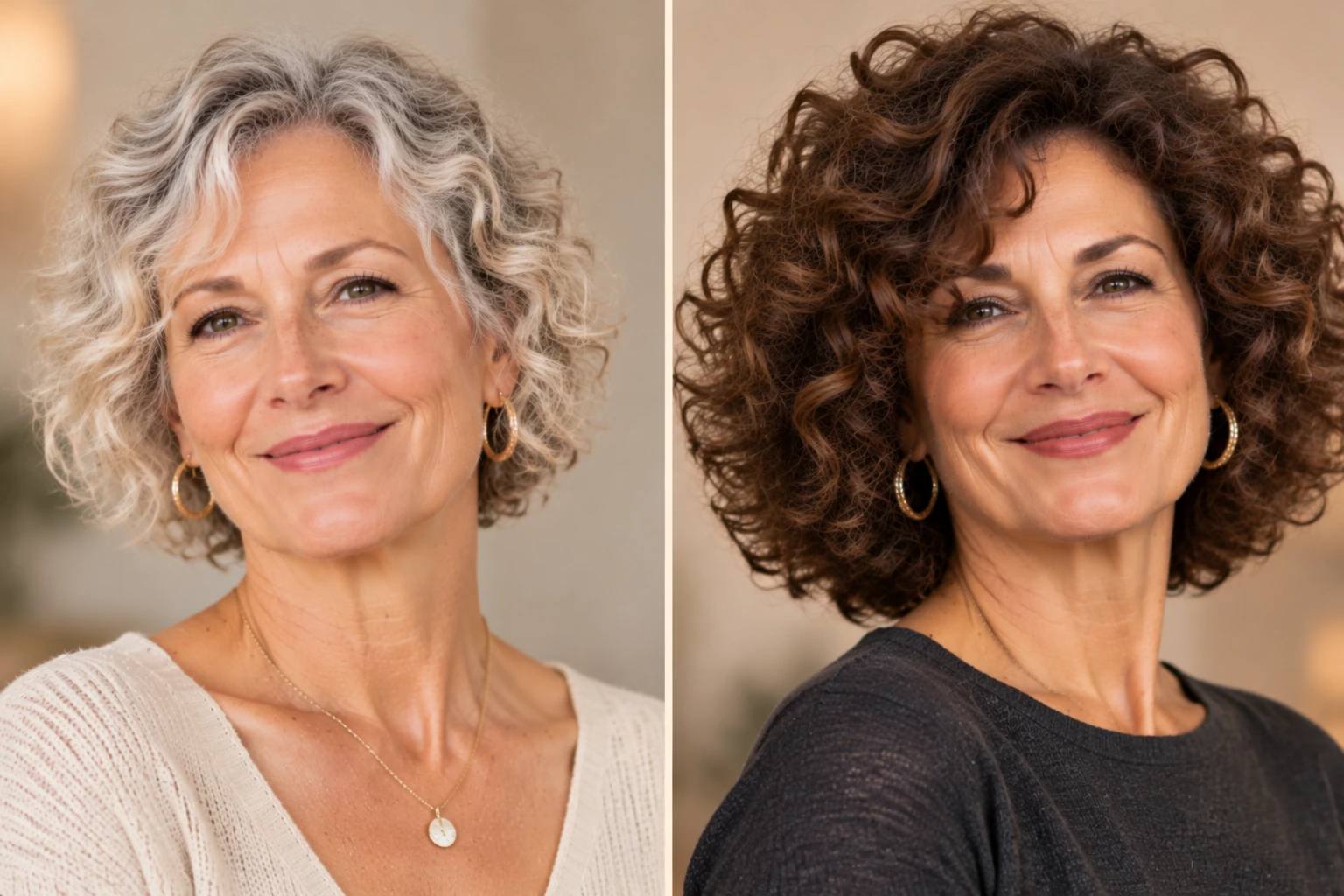
This distinction matters when choosing a curly haircut.
If You Have Fine Curly Hair
Fine curls may lose their shape when weighed down by heavy products or excessive length. A carefully shaped bob or medium-length cut may be easier to manage than a very long style.
Consider:
- Keeping layers controlled.
- Avoiding excessive thinning or texturizing.
- Using lightweight styling products.
- Preserving enough fullness at the ends.
- Applying styling products sparingly to avoid weighing down the curls.
If You Have Low-Density Curly Hair
If your hair has lower density, taking too much hair away through extensive layering can make certain areas appear even less full.
A balanced bob, a softly rounded short cut, or a longer style with minimal layering may be worth discussing with your stylist.
The best approach depends on where your hair is naturally densest and how your curls distribute across the scalp. If you have noticed sudden or unusual hair thinning, a qualified healthcare professional can help assess possible causes.
How to Choose a Curly Haircut for Your Face Shape
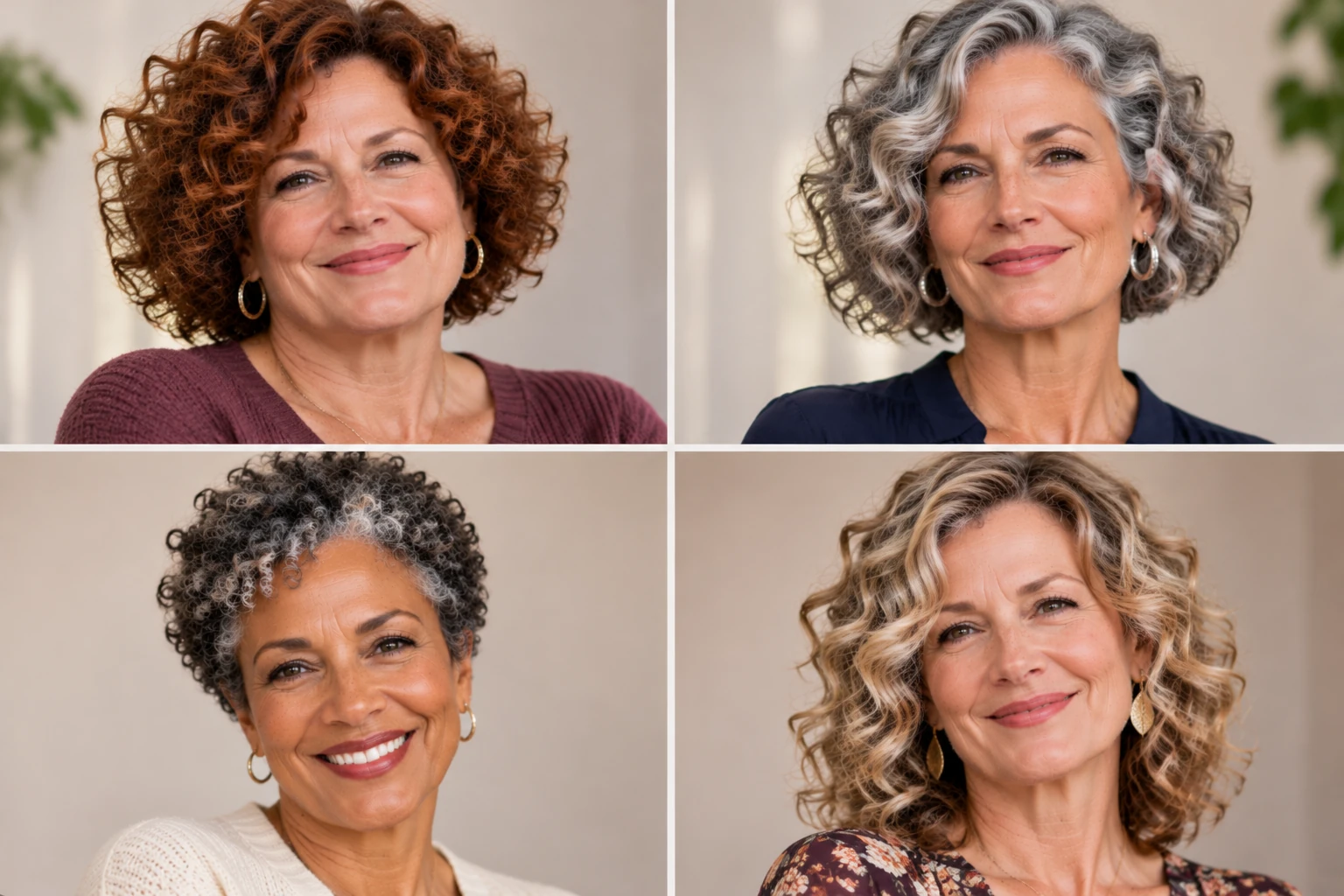
Face shape can help guide your decision, but it should not be treated as a strict rulebook. Your curl pattern, hairline, preferred length, and personal style are equally important.
Here are some possibilities to discuss:
- Oval faces: Many curly shapes can work, including rounded bobs, shoulder-length curls, and longer layers.
- Round faces: A side part, longer layers, or a lob may create a different visual balance around the cheeks.
- Square faces: Soft layers and rounded curly shapes may help create a less angular outline.
- Heart-shaped faces: Chin-length bobs and curly fringe styles can add visual interest around the lower part of the face.
- Long faces: Rounded shapes and curls with more width around the sides may create a balanced appearance.
Use these suggestions as inspiration rather than fixed recommendations. The most suitable haircut is one that works with your features and feels comfortable to wear.
How to Maintain Natural Curls After 50
Healthy-looking curls need a routine that respects their texture. The right approach depends on your hair’s condition, porosity, density, and styling preferences.
Choose a Gentle Cleansing Routine
Curly hair can feel dry when it is washed too frequently or exposed to cleansing products that do not suit it. A gentle shampoo and a suitable conditioning routine may help keep your hair comfortable and manageable.
There is no universal washing schedule. Adjust it according to your scalp, product buildup, and how your hair feels between washes.
Use Conditioner and Leave-In Products Thoughtfully
Affiliate Disclosure: This article may contain affiliate links. If you purchase through these links, we may earn a commission at no additional cost to you. We only include products that are relevant to the advice and topics discussed in this article.
Conditioner can help improve slip during detangling and make curls easier to manage. A leave-in conditioner may also be useful if your hair needs additional softness.
However, too much product can weigh down fine curls or make the hair feel coated. Start with a small amount and adjust according to how your hair responds.
Product to consider: Leave-in conditioner — choose a lightweight formula suited to your curl texture and hair density.
Detangle Gently
Avoid pulling a comb through dry, tightly tangled curls. Many people find it easier to detangle curly hair when it is damp and coated with conditioner.
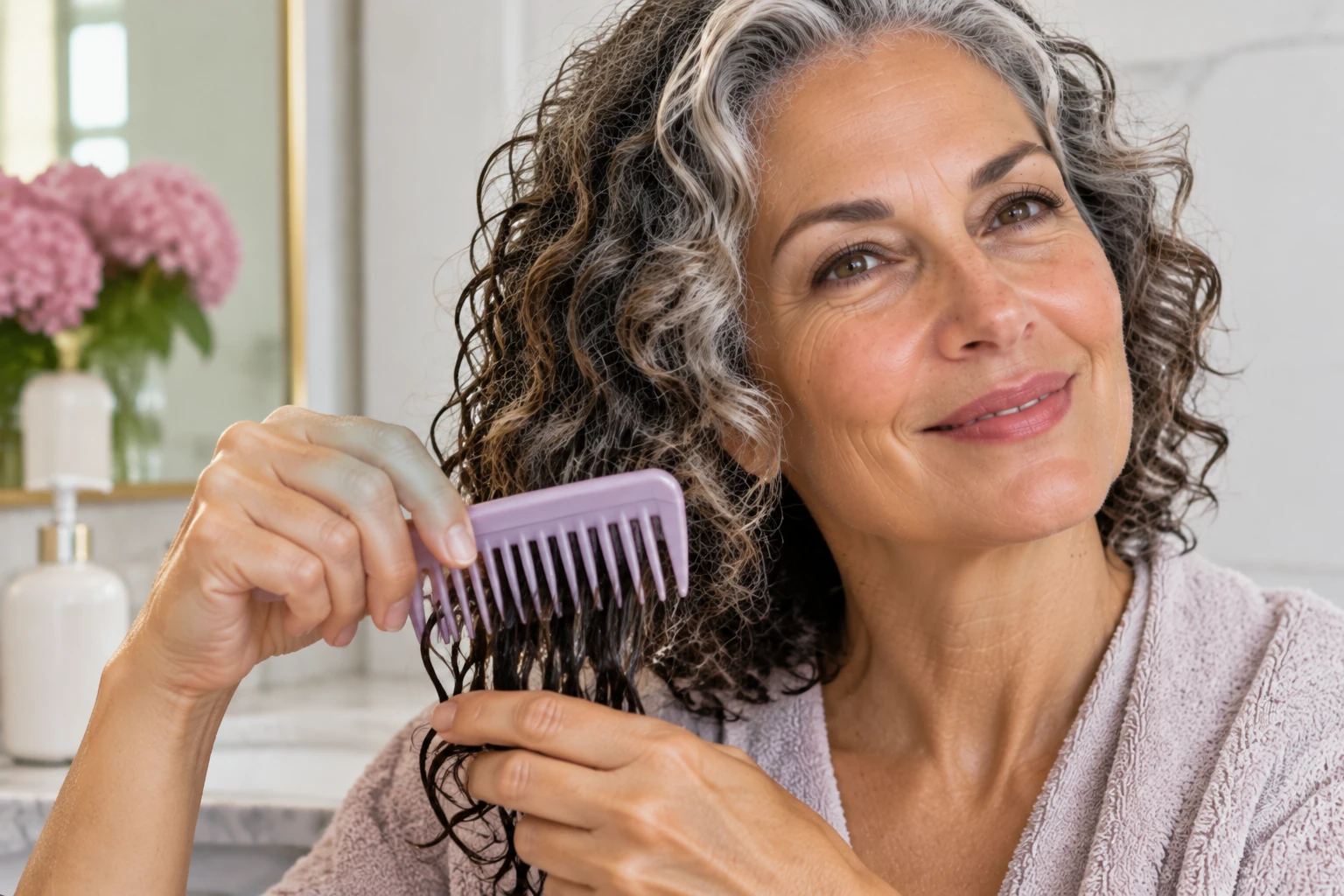
A wide-tooth comb or your fingers can help separate knots more gently. Work from the ends toward the roots rather than forcing the comb through the entire length at once.
Product to consider: Wide-tooth comb or detangling tool — use gently on damp, conditioned hair, working from the ends upward.
Avoid Excessive Heat
Frequent high-heat styling can contribute to dryness and damage. If you use a hair dryer, consider a diffuser attachment and a moderate heat setting.
Allowing curls to air-dry may also be an option when your schedule and environment permit.
Product to consider: Diffuser attachment — check that it fits your hair dryer before purchasing.
Protect Your Curls While Sleeping
Friction from pillowcases and bedding can disturb curls overnight. Some women prefer a satin bonnet, satin scarf, or satin pillowcase to reduce friction.
Choose an option that feels comfortable and does not pull tightly on your hair.
Product to consider: Satin bonnet or pillowcase — choose the option that feels comfortable and does not pull on your hair.
Easy Styling Tips for Natural Curly Hair
You do not need an elaborate styling routine to enjoy your natural curls. A few simple techniques can help you achieve a more consistent result.
Apply Products to Damp Hair
Many curl creams, mousses, and leave-in products are designed to be applied to damp hair. Follow the product instructions and begin with a small amount.
Distribute the product gently rather than rubbing the curls aggressively.
Scrunch to Encourage Curl Definition
Scrunching involves gently squeezing the hair upward toward the scalp. This can help encourage natural curl formation.
Avoid repeatedly touching your hair while it dries, as excessive handling can disturb the curl pattern.
Use a Diffuser When Needed
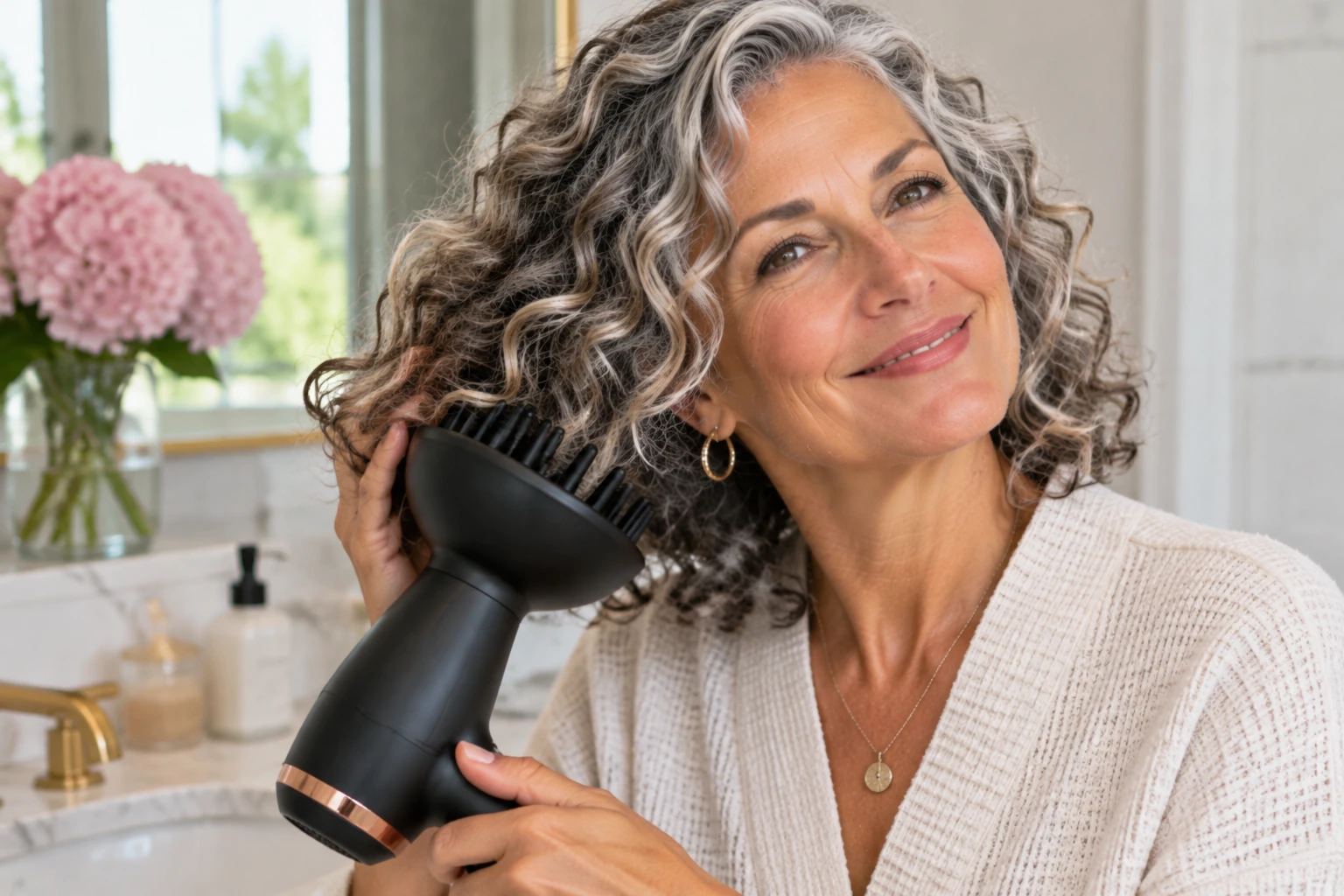
A diffuser distributes airflow over a wider area than a concentrated dryer nozzle. It can be useful when you want to dry curls while preserving their shape.
Use a suitable temperature and avoid holding the dryer in one position for too long.
Refresh Curls Between Wash Days
If your curls lose definition, a small amount of water or an appropriate curl-refreshing product may help. You do not necessarily need to wash your entire head again.
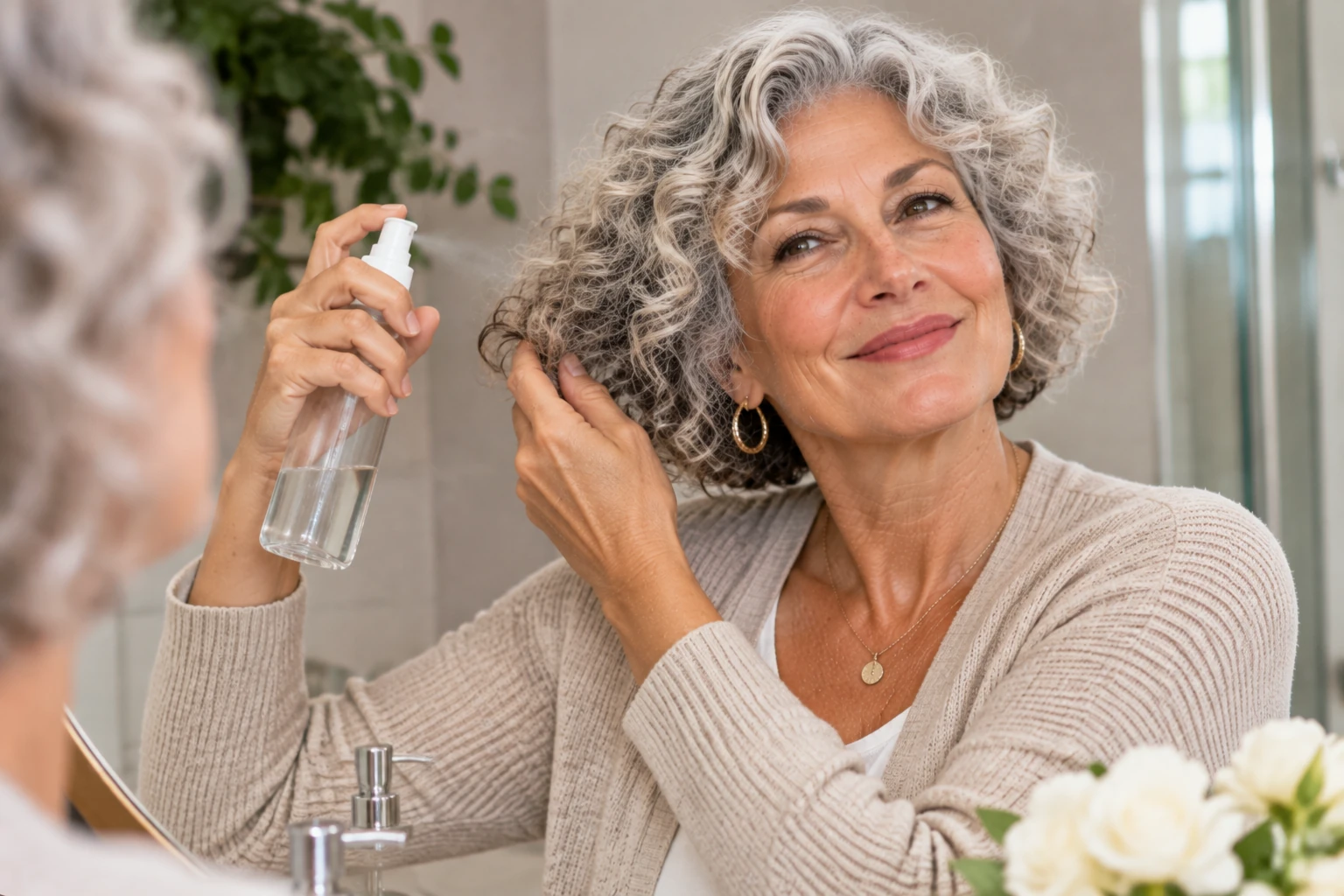
Start with a small amount and avoid adding several layers of product that could cause buildup.
Product to consider: Curl-refreshing spray or mousse — follow the product directions and start with a small amount to avoid buildup.
What to Ask Your Hairstylist Before Getting a Curly Haircut
A photograph is a useful starting point, but your stylist also needs to understand how your hair behaves naturally.
Before choosing a new cut, consider asking:
- How will this haircut look with my natural curl pattern?
- How much shrinkage should I expect?
- Where should the layers sit when my hair is dry?
- Will this shape preserve enough fullness for my hair density?
- Can I wear this haircut without using heat every day?
- How much maintenance will it need?
- Should the cut be shaped on dry hair, wet hair, or a combination of both?
A stylist experienced with curly hair should be able to explain how the proposed shape will work with your natural texture rather than simply reproducing a photograph.
Frequently Asked Questions
Are curly hairstyles flattering for women over 50?
Yes. Natural curls can look beautiful at any age. The most suitable hairstyle depends on your curl pattern, hair density, face shape, and preferred level of maintenance rather than your age alone.
What is the best haircut for naturally curly hair after 50?
There is no single best haircut for everyone. A curly bob, soft pixie, layered lob, or shoulder-length cut may all work well depending on your curl pattern and the shape you prefer.
What is the best low-maintenance curly hairstyle for women over 50?
A softly shaped curly bob or a simple shoulder-length cut may be easier to manage for some women. However, maintenance depends on your curl pattern, haircut structure, and styling routine. Shorter cuts can reduce washing and detangling time but may need more frequent trims to maintain their shape.
Are short curly hairstyles easier to maintain?
Short curly hairstyles can reduce the time needed for washing and detangling, but they may require more frequent trims to maintain their shape. Maintenance also depends on how your curls behave at shorter lengths.
Are layers good for mature curly hair?
Layers can help distribute weight and shape natural curls. However, too many layers may reduce fullness, particularly in fine or low-density hair. The right amount depends on your hair’s density and curl pattern.
How can women with fine curly hair get more volume?
A suitable haircut, lightweight styling products, and careful product application may help fine curls maintain their shape. Avoid excessive product buildup and discuss layer placement with a stylist who understands fine curly hair.
Should curly hair be cut wet or dry?
Both methods can be used, depending on the stylist’s approach and your curl pattern. Dry cutting can help a stylist assess how individual curls fall, while wet cutting can be useful for certain shaping techniques. The important thing is that the stylist accounts for shrinkage and your natural texture.
How often should naturally curly hair be trimmed?
The ideal interval varies according to the haircut, hair growth, and condition of the ends. Shorter, more structured styles may need more frequent shaping than longer cuts. Ask your stylist to recommend a schedule that maintains your chosen silhouette.
What curly haircut works well for low-density hair?
A softly shaped bob, a rounded short cut, or a longer style with minimal layering may be worth discussing with your stylist. The best choice depends on where your hair has the most density and how your curls naturally fall. Avoid assuming that more layers will automatically create fullness.
Can gray hair remain naturally curly and defined?
Yes. Gray and silver hair can retain its natural curl pattern. Some women notice changes in texture or dryness as their hair changes over time, so adjusting the conditioning and styling routine may be helpful.
Final Thoughts
Curly hairstyles for women over 50 offer plenty of possibilities, from soft pixies and structured bobs to shoulder-length curls and longer layered styles.
The best haircut is not necessarily the shortest, most layered, or most fashionable option. It is the one that respects your natural curl pattern, works with your hair density, and fits the amount of time you want to spend styling.
Before your next appointment, choose a few reference photographs that resemble your own curls and discuss how each shape would work with your hair when dry.
Natural curls do not need to be controlled into a completely different texture. With a suitable haircut and a manageable routine, they can remain the defining feature of your style.