12 Flattering Wispy Bangs for Women Over 50: Soft Ways to Wear Them
How to Maintain and Grow Out Wispy Bangs
Even a light fringe needs occasional attention. Because the strands sit around the forehead and eyes, small changes in length can affect the overall shape.
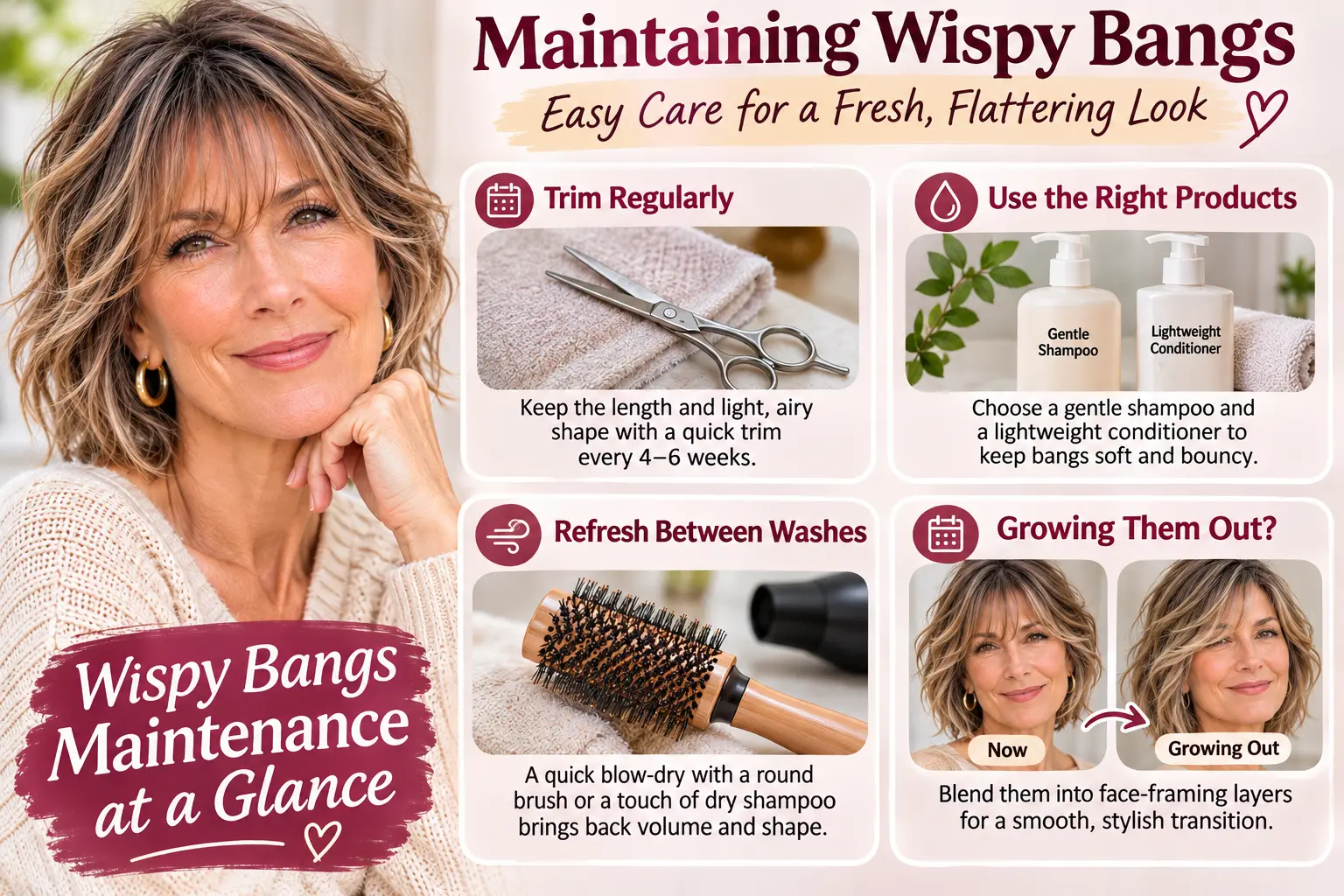
Schedule trims when the shape needs it. Shorter bangs may need more frequent professional maintenance than longer, side-swept styles. Your stylist can recommend a suitable schedule based on how quickly your hair grows and how precise you want the fringe to remain.
Avoid cutting too much at home. Small mistakes can quickly change the shape, especially with short or asymmetrical bangs.
Transition gradually. If you want to grow out your fringe, ask your stylist to reshape it into a side-swept style or blend it into longer face-framing pieces.
Use accessories when needed. Small clips, headbands, and a gentle side part can help manage the transition while the bangs grow.
Wispy bangs are often easier to blend into a haircut than a very dense, blunt fringe, but the grow-out process still takes time.
What to Ask Your Hairstylist Before Getting Wispy Bangs
Before committing to a fringe, take a photograph of the style you like and discuss how it would translate to your own hair.
- Will this fringe work with my natural hairline and cowlicks?
- How much hair would you need to take from the front?
- Will the bangs look balanced with my hair density?
- How will this shape behave when my hair dries naturally?
- How much daily styling will it require?
- Can the fringe be blended into my haircut as it grows?
- Would a longer or side-swept version be easier for me to maintain?
A good stylist should be able to explain the advantages and limitations of the chosen shape rather than simply copying a photograph.
Frequently Asked Questions
Are wispy bangs flattering for women over 50?
They can be a lovely option for women over 50, but the result depends on the fringe shape, hair texture, density, and personal preference. A light fringe can create a softer outline without the weight of a full, blunt fringe.
Are wispy bangs good for fine hair?
They can work well with fine hair when the amount of hair used is carefully balanced. Fine strands may not support a heavy fringe, but removing too much hair from the front can also make the rest of the hairstyle look less full.
Can women with thinning hair wear wispy bangs?
Yes, some women with low-density hair can wear a light fringe. The important consideration is how much hair is available at the front and whether creating bangs would make the remaining hair appear thinner. Longer, side-swept pieces may be worth considering.
Do wispy bangs work with a cowlick?
They can, but the natural direction of the hair needs to be considered before cutting. A cowlick may cause the fringe to separate or stand up, particularly when it is short. Working with the natural growth pattern is usually more practical than trying to force the hair in the opposite direction.
How often should wispy bangs be trimmed?
There is no single schedule for everyone. Shorter, more defined bangs generally need more frequent attention than longer, softer fringe. Your stylist can recommend a trimming interval based on the length and shape you choose.
Are wispy bangs easier to maintain than full bangs?
They may feel lighter and offer more styling flexibility, but they are not always maintenance-free. Short wispy bangs can still require regular shaping and daily attention, particularly if your hair has a cowlick or strong natural movement.
How do you grow out wispy bangs?
Let the fringe gain length gradually, then ask your stylist to reshape it into side-swept bangs or blend it into face-framing layers. Clips and a change in parting can also help while the hair grows.
Final Thoughts
Wispy bangs offer many possibilities, from delicate eyebrow-skimming strands to short micro bangs, soft curves, separated pieces, and longer see-through fringes. The difference is not simply the haircut worn with the fringe—it is the way the bangs are cut, distributed, shaped, and styled.
If you are considering a new look, start with the shape that suits your hairline, density, and natural texture. Bring a few reference photographs to your stylist and discuss how much daily styling you are comfortable with.
The best wispy bangs are not necessarily the shortest or most fashionable ones. They are the ones that feel natural, complement your haircut, and fit comfortably into your everyday routine.
Continue Reading
You've reached the final page of this article.